

Investing in 2025 and Beyond
What’s Working, What’s Not, and What You Should Do Now
By Your Career Place | Personal Finance Series
Introduction: A Wild Ride — and It’s Not Over Yet
If you’ve been watching your investment portfolio over the past year, you’ve probably felt like you were on a roller coaster — one that somehow ended up higher than where it started. The stock market in 2025 was a story of dramatic dips, stunning rebounds, and a whole lot of uncertainty. And yet, for those who stayed the course, the rewards were real.
At Your Career Place, we believe that understanding what’s happening in the financial world isn’t just for Wall Street insiders. Whether you’re just starting to invest, building toward retirement, or trying to make sense of headlines about AI stocks and tariff shocks, this post is for you. Let’s break down what happened, what the experts are saying, and — most importantly — what it means for your money.
What’s Been Happening: The Investing Landscape in 2025
Let’s start with the big picture. Despite a rocky start — the S&P 500 dropped more than 10% in the first quarter of 2025, its worst quarter since 2022 — the market staged a remarkable comeback. By year’s end, the S&P 500 was up roughly 16-18%, the Nasdaq had gained about 20%, and the Dow Jones hit a record high above 48,000. Not bad for a year that included tariff shocks, geopolitical tensions, and ongoing inflation concerns.
Here are the key developments every investor should know about:
1. The AI Boom Is Reshaping Portfolios
Artificial intelligence wasn’t just a buzzword in 2025 — it was a market-moving force. Companies like Nvidia (up 40% for the year), Microsoft, Amazon, and Alphabet drove massive gains. AI infrastructure deals totaling nearly $500 billion in potential spending were announced, and the technology sector nearly doubled the returns of the broader S&P 500 in the second half of the year. The top five tech companies now make up roughly 30% of the entire S&P 500 index — a concentration that excites some investors and worries others.
2. The Fed Cut Rates — Three Times
The Federal Reserve cut interest rates three times in the fall of 2025, bringing rates to their lowest level in nearly three years. This was good news for borrowers and gave a boost to stocks, but it also meant that the days of earning 5% on a money market account are fading. If you’ve been sitting on a lot of cash, it may be time to rethink that strategy.
3. Tariff Turbulence Tested Investor Nerves
In April 2025, President Trump’s announcement of sweeping new tariffs sent markets into a tailspin — the S&P 500 fell nearly 19% from its peak. But here’s the kicker: when some of the steepest tariffs were walked back, markets bounced back just as fast. According to Hartford Funds, missing just the single best trading day of 2025 (April 9th) would have cut your full-year returns by more than half. This is a powerful reminder of why staying invested matters.
4. ETFs and Index Funds Remain the Workhorses
For everyday investors, ETFs and index funds continued to be the go-to tools in 2025. Morningstar highlighted standout new funds like the Vanguard High-Yield Active ETF (VGHY) and the iShares S&P 500 ex S&P 100 ETF (XOEF), which addresses concentration risk by excluding mega-cap stocks. Meanwhile, experts continued to warn against leveraged and inverse ETFs, which are designed for day traders — not long-term wealth builders.
5. AI Investing Tools Are Going Mainstream
From robo-advisors like Betterment and Wealthfront to newer AI-powered platforms like Kavout and Magnifi, technology is making sophisticated investing tools available to everyday people. These platforms can automate portfolio rebalancing, harvest tax losses, and even analyze thousands of stocks in real time. The caveat? AI tools are only as good as the data they’re trained on — they’re assistants, not crystal balls.
The Boomer Perspective: “Stay the Course — History Is on Your Side”
If you’re an optimist — or if you’ve been investing long enough to have lived through the dot-com crash, the 2008 financial crisis, and the COVID-19 market collapse — you probably look at 2025 and see a familiar story: short-term pain, long-term gain.
And the data backs you up. Despite all the drama, the S&P 500 delivered strong returns for the year. J.P. Morgan is projecting stock gains of 13-15% for 2026. Morgan Stanley says the bull market “still has room to run” and puts the probability of a recession at “extraordinarily low.” BNY Wealth estimates the S&P 500 could reach 7,600 by the end of 2026 — about a 10% jump from late 2025 levels.
The optimistic case for investing right now rests on several pillars:
- Corporate earnings are strong. Profit margins for S&P 500 companies hit new highs in 2025, around 15%. Companies are reinvesting aggressively in future growth, with capital expenditures at multi-decade highs.
- AI is a genuine growth engine. Unlike some previous tech bubbles, experts like Fidelity’s Jurrien Timmer note that investors have been more skeptical this time around, keeping valuations in more sustainable ranges. The AI revolution is real, and companies are spending real money on it.
- Rate cuts are a tailwind. With the Fed cutting rates, the environment is becoming more favorable for stocks and bonds alike. Cash is losing its appeal as yields drift lower, pushing money back into markets.
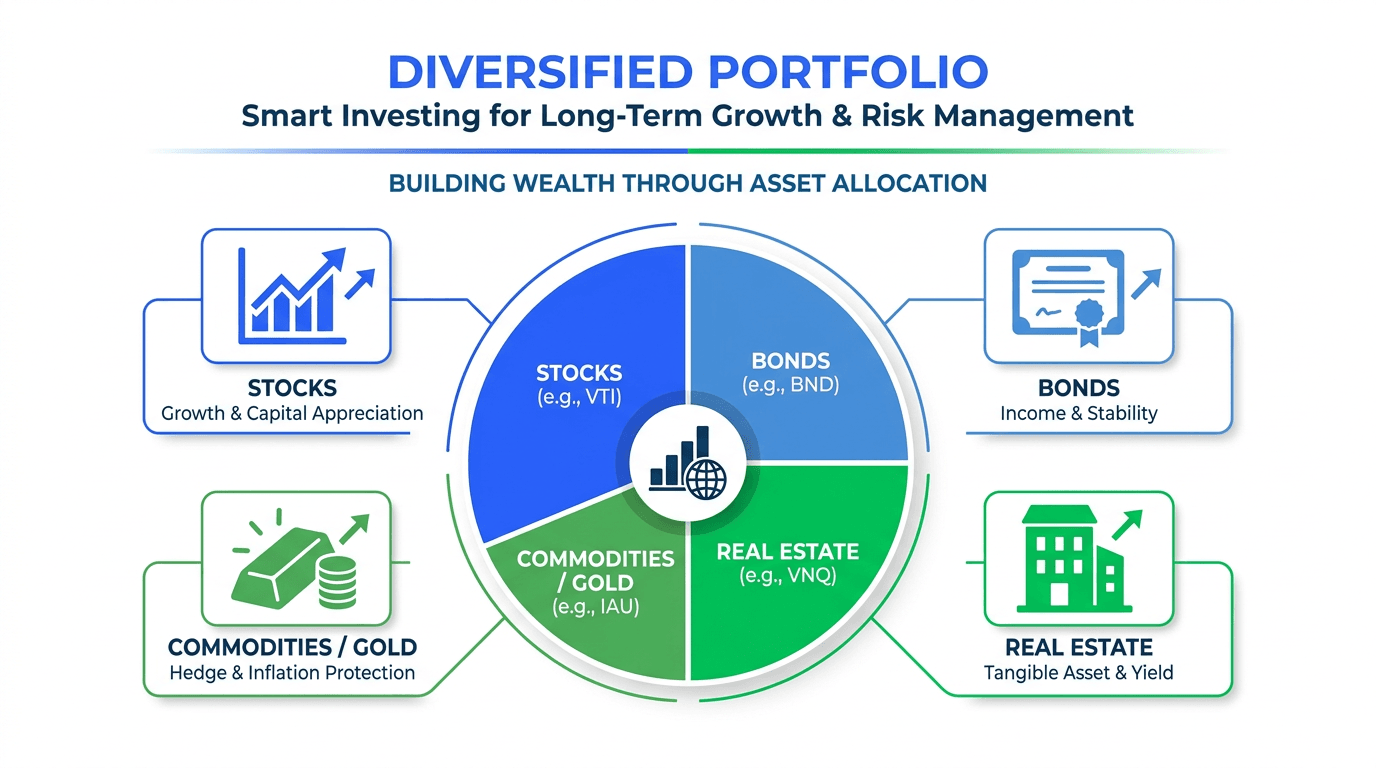
- Diversification is working. J.P. Morgan’s data showed an “everything rally” in 2025 — gold up 26%, emerging markets up 23%, global bonds up 7%. A well-diversified portfolio had plenty of winners.
At Your Career Place, we often hear from readers who stayed invested through the scary headlines and came out ahead. The lesson? Time in the market beats timing the market — almost every single time.
The Doomer Perspective: “Don’t Get Complacent — There Are Real Risks Ahead”
Of course, not everyone is popping champagne. And honestly, a healthy dose of caution is never a bad thing when it comes to your financial future.
Here’s what the pessimists — and some very credible analysts — are worried about:
- Concentration risk is at historic levels. When five companies make up 30% of the S&P 500, a stumble from any one of them can drag down the whole index. If the AI hype cools or any of the tech giants disappoints, the fallout could be significant.
- Vanguard’s long-term outlook is sobering. While the short-term forecasts are rosy, Vanguard projects annualized returns of just 3.5% to 5.5% for U.S. stocks over the next decade. After years of 15-20% gains, investors may need to recalibrate their expectations.
- Inflation isn’t fully tamed. Official CPI numbers showed inflation cooling to around 2.7%, but the real-world impact on household budgets is still being felt. Food prices are up significantly (coffee +18.8%, beef +15.8%), and shelter costs remain elevated. “Stickier inflation” could challenge portfolios and limit how much the Fed can cut rates.
- Policy uncertainty is a wildcard. Charles Schwab analysts warn that “policy risk is not subsiding anytime soon,” and the upcoming appointment of a new Federal Reserve chair by President Trump adds another layer of uncertainty. Transitions at the Fed have historically brought volatility.
- Most Americans are financially fragile. According to Ramsey Solutions, 51% of Americans are living paycheck to paycheck, and only 45% are confident they could handle a $1,000 emergency expense. For many people, investing feels like a luxury they can’t afford — and that’s a real problem that no bull market can fix on its own.
- Household debt is at record levels. Total U.S. household debt hit $18.59 trillion by Q3 2025, with credit card balances alone at $1.23 trillion and average APRs above 25%. High debt loads limit people’s ability to invest and create financial vulnerability.
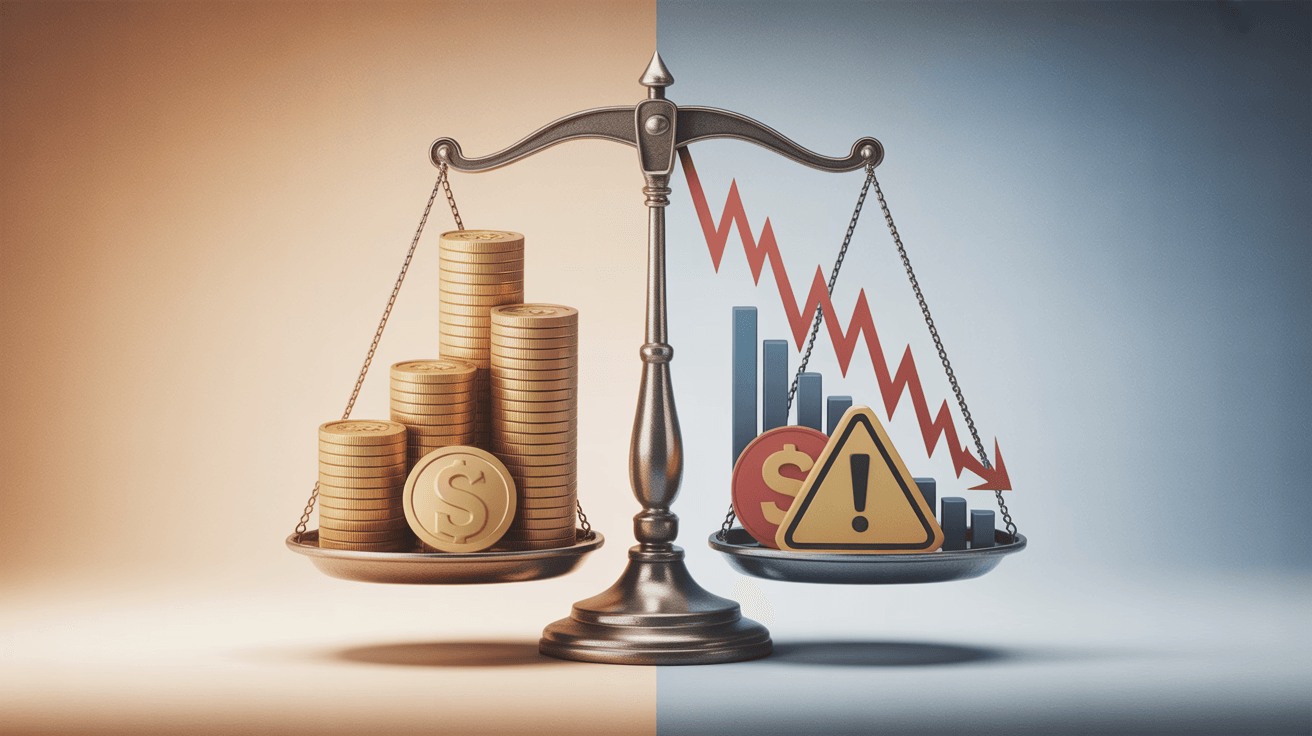
The bottom line from the cautious camp: don’t let a good year make you overconfident. Markets can and do go down, sometimes sharply and without much warning. Building a resilient financial foundation — emergency fund, manageable debt, diversified investments — matters more than chasing the hottest stock.
Key Takeaways: What Should You Actually Do?
Whether you lean optimistic or cautious, there are some practical steps that make sense for almost every investor right now. Here at Your Career Place, we always come back to the fundamentals:
- Don’t try to time the market. The data is clear: missing even a handful of the best trading days can devastate your long-term returns. If you’re invested, stay invested. If you’re not, start — even with small amounts.
- Diversify, diversify, diversify. Don’t put all your eggs in the AI basket (or any single basket). A mix of U.S. stocks, international stocks, bonds, and other assets can smooth out the ride. Consider equal-weight or small-cap ETFs to reduce concentration risk.
- Reassess your cash holdings. With the Fed cutting rates, high-yield savings accounts and money market funds are becoming less attractive. If you have more cash than you need for emergencies (3-6 months of expenses), consider putting the rest to work in a diversified portfolio.
- Maximize your retirement accounts. The SECURE 2.0 Act expanded catch-up contribution rules for older workers. If you’re 50 or older, you can contribute significantly more to your 401(k) or IRA. Take advantage of it.
- Explore AI investing tools — carefully. Robo-advisors and AI-powered platforms can be genuinely useful, especially for automating rebalancing and tax-loss harvesting. But do your homework, understand the fees, and remember that no algorithm can predict the future.
- Consider working with a financial advisor. According to First Citizens Bank’s 2025 wealth survey, people who work with financial advisors report greater preparedness and significantly less financial stress. Even a one-time consultation can provide valuable perspective.
- Build your financial foundation first. Before you chase returns, make sure you have an emergency fund, manageable debt, and adequate insurance. Investing on a shaky foundation is like building a house on sand.
Final Thoughts
Investing in 2025 and beyond is both exciting and humbling. The opportunities are real — AI-driven growth, rate cuts, strong corporate earnings — but so are the risks: concentration, inflation, policy uncertainty, and the ever-present danger of letting emotions drive decisions.
The good news? You don’t have to navigate this alone. At Your Career Place, we’re committed to bringing you clear, honest, and actionable personal finance guidance every week. Whether you’re just starting your investing journey or you’re a seasoned market watcher, the principles are the same: stay informed, stay diversified, and stay the course.
Your financial future is worth investing in — and so is the time you spend learning about it.
Have questions about investing or personal finance? Drop them in the comments below, or explore more resources at Your Career Place. We’re here to help you build the financial life you deserve.
Disclaimer: This article is for informational and educational purposes only and does not constitute financial advice. Always consult a qualified financial professional before making investment decisions.