

The Silver Tsunami Is Here: How the Retirement Wave Is Reshaping Every Job in America
The Silver Tsunami Is Here: How the Retirement Wave Is Reshaping Every Job in America

Something seismic is happening in the American workplace right now — and it’s not AI, not remote work, not even the latest round of layoffs. It’s demographics. Tens of millions of Baby Boomers are hitting retirement age at the same time, and the ripple effects are touching every industry, every career ladder, and every paycheck in the country. At Your Career Place, we’re calling it what it is: the Silver Tsunami has arrived, and whether you’re 25 or 65, it’s going to change your working life.
We’re living through what economists are calling “Peak 65” — a historic moment where more Americans are turning 65 than at any other point in history. This wave is expected to continue through at least 2027. But here’s the twist: many of those Boomers aren’t actually leaving. And the ones who are? They’re leaving behind a workforce scrambling to fill the gaps. Let’s break down what’s really happening, who it helps, and who it hurts.
What’s Actually Happening Right Now
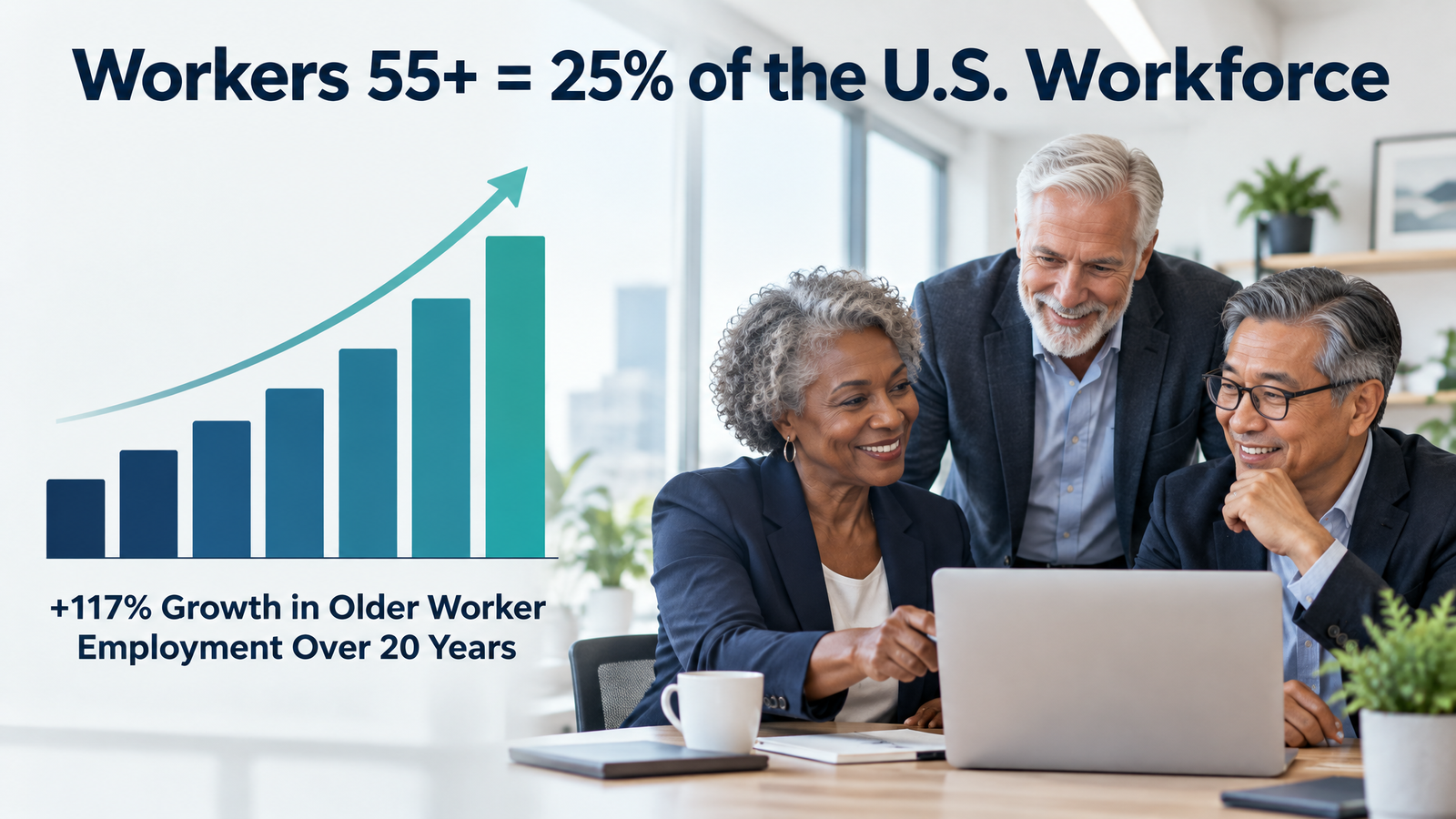
The numbers are staggering. Workers aged 55 and older now make up nearly 25% of the entire U.S. labor force — that’s roughly 38 million people. The Bureau of Labor Statistics projects that by 2032, adults 65 and older will account for 57% of all labor force growth in the country. Meanwhile, employment among workers 65 and older has grown by an astonishing 117% over the past 20 years, according to the National Institute for Occupational Safety and Health.
So why aren’t Boomers retiring? The short answer: many can’t afford to. The median retirement savings for Americans sits at roughly $87,000 — a far cry from the $820,000+ that financial planners say you need for a comfortable retirement. About 38% of working seniors say they simply must keep working to make ends meet. Rising healthcare costs, housing expenses, and the reality of living longer than previous generations have turned “retirement” into a luxury many can’t access.
At the same time, the workers who are retiring are leaving enormous holes. Businesses currently need to hire approximately 142,000 people per month just to maintain current employment levels as Boomers exit. The ratio of retirees to new labor force entrants has shifted from roughly 1:1 between 1970 and 2010 to a staggering 3:1 in 2026. The “breakeven” number of jobs needed to keep unemployment stable has dropped from 200,000 per month to around 50,000 — and some economists project it could hit zero by 2027.
Industries feeling the squeeze most acutely include healthcare (where nearly one in four workers is already over 55), manufacturing, government, and education. An estimated 3.2 million lower-paid healthcare positions are projected to go unfilled by 2026 alone. The succession crisis is real: many organizations built around Boomer leadership never developed strong pipelines, leaving younger workers underprepared to step into senior roles.
The Boomer’s Perspective: A Golden Window of Opportunity
If you’re an optimist — or a Boomer who’s been told your best years are behind you — the current moment looks remarkably promising. Here’s why the Silver Tsunami might actually be the best thing to happen to the American job market in decades.
For older workers, the leverage has never been greater. With labor shortages biting across virtually every sector, employers are finally waking up to the value of experienced workers. Companies are rolling out phased retirement programs, flexible scheduling, remote and hybrid options, and “returnship” programs specifically designed to bring back workers who stepped away. The days of age discrimination being a silent career killer aren’t over — but the economic pressure to retain and recruit older talent is forcing real change.
The concept of the “longevity lifestage” is gaining traction in HR circles. Rather than a hard stop at 65, more workers are transitioning through bridge jobs, encore careers, consulting roles, and part-time arrangements that let them stay engaged without the grind of full-time work. This isn’t just good for wallets — research consistently shows that continued purposeful work is linked to better cognitive, emotional, and physical health outcomes for older adults.
For younger workers, the talent shortage is creating real upward mobility. As Boomers exit, they’re leaving behind senior roles, institutional knowledge gaps, and leadership vacuums that ambitious Gen X, Millennial, and Gen Z workers can step into. The labor market tightening means employers are competing harder for talent at every level — which translates to better wages, more negotiating power, and faster career advancement for those who are ready.
At Your Career Place, we’ve seen this play out in real time: job seekers who might have waited years for a promotion are suddenly being fast-tracked because there simply aren’t enough experienced candidates to fill the pipeline. The Silver Tsunami, for all its challenges, is creating a genuine meritocracy moment for workers willing to step up.
For entrepreneurs and small business buyers, the opportunity is historic. Millions of Boomer-owned small businesses — in trades, professional services, retail, and beyond — are hitting the market as their owners retire. Many of these businesses are profitable, established, and undervalued simply because the owner is ready to move on. Savvy buyers who can modernize operations and plug in new technology are finding extraordinary deals that would have been impossible a decade ago.
The Doomer’s Perspective: A Crisis We’re Not Ready For
Now for the harder conversation. Because while the Silver Tsunami creates opportunities, it also exposes some deeply uncomfortable truths about how unprepared America is for this demographic reckoning.
The retirement savings crisis is a ticking time bomb. When the median American has $87,000 saved for retirement and needs $820,000+, we’re not talking about a minor shortfall — we’re talking about a systemic failure. Millions of older workers aren’t staying in the workforce by choice; they’re staying because they have no alternative. That’s not a success story. That’s a quiet catastrophe playing out in break rooms and cubicles across the country, where workers in their late 60s and 70s are grinding through jobs their bodies and minds are struggling to sustain.
The average retirement age is 62.6 — but that number masks a painful reality. Many workers who “retire” at 62 are doing so involuntarily, pushed out by health problems, corporate restructuring, or caregiving demands. And retiring at 62 means claiming Social Security early, which permanently reduces monthly benefits by up to 30%. Only 11% of Americans currently work past age 70. The gap between when people want to retire and when they can afford to is widening, not closing.

The institutional knowledge loss is happening faster than organizations can manage. Decades of expertise, client relationships, and operational know-how are walking out the door every day — and many companies have no real plan to capture it. The “succession failure” that researchers are documenting isn’t just an HR problem; it’s a productivity crisis. When experienced workers leave without adequate knowledge transfer, the organizations they leave behind become less effective, less innovative, and more vulnerable to costly mistakes.
The generational tension is real and growing. Some younger workers are frustrated — and not without reason. When Boomers stay in senior roles past traditional retirement ages, it can slow career advancement and suppress wages for the workers below them. The frustration isn’t just anecdotal; economists have documented how the extended presence of older workers in certain sectors has created bottlenecks for younger talent. The same demographic wave that creates opportunity in some areas creates gridlock in others.
The healthcare system is particularly exposed. We’re simultaneously aging the workforce that provides care AND aging the population that needs it. Nearly one in four healthcare workers is already over 55. As those workers retire, the demand for their services is exploding — driven by the very demographic wave that’s depleting the workforce. The math doesn’t work, and the 3.2 million projected unfilled healthcare positions are a preview of a system under severe strain.
The labor force participation rate fell to 61.6% in June 2026 — a notable decline driven partly by structural aging. As the “pig leaves the python,” economists warn that labor supply will remain constrained through 2040. That’s not a short-term blip. That’s a generation-long structural challenge that will require policy changes, immigration reform, automation investment, and cultural shifts around work and retirement that we haven’t even begun to seriously address.
Key Takeaways: What This Means for Your Career
Whether you’re early in your career or approaching retirement age, the Silver Tsunami is reshaping the landscape you’re navigating. Here’s what the team at Your Career Place thinks you should take away from all of this:
- If you’re a younger worker: The talent shortage is your leverage. Use it. Negotiate harder, pursue promotions more aggressively, and position yourself to fill the leadership gaps that are opening up. The next five years may be the best window for career advancement your generation will ever see.
- If you’re an older worker: Your experience has never been more valuable — but you need to make sure employers know it. Update your skills, embrace new technologies, and don’t be afraid to negotiate for flexible arrangements. The market is on your side in ways it hasn’t been in decades.
- If you’re approaching retirement: Don’t let the savings crisis sneak up on you. The gap between what most Americans have saved and what they need is enormous. Explore phased retirement, bridge jobs, and part-time consulting as ways to extend your earning years without burning out.
- If you’re an employer: The old playbook of posting jobs and waiting for applicants is broken. Invest in succession planning, knowledge transfer programs, and age-inclusive benefits. The organizations that figure out how to retain and leverage their older workforce — while developing younger talent — will have a massive competitive advantage.
- For everyone: The Silver Tsunami isn’t a future problem. It’s happening right now, in every industry, in every city. The workers and organizations that understand the dynamics — and adapt proactively — will be the ones who thrive on the other side of this historic demographic shift.
At Your Career Place, we believe that understanding the big picture is the first step to making smart career decisions. The retirement wave is real, the challenges are real, and the opportunities are real. The question is: are you positioned to take advantage of them?
Stay informed, stay adaptable, and keep building the career you deserve — no matter what wave is coming.