
Investing in Late October 2026: Is the Market’s Wild Ride Your Ticket to Wealth or a Warning to Watch Out?
Investing in Late October 2026: Is the Market’s Wild Ride Your Ticket to Wealth or a Warning to Watch Out?
October 2026 has been anything but boring for investors. From AI-fueled rallies to oil price spikes, from a Federal Reserve on hold to a Boeing nosedive, the stock market has served up a full buffet of drama — and opportunity. Whether you’re a seasoned investor or just getting started, the question on everyone’s mind right now is the same: Is this a great time to invest, or should you be bracing for impact?
At Your Career Place, we believe that understanding what’s happening in the markets — and what it means for your personal finances — is one of the most powerful things you can do for your financial future. So let’s break down what’s going on, what the optimists are saying, what the pessimists are warning, and what you should actually do with your money right now.

What’s Happening in the Markets Right Now
Let’s start with the numbers. The S&P 500 closed at 7,722.60 on October 27, 2026, delivering a year-to-date total return of 13.86%. That’s a solid performance by any measure — but the path to get there has been bumpy.
The month started strong, with the S&P 500 hitting a record high of 7,818.93 on October 6. Then things got choppy. Here’s what drove the volatility:
- The AI Rollercoaster: Artificial intelligence stocks took investors on a wild ride. Mid-month, concerns about AI spending caused a slump. Then Anthropic filed for a Nasdaq IPO, and suddenly the AI bulls were back in charge. Broadcom shares surged after news of a $63 billion financing arrangement tied to Anthropic’s technology acquisition — though some analysts raised eyebrows at what they called “circular deals” between chipmakers and their clients.
- Oil Prices and Geopolitics: Brent crude spiked to over $116 per barrel mid-month as Middle East tensions escalated. That spooked markets and contributed to a rough stretch for major indices. By late October, diplomatic discussions helped ease oil prices, and stocks recovered.
- The Fed Holds Steady: The Federal Reserve is widely expected to keep interest rates unchanged at its late-October meeting. But the 10-year Treasury yield still reached a 24-year high of 5.35% early in the month before retreating to around 4.99%. That’s a big deal for investors — more on that in a moment.
- Corporate Earnings Mixed Bag: SoFi Technologies surged over 13% on strong results. Nucor reported its strongest demand in 31 years, driven by infrastructure, pharmaceutical, and data center needs. Boeing, on the other hand, dropped nearly 11% after cautious guidance on 737 Max production.
Meanwhile, General Motors made headlines by announcing it’s moving its stock listing from the New York Stock Exchange to the Nasdaq — a symbolic shift that underscores how even legacy companies are repositioning themselves as technology-forward businesses.
The Boomer Perspective: “Stay the Course — This Is What Investing Looks Like”
If you’ve been investing for decades, October 2026 probably feels familiar. Markets go up, markets go down, and the people who stay invested through the noise are the ones who build real wealth over time. That’s the Boomer perspective — and there’s a lot of data to back it up.
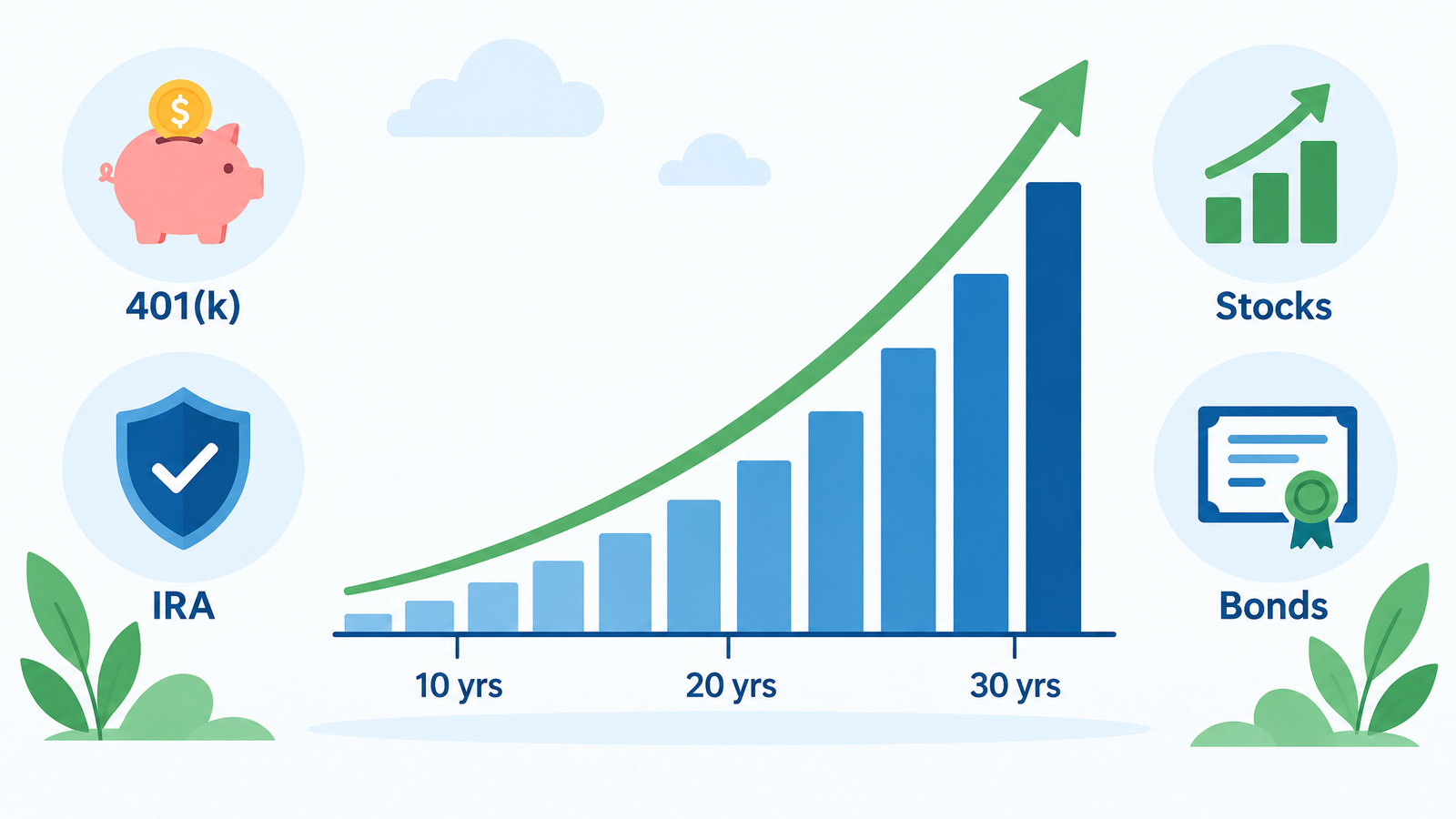
Here’s why the optimists are feeling good right now:
The Bull Market Is Still Alive
A 13.86% year-to-date return is nothing to sneeze at. Yes, the market has pulled back from its October 6 record high, but it’s still up significantly for the year. Analysts at Fidelity note that while the “slope” of the bull market has moderated, the broader trajectory remains upward. For long-term investors, that’s what matters.
AI Is a Secular Growth Story
The Anthropic IPO filing is just the latest sign that artificial intelligence isn’t a fad — it’s a fundamental reshaping of the economy. The “Undervalued Seven” — Nvidia, Alphabet, Broadcom, Microsoft, Meta, Amazon, and Tesla — continue to drive market gains, and analysts at Morningstar suggest these companies still have room to run. If you own broad index funds, you own a piece of this growth.
Dollar-Cost Averaging Still Works
For everyday investors, the best strategy remains simple: keep contributing to your 401(k) and IRA on a regular schedule, regardless of what the market is doing. In 2026, the 401(k) contribution limit is $24,500, with an additional $8,000 catch-up for those 50 and older (and up to $11,250 for those aged 60-63 if your plan allows). Maxing out these accounts — especially if your employer offers a match — is one of the most reliable wealth-building strategies available.
Strong Corporate Fundamentals
Nucor’s record demand, SoFi’s earnings beat, and the broader strength in infrastructure and data center spending suggest that the real economy is holding up. Companies with strong pricing power and durable competitive advantages are performing well — exactly the kind of businesses that long-term investors want to own.
At Your Career Place, we’ve always believed that time in the market beats timing the market. The investors who stayed invested through every October scare, every geopolitical crisis, and every Fed meeting have historically come out ahead. This October is no different.
The Doomer Perspective: “The Warning Signs Are Flashing — Don’t Get Complacent”
Of course, not everyone is feeling rosy about the current market environment. There are legitimate reasons to be cautious — and ignoring them could be costly.
Treasury Yields Are Competing With Stocks
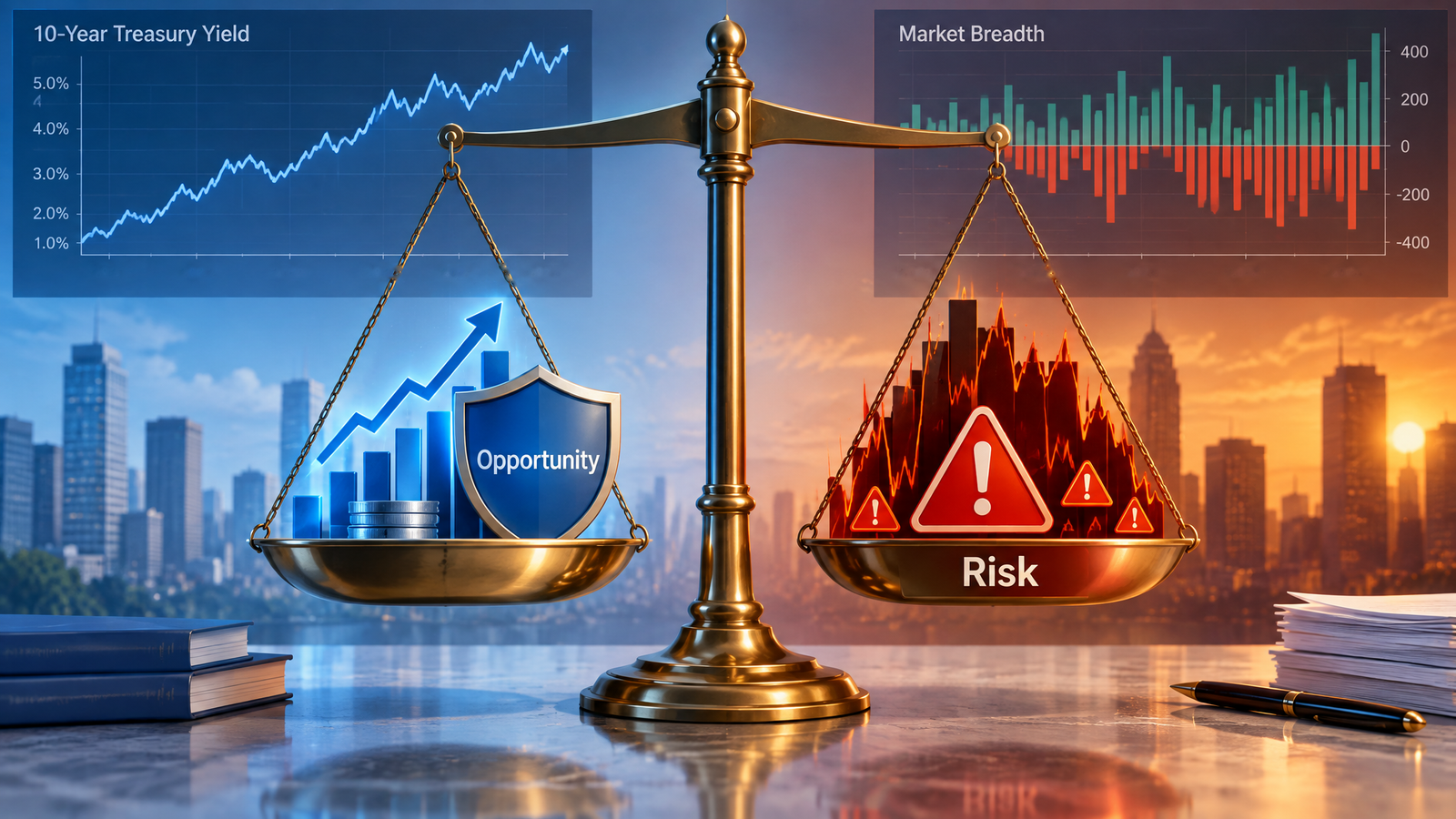
When the 10-year Treasury yield hits 5.35% — a 24-year high — that’s a serious competitor to stocks. Why take on the risk of equity investing when you can lock in a near-guaranteed 5%+ return from government bonds? This dynamic is putting real pressure on stock valuations, particularly for high-growth companies whose value depends on distant future earnings. Higher rates mean those future earnings are worth less today.
Market Breadth Is Dangerously Narrow
Here’s a sobering fact: the top 10 holdings in the S&P 500 account for approximately 39% of the index’s total weight. That means the “market” is really just a handful of mega-cap tech companies. If Nvidia, Apple, Microsoft, or Amazon stumble, the entire index feels it. Analysts at Strong Buy Analytics note that fewer stocks are participating in uptrends — a classic warning sign that the rally may be running on fumes.
The “Circular Deal” Problem
The Broadcom-Anthropic financing arrangement — where a chipmaker provides $63 billion in financing to a client buying its chips — has raised red flags among some analysts. If AI companies are relying on their suppliers to finance their own purchases, that’s a sign that the AI spending boom may be more fragile than it appears. A slowdown in AI capital expenditure could hit tech stocks hard.
Midterm Election Year Volatility
Historical data shows that midterm election years like 2026 tend to be among the most volatile in the presidential cycle, with higher intra-year drawdowns and more modest annual gains. We’re not out of the woods yet — the final months of the year could bring additional turbulence as political uncertainty intersects with economic headwinds.
Refinancing Risk Is Real
Companies that loaded up on cheap debt during the 2020-2021 low-rate era are now facing a “wall of maturities.” Refinancing that debt at today’s rates — 5%+ — is a serious burden for weaker companies. This could lead to a wave of credit stress, layoffs, and earnings disappointments in the months ahead.
Key Takeaways: What Should You Actually Do?
So where does that leave you, the everyday investor trying to make smart decisions with your hard-earned money? Here’s what the experts — and the team at Your Career Place — recommend:
1. Don’t Stop Contributing to Your Retirement Accounts
Regardless of market conditions, keep contributing to your 401(k) and IRA. Take full advantage of the 2026 contribution limits: $24,500 for 401(k)s, plus catch-up contributions if you’re 50 or older. If your employer matches contributions, make sure you’re capturing every dollar of that match — it’s free money.
Important note for high earners: If you earned $150,000 or more in 2025, your catch-up contributions must now be made as Roth contributions starting in 2026. Talk to your plan administrator to make sure you’re set up correctly.
2. Rebalance Your Portfolio
If you haven’t rebalanced recently, now is a good time. With tech stocks dominating the S&P 500, you may be more concentrated in that sector than you realize. Consider whether your current allocation still matches your risk tolerance and time horizon. Diversification across stocks, bonds, real estate, and other asset classes remains the best defense against volatility.
3. Consider Bonds as a Real Option
With Treasury yields near 5%, bonds are offering genuine competition to stocks for the first time in years. For investors approaching retirement or those with lower risk tolerance, adding some bond exposure makes sense. A balanced portfolio that includes quality fixed income can provide stability when equity markets get choppy.
4. Be Selective With Individual Stocks
If you invest in individual stocks, Q4 2026 rewards selectivity. Look for companies with strong pricing power, low debt, and near-term free cash flow. Avoid companies with heavy floating-rate debt that could struggle to refinance. The “Undervalued Seven” mega-caps may still have room to run, but don’t put all your eggs in one basket.
5. Keep an Emergency Fund
Before you invest another dollar in the market, make sure you have 3-6 months of living expenses in a high-yield savings account. With market volatility elevated and economic uncertainty real, having that cushion means you won’t be forced to sell investments at the worst possible time.
6. Stay Informed, Stay Calm
The biggest mistake investors make is letting fear or greed drive their decisions. October’s volatility — the AI swings, the oil spike, the Boeing drop — is normal market behavior. The investors who panic-sell during downturns and chase rallies during upswings consistently underperform those who stay disciplined and stick to their plan.
The Bottom Line
October 2026 is a reminder that investing is never a straight line. The S&P 500 is up nearly 14% for the year, AI is reshaping the economy, and corporate earnings are largely holding up. But Treasury yields are high, market breadth is narrow, and geopolitical risks are real. Both the Boomers and the Doomers have valid points.
The smartest move? Stay invested, stay diversified, and stay informed. At Your Career Place, we’re here to help you navigate the noise and make decisions that serve your long-term financial goals — not just the headlines of the moment.
Whether you’re just starting your investing journey or you’re a seasoned market veteran, the fundamentals haven’t changed: invest consistently, diversify broadly, manage risk wisely, and keep your eyes on the long game. That’s how wealth is built — one paycheck, one contribution, one smart decision at a time.
Disclaimer: This article is for informational and educational purposes only and does not constitute financial, investment, or tax advice. Always consult with a qualified financial advisor before making investment decisions. Past market performance is not indicative of future results. Investing involves risk, including the possible loss of principal.