

Budgeting in November 2026: Is Your Money Plan Surviving the Squeeze — or Cracking Under Pressure?
Budgeting in November 2026: Is Your Money Plan Surviving the Squeeze — or Cracking Under Pressure?
Let’s be honest: budgeting has never been glamorous. Nobody wakes up on a Saturday morning excited to track their grocery receipts or calculate how much they spent on subscriptions they forgot they had. But in November 2026, budgeting isn’t just a good idea — it’s practically a survival skill.
With inflation still running hotter than most of us would like, gas prices hovering around $4.37 a gallon nationally, and nearly half of Americans still living paycheck to paycheck, the pressure on household budgets is real and relentless. At Your Career Place, we believe that understanding your financial situation — clearly and honestly — is the first step toward changing it. So this week, we’re diving deep into the state of budgeting in America right now: what’s working, what’s not, and what the experts are saying you should do about it.

The State of American Budgets Right Now
The numbers tell a complicated story. On one hand, there’s some encouraging news: according to Debt.com’s 2026 budgeting survey, the share of Americans living paycheck to paycheck has dropped to 48% — down sharply from a record 69% in 2025. That’s real progress. Budget adoption is also up, with about 85% of survey respondents saying they use some form of budget, and 95% agreeing that rising costs make budgeting more critical than ever.
On the other hand, Pew Research Center data from October 2026 paints a sobering picture: 60% of U.S. adults say they don’t have enough income to live the life they want. More than four in ten Americans (44%) struggled to pay for at least one basic necessity — medical care, transportation, rent, or food — in the past year. Among lower-income households, that number jumps to 71%.
And inflation? It’s still a problem. Annual inflation is tracking around 4% as of late 2026, driven in part by energy price spikes tied to geopolitical tensions earlier in the year. Ground beef that used to cost $2 a pound now runs closer to $8 for some consumers. Gasoline is up more than a dollar per gallon compared to a year ago. These aren’t abstract statistics — they’re the reason your grocery bill feels like it doubled overnight.
The good news is that more people are fighting back with better tools and smarter strategies. Let’s look at what’s actually working.
The Budgeting Toolkit: What’s New in 2026
If you haven’t revisited your budgeting approach in a while, you might be surprised by how much has changed. The biggest shift? Artificial intelligence has moved from a gimmick to a genuine game-changer in personal finance apps.
Today’s top budgeting apps — think Monarch Money, YNAB (You Need a Budget), Rowan by Rocket Money, and Copilot Money — now offer AI features that go far beyond simple transaction categorization. We’re talking about apps that can predict upcoming cash flow problems, alert you before you overspend in a category, and even negotiate or cancel subscriptions on your behalf via text message.
About 24% of consumers are now using generative AI for money management, according to recent research. Interestingly, though, most people want AI to advise them — not to take over. The preference is for smart tools that help you make better decisions, not autonomous systems that make decisions for you. That’s a healthy instinct.
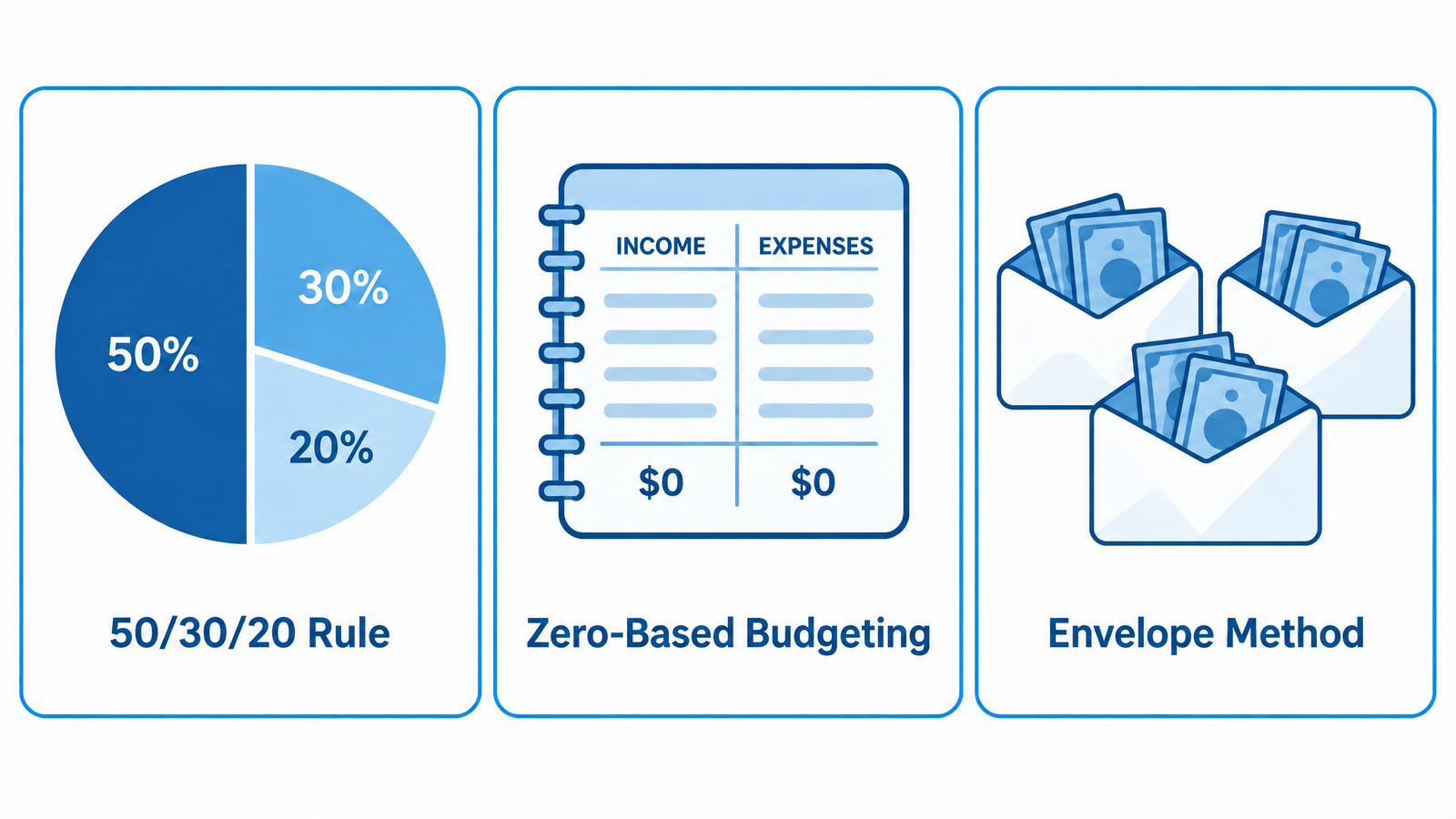
Meanwhile, the classic cash envelope method has had a massive cultural revival, racking up billions of views on TikTok under the “cash stuffing” trend. Sometimes the old ways really do work best. And “loud budgeting” — openly telling friends and family about your financial limits — has become a normalized social practice, especially among Gen Z. There’s real power in saying “I can’t afford that right now” without shame.
The Boomer Perspective: “Budgeting Is the Foundation — And It’s Never Been More Accessible”
For those who’ve been managing household finances for decades, the current moment — while challenging — isn’t without its silver linings. The tools available today are extraordinary compared to what previous generations had to work with. A spreadsheet, a smartphone app, or even a good old-fashioned notebook can give you more financial clarity than most people had access to 30 years ago.
The fundamentals haven’t changed, and that’s actually reassuring. The 50/30/20 rule — 50% of take-home pay for needs, 30% for wants, 20% for savings — has been a reliable framework for decades. Yes, inflation has pushed some households to adapt it (some experts now suggest a 70/20/10 split, where needs and wants share 70% of income), but the underlying principle remains sound: know where your money is going, and make intentional choices about it.
Financial experts at Fidelity recommend keeping essential expenses at 60% or less of take-home pay, allocating 30% to discretionary spending, and putting 10% toward near-term savings goals — while also targeting 15% of pre-tax income for retirement. That’s a lot of percentages, but the point is simple: structure matters. People who budget consistently, even imperfectly, are far better positioned than those who don’t budget at all.
The optimistic view is this: budgeting adoption is rising. More Americans are taking control of their finances than ever before. The cultural stigma around talking about money is fading. And the technology to help you budget smarter — from AI-powered apps to high-yield savings accounts — has never been more accessible or affordable. At Your Career Place, we see this as a genuine reason for hope.
Zero-based budgeting, where every dollar is assigned a job before the month begins, is gaining traction as a particularly powerful approach. When you know exactly where every dollar is going, there are no surprises — and no excuses. Tools like YNAB make this method manageable even for people who’ve never budgeted before.
The Doomer Perspective: “The Math Just Doesn’t Work for Too Many People”
Here’s the uncomfortable truth that no budgeting app can fix: for a significant portion of Americans, the problem isn’t a lack of budgeting discipline — it’s a lack of income. When 53% of U.S. adults don’t have enough emergency savings to cover three months of expenses, and 39% are using credit cards to buy groceries, that’s not a budgeting failure. That’s a structural economic problem.
The classic 50/30/20 rule assumes that 50% of your income is enough to cover your needs. But in many cities, rent alone can consume 50% or more of a household’s take-home pay. Add in food, transportation, utilities, and healthcare, and the math simply doesn’t work — no matter how disciplined you are. Ramsey Solutions has acknowledged this, noting that the 50% cap on essentials is unrealistic for many households facing today’s housing and food costs.
Inflation has been particularly brutal for lower-income and non-college-educated workers. Research from The Budget Lab at Yale found that noncollege graduates experienced inflation rates roughly 0.5 percentage points higher than college graduates in 2026, largely because transportation and gasoline make up a bigger share of their spending. And wage growth for these workers has lagged behind their college-educated counterparts since 2024.
Consumer sentiment reflects this reality. The Gallup Economic Confidence Index has been deeply negative — around -40 to -45 — through much of 2026. The New York Federal Reserve’s Survey of Consumer Expectations shows households anticipating continued high inflation and reporting deteriorating personal financial standings. Many Americans are working second and third jobs just to keep up.
The pessimistic view is that budgeting, while necessary, is not sufficient. Telling someone to “cut their subscriptions” when they’re struggling to pay for medical care is tone-deaf advice. The average American spends about $219 per month on subscriptions — often without realizing it — but canceling all of them won’t solve a $500 monthly rent gap. Structural solutions — wage growth, housing affordability, healthcare costs — are beyond the reach of any personal finance app.

Practical Strategies That Actually Help Right Now
Whether you’re feeling cautiously optimistic or genuinely stressed about your finances, here are strategies that financial experts consistently recommend for 2026’s economic environment:
1. Build a budget calendar. Map out every paycheck date and every bill due date for the month. Align bills to the closest preceding paycheck. If one paycheck is overloaded, contact service providers to shift due dates. Keep a $100–$300 buffer in your checking account to absorb timing mismatches.
2. Create sinking funds for irregular expenses. Car repairs, annual insurance premiums, holiday gifts — these feel like emergencies, but they’re actually predictable. Divide the annual cost by 12 and save that amount monthly. A $1,200 car repair becomes $100 a month. Suddenly it’s manageable.
3. Audit your subscriptions. The average American underestimates their monthly subscription spending by a significant margin. Go through your bank and credit card statements line by line. Cancel anything you haven’t used in the past 30 days. Apps like Rowan by Rocket Money can do this automatically.
4. Try the pay-yourself-first method. Before you spend a single dollar on anything discretionary, automatically route money to savings, retirement, and debt payoff. What’s left is yours to spend freely. This approach works especially well for people who find traditional budgeting too time-consuming — which, according to Debt.com, is now the #1 reason people don’t budget.
5. Consider “loud budgeting.” Tell the people in your life about your financial boundaries. You don’t have to share every detail — just enough to reduce the social pressure to overspend. “I’m saving for something important right now” is a complete sentence.
At Your Career Place, we know that financial stress doesn’t stay at home — it follows you to work, affects your performance, and impacts your career. Taking control of your budget isn’t just about money. It’s about reducing anxiety, building confidence, and creating the financial stability that lets you focus on what matters most.
Key Takeaways
- Budgeting adoption is rising — about 85% of Americans now use some form of budget, up from 46% in 2025, driven by economic uncertainty and rising costs.
- Inflation remains a real challenge — annual inflation is tracking around 4% in late 2026, with gas, food, and housing costs continuing to squeeze household budgets.
- AI budgeting tools are genuinely useful — apps like Monarch Money, YNAB, and Rowan by Rocket Money now offer predictive alerts, subscription management, and conversational financial coaching.
- The 50/30/20 rule is bending — many experts now suggest a 70/20/10 split as essential costs consume a larger share of income for many households.
- Structural challenges persist — for nearly half of Americans, the core problem is insufficient income, not insufficient discipline. Budgeting helps, but it’s not a complete solution.
- Simple strategies work — budget calendars, sinking funds, subscription audits, and pay-yourself-first automation are practical tools anyone can implement today.
The bottom line? Budgeting in November 2026 is harder than it should be for too many people — but it’s also more important than ever. Whether you’re thriving or just surviving, having a clear picture of your finances gives you options. And options are power.
Your Career Place is here to help you navigate not just your career, but your financial life too. Because the two are more connected than most people realize.
Disclaimer: This blog post is for informational and educational purposes only and does not constitute financial, investment, or legal advice. The information presented reflects publicly available data and expert opinions as of November 2026. Individual financial situations vary widely — please consult a qualified financial advisor before making any significant financial decisions. Your Career Place is not a licensed financial advisor.