

Job Audition Interviews in 2026: Are Employers Finally Seeing the Real You—or Just Getting Free Labor?
Job Audition Interviews in 2026: Are Employers Finally Seeing the Real You—or Just Getting Free Labor?
Let’s be honest. You’ve probably sat through an interview that felt like a performance review of your acting skills rather than your actual ability to do the job. You smiled, you STAR-method’d your way through behavioral questions, and you walked out wondering if anyone in that room actually knows whether you can perform. Well, in 2026, a growing number of employers are done guessing. They want proof. And they’re getting it through job audition interviews—also known as working interviews, work trials, or trial shifts.
But here’s the twist: what started as a smart way to verify skills has exploded into one of the most controversial hiring trends of the year. Some candidates are being asked to work three, four, even five full days without pay before receiving an offer. Others are handed real projects that their potential employer later uses in production. And with AI-generated applications now flooding recruiters’ inboxes, companies say they have no choice but to make candidates prove themselves in real time.
So is the job audition interview the fairest hiring innovation in decades, or is it just legalized exploitation dressed up in corporate jargon? At Your Career Place, we dug into the data, the headlines, and the real stories from candidates on the front lines. Here’s what you need to know.
What Is a Job Audition Interview, Really?
A job audition interview is exactly what it sounds like: instead of talking about what you can do, you do it. In hands-on fields like food service, retail, veterinary practices, and the trades, this might mean working a full shift alongside the team. In tech, marketing, and creative roles, it could mean spending several days on a real project, attending standups, and presenting your work to stakeholders.
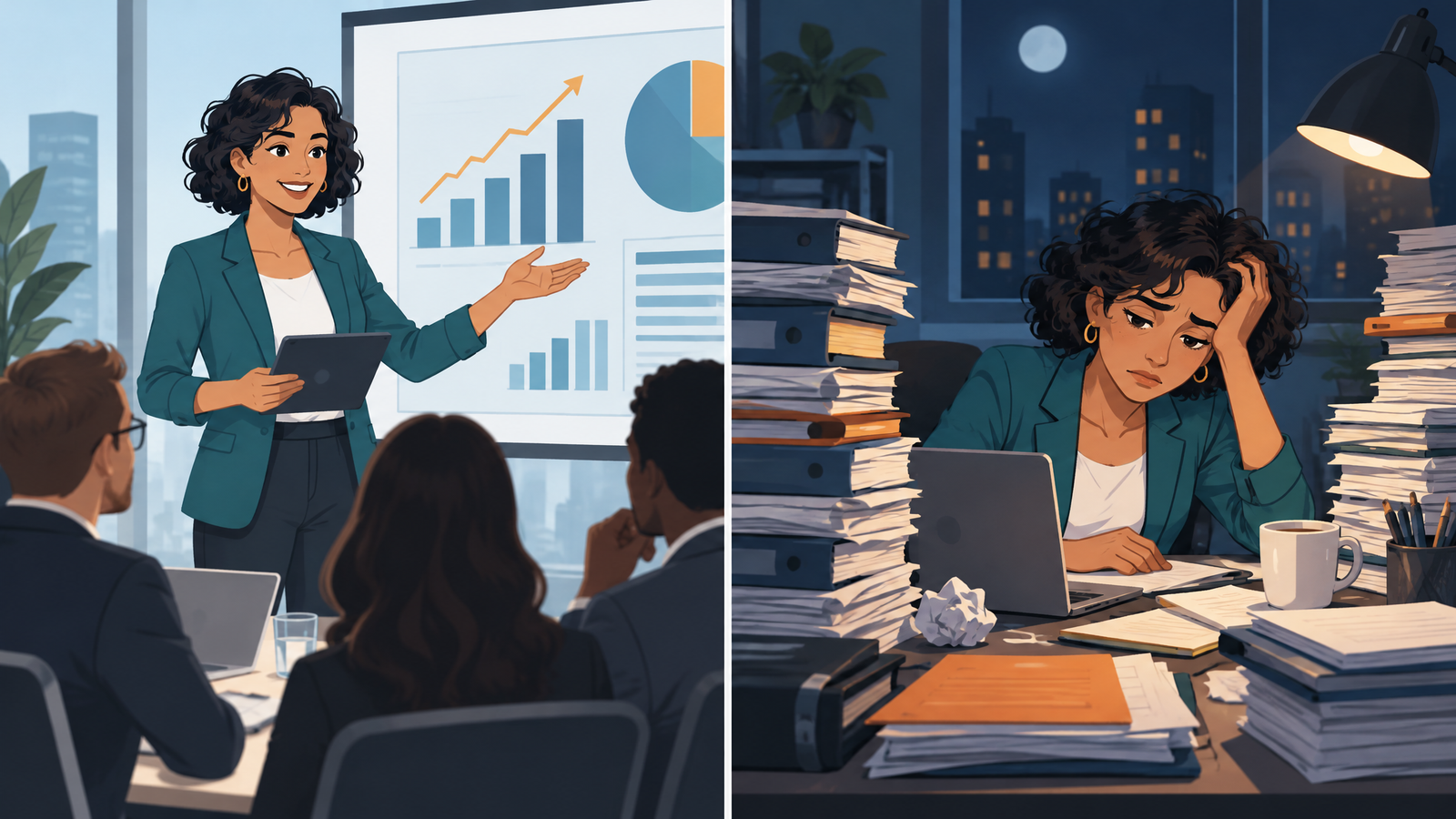
According to a 2025 survey by the National Association of Colleges and Employers, nearly two-thirds of employers now incorporate some form of skill-based assessment for entry-level roles. Fast Company reported in April 2026 that these trials are getting longer and more demanding, with some companies asking candidates to commit days or even weeks of unpaid work before making a hiring decision.
The trend is being driven by a perfect storm: AI-generated resumes and cover letters have made traditional screening nearly useless. Willo’s 2026 Hiring Trends Report found that 76.9% of hiring teams have encountered AI-generated or AI-assisted applications. When everyone’s resume looks perfect, employers say they need to see candidates in action to separate the real talent from the ChatGPT polish.
The Boomer’s Perspective: “Finally, a Hiring Process That Makes Sense”
If you’ve ever hired someone who interviewed brilliantly but couldn’t deliver on day one, you understand the appeal of job auditions. The Boomer perspective on this trend is straightforward: it works.
Traditional interviews are notoriously poor predictors of job performance. Research consistently shows that unstructured interviews are barely better than flipping a coin. Work samples, on the other hand, are among the most predictive hiring tools available. A well-designed job audition lets an employer see how a candidate solves problems, collaborates with a team, handles feedback, and manages real deadlines. It’s not theoretical. It’s not performative. It’s the job.
From the candidate side, job auditions can be a massive advantage. If you’re genuinely skilled, a trial lets you prove it in ways no resume ever could. You get to see the actual work environment, meet your potential teammates, and evaluate whether the company culture matches what was sold in the interview process. It turns the tables: instead of the company interrogating you, you both get to test-drive each other.
Some companies are doing this right. They cap trials at a few hours, pay candidates for their time, and treat the experience as a mutual evaluation. Fortune reported in September 2026 that progressive employers are framing these sessions as “paid tryouts” and explicitly telling candidates: “We’re evaluating you, but you should also be evaluating us.” That’s the kind of transparency that builds trust.
At Your Career Place, we’ve seen candidates land roles they never would have gotten through a traditional interview because their trial performance was undeniable. For skilled workers who may not interview well but execute flawlessly, job auditions are a godsend.
The Boomer takeaway? The best predictor of future job performance is current job performance. Job auditions cut through the noise of AI-generated applications, polished LinkedIn profiles, and rehearsed interview answers. They reveal who can actually do the work. And in a hiring market where 78.7% of organizations still believe final decisions should be human-led, watching someone work remains one of the most human things an employer can do.
The Doomer’s Perspective: “This Is Just Free Labor With Extra Steps”
Now let’s look at the dark side. Because for every company running a fair, capped, paid job audition, there are others pushing the boundaries into exploitation.
Fast Company’s April 2026 investigation into days-long, often unpaid work trials painted a grim picture. Candidates described being asked to complete real projects—projects that were later implemented by the company without compensation. Some were expected to attend multi-day team meetings, contribute strategic ideas, and produce deliverables that had clear commercial value. When they asked about payment, they were told this was “part of the interview process.”
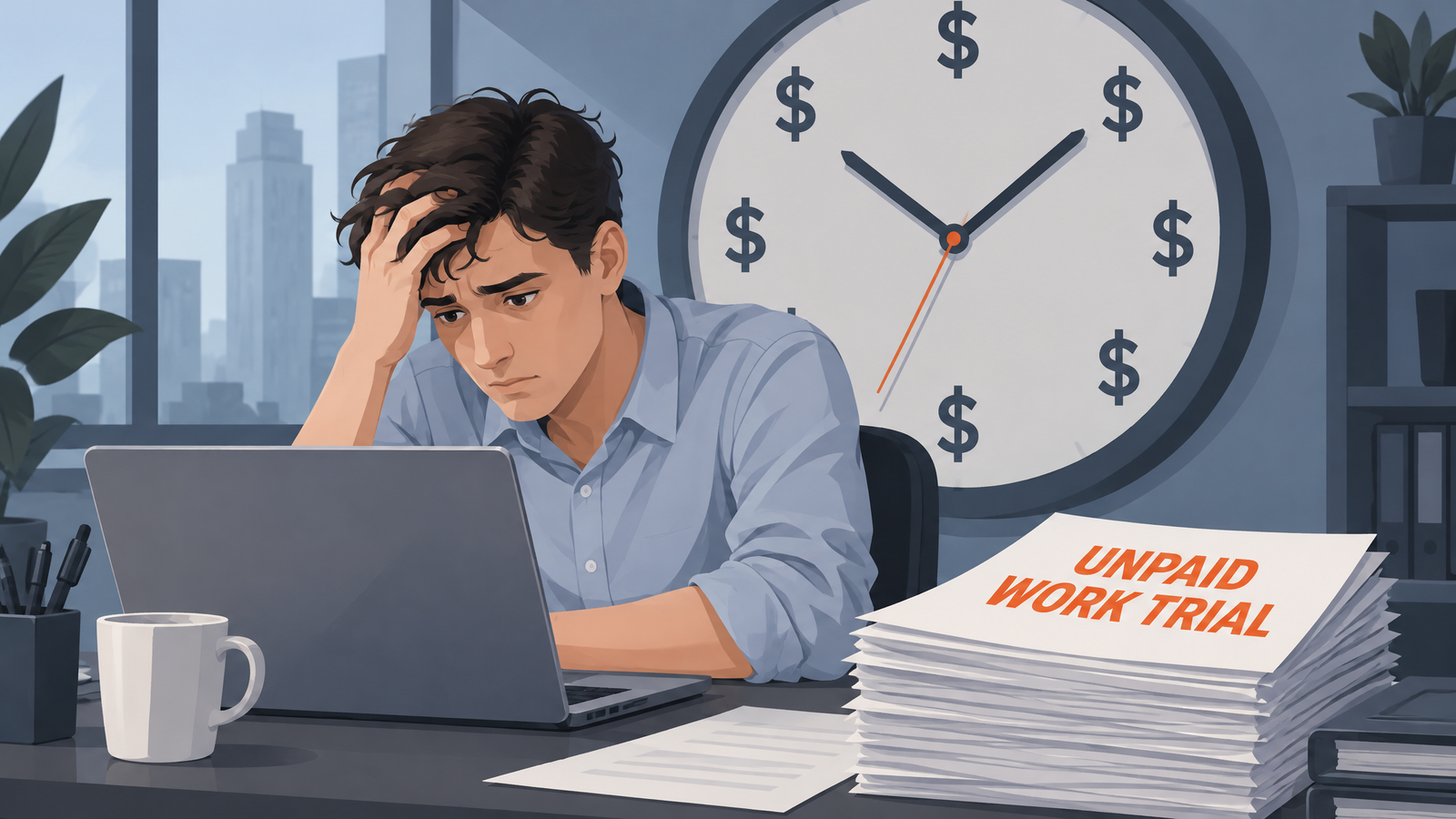
Only 12% of recruiters now view take-home assignments—a closely related format—as reliable indicators of a candidate’s true ability, according to OfferHack’s 2026 data. If the people administering these assessments don’t even trust them, why are candidates still being subjected to them?
The exploitation isn’t just financial. It’s about access. A candidate who is currently employed, caring for children, or working multiple jobs simply cannot afford to take three unpaid days off for a maybe-job. Job auditions become a filter that privileges people with savings, flexible schedules, and fewer caregiving responsibilities. In other words, they replicate and reinforce the very inequalities that structured interviews and skills-based hiring were supposed to reduce.
There’s also the legal question. Under the U.S. Fair Labor Standards Act, work that an employer “suffers or permits” to be performed is generally compensable. If a trial produces real value for the company, it should be paid. Period. Yet enforcement is inconsistent, and many candidates—especially early-career job seekers—don’t know their rights or fear that pushing back will cost them the offer.
Scope creep is another nightmare. What starts as a “two-hour assessment” morphs into a weekend project. What was pitched as a “collaborative session” becomes an unpaid consulting engagement. Industry commentators have started calling this the “job-market tax”—a penalty levied on anyone trying to change jobs in an economy where employers hold all the leverage.
At Your Career Place, we’ve heard from candidates who completed elaborate trials, received positive feedback, and then were ghosted—only to see their work ideas or project structures appear in the company’s public-facing products months later. That’s not an interview. That’s unpaid labor.
The Doomer takeaway? Job auditions are being weaponized. What could be a fair evaluation tool is, in too many cases, a way for companies to extract free work, filter out candidates who can’t afford to participate, and avoid the hard work of building a fair, structured hiring process. If you’re not getting paid and the work has commercial value, you’re not interviewing. You’re working.
Key Takeaways: How to Survive (and Maybe Win) a Job Audition Interview
Whether you see job auditions as a fair test or a corporate scam, the reality is they’re here to stay in 2026. Here’s how to protect yourself and maximize your chances:
1. Clarify the terms before you start. Ask directly: How long will this take? Will I be paid? What tasks will I be performing? Will my work be used by the company? Get answers in writing. If a company refuses to be transparent, that’s a red flag.
2. Know your rights. In the U.S., if you perform productive work that benefits the employer, you generally must be paid. Don’t let “it’s part of the interview” be an excuse for wage theft. If you’re unsure, consult your state labor board or a legal resource.
3. Push back on scope creep. If a two-hour assessment turns into a multi-day project, it’s reasonable to ask for compensation or a reduced scope. Professional boundaries are not unprofessional.
4. Treat it like day one. If you decide to proceed, show up ready to work. Employers evaluate your learning speed, teamwork, communication, and judgment. The social dynamics matter as much as the output.
5. Use it as a two-way evaluation. A job audition is also your chance to see how the team operates, how feedback is delivered, and whether the culture matches the pitch. Take notes. Ask questions. If the environment feels toxic during the trial, it won’t get better after you’re hired.
6. Document everything. Save your work, save the communications, save the feedback. If your trial work is later used without compensation, you’ll want a paper trail.
At Your Career Place, we believe the job audition interview isn’t inherently good or bad—it’s a tool, and like any tool, it can be used fairly or abused. The difference comes down to structure, transparency, and respect for the candidate’s time and labor. The companies that get this right will attract better talent. The ones that don’t will build reputations as exploitative, and in a tight labor market, reputation matters.
So the next time you’re asked to audition for a job, ask yourself: Is this a chance to shine, or a request to work for free? The answer will tell you everything you need to know about whether that company deserves you.