
Real Estate in November 2026: Is the Housing Market Finally Cracking — or Setting Up for a Comeback?
Real Estate in November 2026: Is the Housing Market Finally Cracking — or Setting Up for a Comeback?
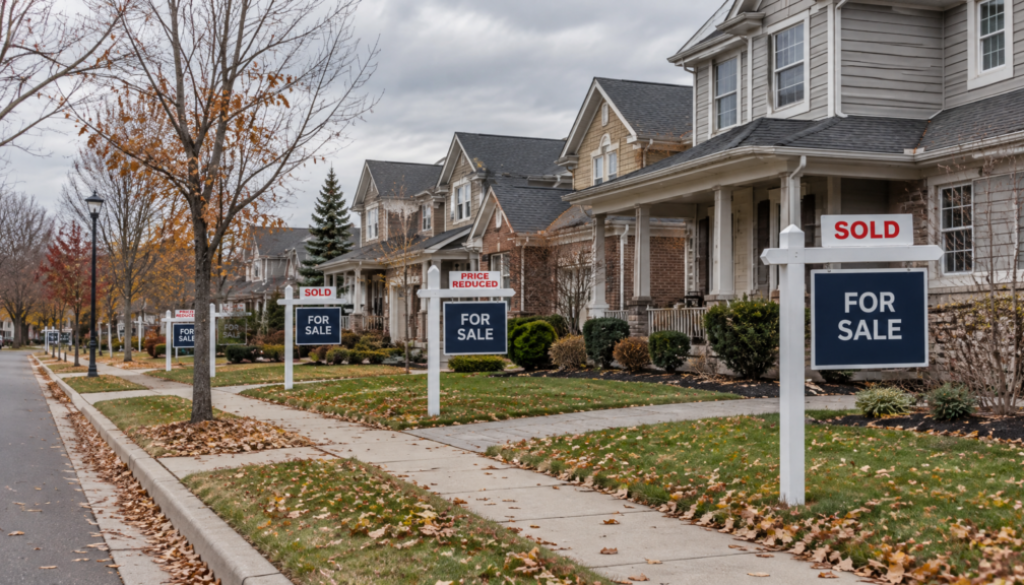
If you’ve been watching the housing market lately, you might feel like you’re stuck in a bad dream. Mortgage rates hovering above 7%. Home prices that — for the first time in over three years — are actually starting to dip. Existing-home sales at their lowest point since 2010. And builder confidence that just hit a 14-year low. It’s a lot to take in.
But here’s the thing: whether you’re a first-time buyer who’s been waiting on the sidelines, a homeowner wondering if now is the time to sell, or an investor trying to figure out where the opportunities are hiding, the real estate market in November 2026 is sending some very mixed signals. At Your Career Place, we believe that understanding those signals — and knowing how to read them from different angles — is the key to making smart financial decisions.
So let’s break it all down. What’s actually happening in the housing market right now? And what does it mean for your financial future?
What’s Actually Happening in the Housing Market Right Now
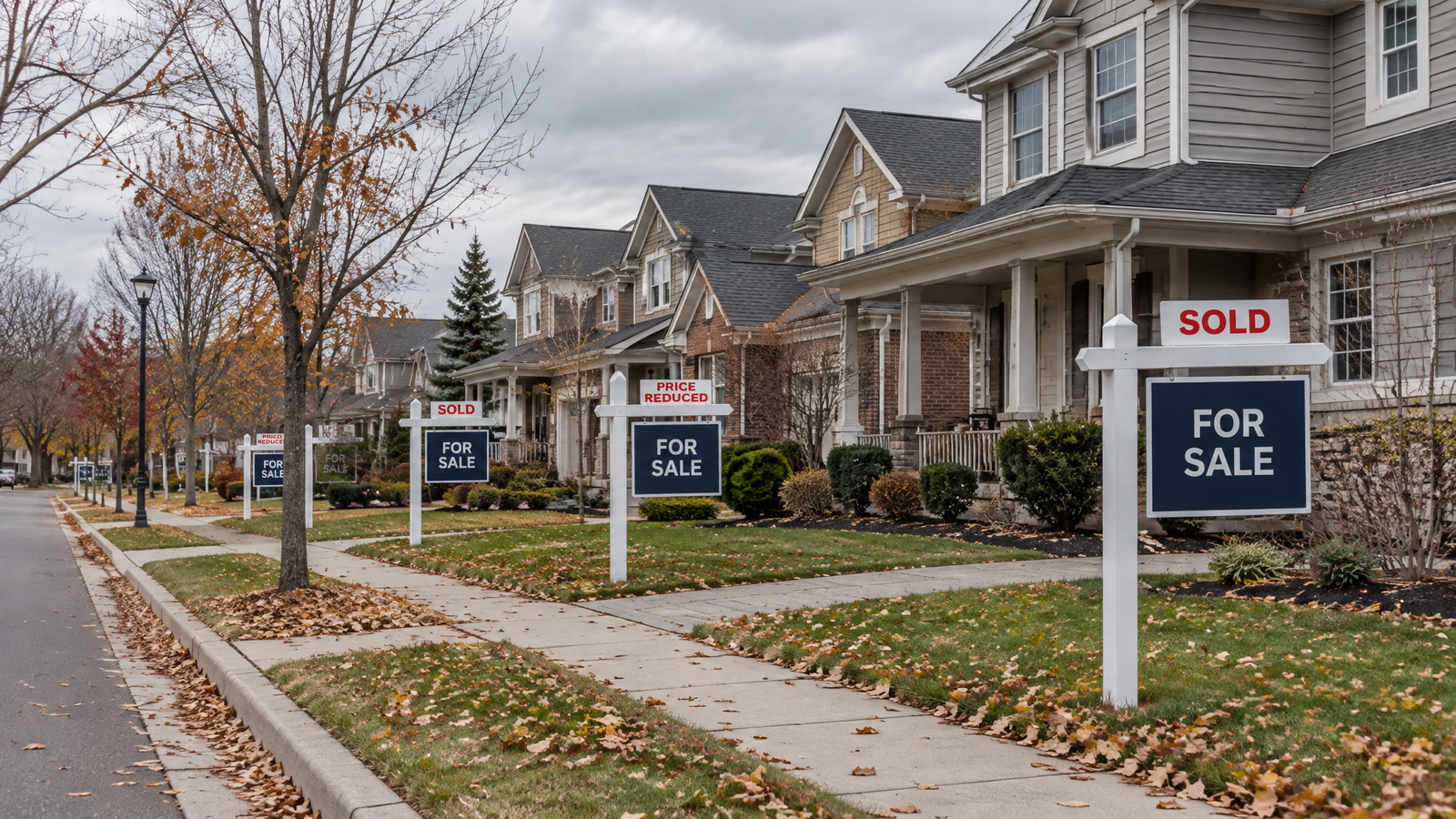
The numbers coming out of the real estate market this November are striking. Here’s a quick snapshot of where things stand:
- Home prices are falling. The median U.S. home-sale price dropped to $388,613 for the week ending November 8, 2026 — a 0.9% year-over-year decline. That might not sound like much, but it’s the first such decline since May 2023, and it’s a meaningful psychological shift in a market that seemed immune to gravity for years.
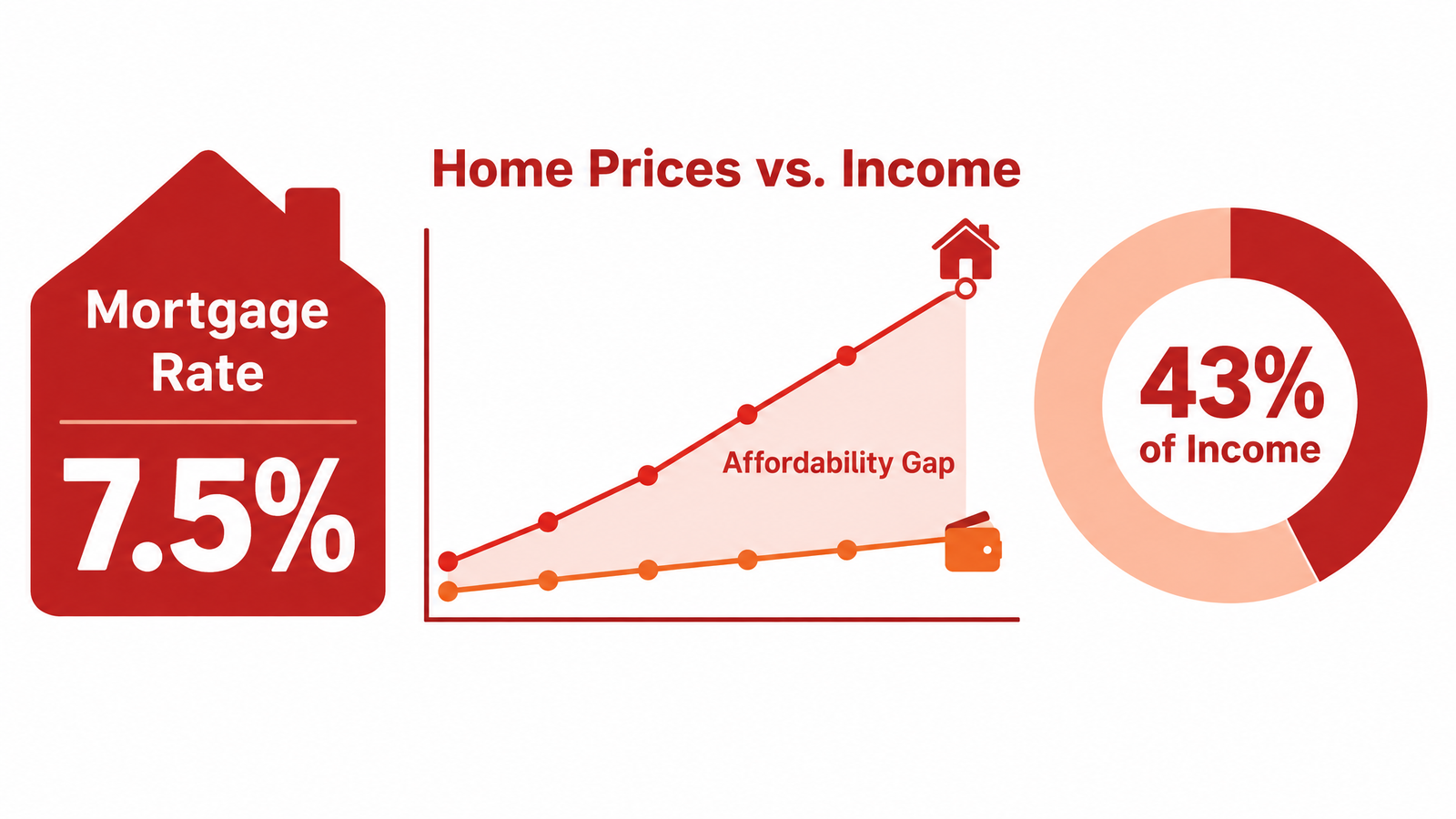
- Mortgage rates are brutal. The 30-year fixed mortgage rate averaged 7.33% in October and has since climbed to around 7.58% in mid-November — the highest levels since 2000. That’s not a typo. We’re talking about borrowing costs that haven’t been this high in a quarter century.
- Sales have cratered. Existing-home sales fell 5.5% month-over-month and 8.8% year-over-year in October 2026, hitting an annualized rate of just 3.75 million — the lowest since August 2010. Pending sales dropped 17% year-over-year, the steepest decline since 2023.
- Affordability is at crisis levels. Buying a median-priced home now requires about 43% of median household income. The traditional affordability threshold is 30%. In 98% of U.S. counties, homes are less affordable than their historical averages.
- Builders are pulling back. The National Association of Home Builders’ confidence index hit 25 in November — a 14-year low. Nearly half of builders are cutting prices, and 68% are offering incentives just to move inventory.
- The “lock-in effect” is real. About 78% of outstanding mortgages carry rates below 6%. That means millions of homeowners are essentially trapped — they can’t afford to sell and take on a new mortgage at today’s rates. New listings have declined for six consecutive weeks.
The picture is clear: this is one of the toughest housing markets in a generation. But as with most things in personal finance, the story isn’t entirely one-dimensional. There are two very different ways to look at what’s happening — and both have merit.
The Boomer Perspective: “This Is a Buying Opportunity in Disguise”
If you’re an optimist — or if you’ve lived through enough market cycles to know that downturns don’t last forever — you might see the current real estate landscape very differently. And honestly? There’s a solid case to be made.
Prices are finally coming down. After years of watching home prices climb seemingly without end, we’re now seeing the first meaningful price corrections in several years. In markets like Austin, prices are down 6.5% year-over-year. In the Sun Belt and Mountain West, buyers are finding real negotiating power for the first time in years. If you’ve been waiting for prices to come down, that wait is finally paying off in some markets.
Sellers are motivated. With 61% of homes selling below their original list price and roughly 15% of pending sales falling through, buyers who do show up have leverage they haven’t had in years. You can negotiate. You can ask for concessions. You can take your time. That’s a dramatic shift from the frenzied bidding wars of just a few years ago.
Inventory is rising. Active inventory is up 8.3% year-over-year, and total housing inventory has reached its highest level since early 2020. More choices mean better opportunities to find the right home at the right price.
Pent-up demand is enormous. The National Association of Realtors has noted that significant pent-up demand exists in the market. When rates eventually come down — and most economists believe they will, gradually, over the next 12–24 months — that demand could be released quickly, pushing prices back up. Buying before that happens could mean locking in today’s lower prices before the next wave of buyers arrives.
Real estate remains a long-term wealth builder. At Your Career Place, we’ve always emphasized that real estate, over the long haul, has been one of the most reliable wealth-building tools available to everyday Americans. Yes, the short-term picture is challenging. But if you’re buying a home to live in for 10, 15, or 20 years, today’s market conditions may look very different in hindsight.
Alternative real estate investments are thriving. Even if residential real estate feels too risky right now, the commercial and alternative real estate investment space is seeing strong activity. Industrial properties saw investment volume rise 52% year-over-year through Q3 2026. Data centers, senior housing, and specialty assets are attracting significant capital. For investors, there are still compelling opportunities — just not necessarily in the traditional single-family home market.
The Doomer Perspective: “This Could Get a Lot Worse Before It Gets Better”
Of course, not everyone is feeling optimistic. And if you’re looking at the same data through a more cautious lens, there are plenty of reasons to be concerned.
Rates aren’t coming down anytime soon. Fannie Mae’s current baseline model projects mortgage rates to remain around 7.2% through 2027 and into 2028. That’s not a brief blip — that’s years of elevated borrowing costs. Every month that rates stay high is another month that millions of potential buyers are priced out of the market.
The affordability math is brutal. When buying a median-priced home requires 43% of median household income, we’re not talking about a minor inconvenience. We’re talking about a structural barrier that’s locking an entire generation out of homeownership. And it’s not just buyers who are suffering — renters are feeling the squeeze too. Rental demand has surged 22% year-over-year, and 23% of renters reported being behind on payments at some point in the past year.
The lock-in effect could persist for years. With 78% of outstanding mortgages below 6%, the supply of homes for sale is likely to remain constrained for a long time. Even if rates drop to 6.5% or 6%, many homeowners won’t feel comfortable giving up their 3% or 4% mortgages. This “golden handcuffs” problem could keep inventory tight and prices elevated even as demand weakens.
Builder confidence is at a 14-year low. When builders aren’t building, the supply problem doesn’t get solved. High material costs (exacerbated by tariffs), labor shortages, and declining buyer traffic have pushed builder sentiment to levels not seen since the depths of the post-2008 housing crisis. That’s not a sign of a market about to bounce back.
Regional corrections could deepen. While some markets like San Francisco are still seeing price appreciation, others are in genuine correction territory. Austin is down 6.5% year-over-year. Nashville, Seattle, and other Sun Belt cities are seeing material price declines. If rates stay high and the economy softens, those corrections could accelerate.
The recovery timeline keeps getting pushed back. Experts who were predicting a housing market recovery in 2025 pushed it to 2026. Now they’re pushing it to 2027 or 2028. At some point, “the recovery is coming” starts to sound like a broken record. The team at Your Career Place thinks it’s important to be honest about this: there’s no guarantee that the market bounces back on any particular timeline.
Key Takeaways: What Should You Actually Do?
So where does that leave you? Whether you’re a buyer, seller, renter, or investor, here are the practical takeaways from the current real estate landscape:
If You’re Thinking About Buying
- Don’t try to time the market perfectly. Nobody rings a bell at the bottom. If you find a home you love at a price you can genuinely afford (not just barely afford), and you plan to stay for at least 7–10 years, the current market may actually work in your favor — especially in markets where prices are correcting.
- Run the real numbers. At 7.5% on a $400,000 mortgage, your monthly payment is roughly $2,800 — before taxes, insurance, and maintenance. Make sure that fits comfortably within your budget, not just barely.
- Negotiate hard. With 61% of homes selling below list price and sellers motivated, this is one of the best buyer’s markets in years in terms of negotiating power. Use it.
- Consider an adjustable-rate mortgage carefully. ARMs can offer lower initial rates, but they carry risk if rates don’t come down as expected. Understand what you’re signing up for.
If You’re Thinking About Selling
- Price it right from day one. Overpriced homes are sitting. With 61% of homes selling below list price, buyers have options. A well-priced home will sell; an overpriced one will just accumulate days on market.
- Be prepared for a longer process. The days of accepting an offer in 48 hours are largely over in most markets. Plan for a longer selling timeline.
- Consider your next move carefully. If you sell, where are you going? If you’re moving to a rental, that’s one thing. But if you’re buying again, you’ll be taking on a new mortgage at today’s rates. Make sure the math works.
If You’re an Investor
- Look beyond single-family residential. Industrial, data centers, senior housing, and other alternative real estate sectors are seeing strong investment activity. Don’t limit yourself to the traditional playbook.
- REITs offer real estate exposure without the headaches. If you want real estate in your portfolio but don’t want to deal with tenants, maintenance, and illiquidity, Real Estate Investment Trusts (REITs) are worth exploring.
- Cash flow is king right now. With financing costs this high, any investment property needs to generate strong cash flow from day one. Speculative appreciation plays are much riskier in this environment.
If You’re Renting
- Don’t feel pressured to buy just because you “should.” In many markets, renting is genuinely the smarter financial choice right now. The rent-vs-buy math has rarely been this lopsided in favor of renting.
- Build your financial foundation. Use this time to build your down payment fund, improve your credit score, and strengthen your overall financial position. When the market does shift, you’ll be ready.
The Bottom Line
The real estate market in November 2026 is genuinely challenging — there’s no sugarcoating that. Mortgage rates at 7.5%, home sales at 16-year lows, and affordability at crisis levels are not minor headwinds. They’re significant structural challenges that are reshaping who can participate in the housing market and on what terms.
But markets are cyclical. The lock-in effect will eventually loosen. Rates will eventually come down — even if “eventually” means 2027 or 2028. Pent-up demand is real and substantial. And for buyers in the right markets with the right financial foundation, today’s conditions offer opportunities that simply didn’t exist two or three years ago.
At Your Career Place, our advice is always the same: make decisions based on your personal financial situation, your timeline, and your goals — not on fear or FOMO. Whether you’re buying, selling, renting, or investing, the best real estate decision is the one that makes sense for your life and your finances.
Stay informed, stay patient, and stay focused on the long game. The housing market will find its footing again — and when it does, the people who made smart, disciplined decisions during the tough times will be the ones who come out ahead.
Disclaimer: This article is for informational and educational purposes only and does not constitute financial, investment, or real estate advice. Real estate markets vary significantly by location, and individual circumstances differ. Always consult with a qualified financial advisor, real estate professional, or mortgage specialist before making any real estate or investment decisions. Past market performance is not indicative of future results.