
Career Transitions in 2026: How to Successfully Navigate Your Next Big Move
Career Transitions in 2026: How to Successfully Navigate Your Next Big Move
Thinking about making a career change? You’re far from alone. In 2026, career transitions have become one of the most talked-about topics in the professional world — and for good reason. Whether you’re feeling stuck in your current role, eyeing a booming new industry, or simply craving more meaning in your work, the landscape for career changers has never been more dynamic. Here at Your Career Place, we’ve been watching these trends closely, and we’re here to help you make sense of what’s happening — and what it means for you.

The State of Career Transitions in 2026: What the Data Says
The numbers are striking. According to recent research, 52% of American employees are currently considering a career change, and 44% are actively in the planning stages. That’s not a fringe phenomenon — that’s more than half the workforce questioning whether they’re in the right field.
The average age for making a career shift is 39, and the average person will hold approximately 12 jobs over their lifetime. But what’s really changed in 2026 is the why behind these moves. While salary remains a top motivator (39% of career changers cite higher pay as their primary driver), professionals are increasingly motivated by purpose, flexibility, and long-term job security in the face of rapid technological change.
Here’s what’s fueling the wave of career transitions right now:
- AI-driven restructuring: Artificial intelligence is reshaping entire industries, making some roles obsolete while creating entirely new ones. Over 50% of employers have now removed formal degree requirements for specific roles, opening doors for career changers who can demonstrate skills rather than credentials.
- Skills-based hiring: The shift away from degree requirements has dramatically lowered barriers for industry transitions. Employers are increasingly evaluating candidates on what they can do, not just where they went to school.
- The salary gap: Annual raises for staying put typically run 3–5%, while a strategic career move can yield an average salary increase of 14.8%. That math is hard to ignore.
- The “tech-to-trades” migration: White-collar workers are increasingly pivoting to skilled trades — electricians, HVAC technicians, solar installers — that are resistant to automation and offer strong earning potential.
- Green energy and healthcare growth: Climate policy and an aging population are creating massive demand in sectors like renewable energy, digital health, and healthcare-adjacent roles.
The good news? The outcomes for career changers are largely positive. 80% of career changers report being happier in their new field, and 77% achieve equal or higher earnings within two years of making the switch. Only 17% express regret — and the most common regret is that they didn’t make the change sooner.

The Boomer Perspective: Career Transitions Are a Sign of Strength, Not Instability
If you’re looking for reasons to feel optimistic about career transitions in 2026, there’s plenty of evidence to support a hopeful outlook. The structural changes happening in the labor market are creating genuine opportunities for those willing to adapt.
Consider the rise of skills-based hiring. For decades, career changers faced a frustrating catch-22: you couldn’t get experience without a job, and you couldn’t get a job without experience. But as employers increasingly focus on demonstrated competencies over formal credentials, that barrier is crumbling. Platforms offering Google Career Certificates, AWS certifications, and industry-specific badges are helping professionals transition 40% faster than those who rely solely on networking.
The emergence of portfolio careers is another reason for optimism. Fractional work — where professionals serve as a CFO, CMO, or Growth Lead for multiple companies simultaneously — is becoming a primary professional strategy rather than a fallback option. This model allows experienced professionals to leverage their expertise across multiple clients, often earning more than they would in a single full-time role.
There’s also the matter of employer-funded reskilling. Many organizations maintain hidden or under-utilized reskilling budgets that employees simply don’t know about. If you’re considering a transition, it’s worth building a business case for your current employer to fund your upskilling — you might be surprised by what’s available.
Perhaps most encouragingly, the data shows that career transitions are increasingly normalized. Hiring managers in 2026 are far less likely to view a career change as a red flag. In fact, with an 81% increase in job postings referencing “skills-based hiring” in 2025/2026, employers are actively signaling that they value what you can do over where you’ve been.
At Your Career Place, we believe that a well-planned career transition isn’t a risk — it’s an investment in your future. The professionals who thrive in the coming decade will be those who treat their careers as evolving portfolios, not static job titles.

The Doomer Perspective: Career Transitions Are Harder Than They Look
Before you hand in your resignation letter, it’s worth taking a clear-eyed look at the very real challenges that career changers face in 2026. The optimistic headlines don’t always capture the full picture.
First, the job market itself has become more demanding. Hiring cycles have lengthened significantly — senior and director-level searches that once took 6–8 weeks now routinely extend to 4–6 months. Companies are increasingly prioritizing “Day 1” contributors over candidates who need time to grow into a role. For career changers who are, by definition, coming in with less direct experience, this creates a significant headwind.
The “entry-level paradox” is another brutal reality. A staggering 77% of graduates report that entry-level positions often require unreasonable amounts of experience. If you’re pivoting into a new field, you may find yourself competing for junior roles against candidates who are years younger and willing to accept lower salaries — while you’re trying to maintain your current standard of living.
Financial risk is real and often underestimated. Approximately 30% of career changers experience temporary pay cuts, with recovery often taking 12–18 months. Financial experts strongly advise building a 6–12 month emergency fund before making a move — advice that’s easier to give than to follow when you’re eager to escape a job you hate.
There’s also the psychological toll. Career transitions require detaching your sense of identity from your past titles and expertise — a process that can be deeply disorienting. The temptation to “panic quit” before a new path is clearly defined is real, and acting on burnout rather than genuine misalignment can lead to poorly timed, reactive decisions that make things worse, not better.
And then there’s the translation gap. Even if your skills are genuinely transferable, industry-specific terminology can make your experience invisible to hiring managers in a new field. Reframing your accomplishments in the language of a new industry is harder than it sounds, and many career changers underestimate how much time and effort this requires.
The bottom line from the doomer perspective: career transitions are possible, but they’re rarely as smooth or as fast as the success stories suggest. Going in with realistic expectations — and a solid financial cushion — is essential.
Key Takeaways: What You Need to Know About Career Transitions in 2026
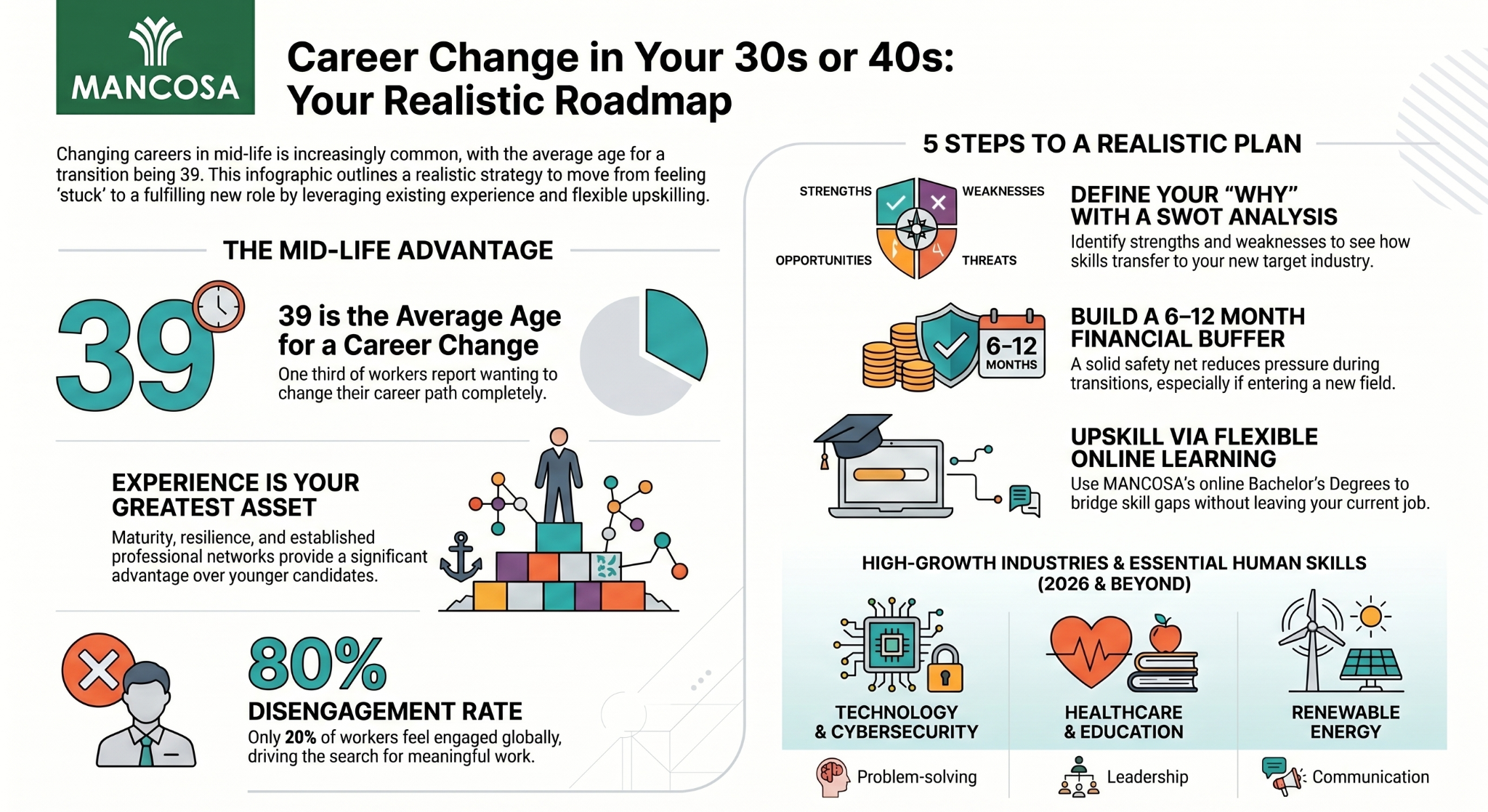
Whether you’re leaning toward the optimistic or cautious view, here are the most important things to keep in mind as you consider a career transition:
- Diagnose before you act. Are you experiencing burnout (temporary pressure that might resolve with rest or a different role) or genuine career misalignment (a deeper lack of purpose that requires a real pivot)? The answer should drive your strategy.
- Leverage your transferable skills. Successful pivots typically require at least 40–50% skill overlap between your current role and your target. Identify your meta-skills — leadership, communication, data literacy, project management — and learn to translate them into the language of your target industry.
- Test before you leap. Rather than quitting abruptly, explore your target field through side projects, freelance work, or volunteering. This builds a portfolio and validates your interest without risking financial stability.
- Invest in targeted credentials. Micro-credentials and industry-specific certifications can accelerate your transition significantly. Professionals who use targeted certifications often transition 40% faster than those who rely solely on networking.
- Build your financial runway. Aim for 6–12 months of emergency savings before making a major move. A financial cushion gives you the freedom to be strategic rather than desperate.
- Network for insight, not just jobs. Conduct informational interviews with people who have successfully made similar transitions. Understanding the day-to-day realities of your target field — and building internal advocates — is often more valuable than sending cold applications.
- Update your personal brand. Revamp your resume and LinkedIn profile to reflect your new direction, using keywords from target job descriptions to ensure you pass Applicant Tracking Systems (ATS).
Conclusion: Your Career Transition Starts with a Plan
Career transitions in 2026 are both more accessible and more challenging than ever before. The structural shifts in the labor market — skills-based hiring, AI-driven restructuring, the rise of new industries — have created genuine opportunities for those willing to adapt. But the path from where you are to where you want to be requires careful planning, realistic expectations, and a willingness to invest in yourself.
Here at Your Career Place, we know that navigating a career transition can feel overwhelming. That’s why we’re committed to providing you with the research, tools, and perspectives you need to make informed decisions about your professional future. Whether you’re just starting to explore your options or you’re ready to make your move, we’re here to help you every step of the way.
The data is clear: most people who make a thoughtful career transition end up happier, more fulfilled, and often better compensated. The key word is thoughtful. Take the time to plan, prepare, and position yourself strategically — and your next chapter could be your best one yet.
Ready to explore your career transition options? Visit Your Career Place for more resources, tools, and expert guidance on navigating your professional journey.