

AI Investing in 2026
Is the AI-Fueled Bull Market Your Friend or Your Foe?
By Your Career Place | June 17, 2026
If you’ve glanced at your investment portfolio lately and felt a mix of excitement and unease, you’re not alone. The stock market has been on a tear in 2026, powered by an artificial intelligence revolution that’s reshaping entire industries. But beneath those record highs, a more complicated story is unfolding — one that could either supercharge your retirement savings or leave you dangerously exposed if you’re not paying attention.
At Your Career Place, we believe that understanding your money is just as important as understanding your career. So let’s break down what’s really happening in the investing world right now, what the optimists are cheering about, and what the pessimists are warning you to watch out for.
What’s Happening in the Markets Right Now
The first half of 2026 has been defined by one word: AI. The artificial intelligence “supercycle” is driving massive corporate spending — major cloud companies are expected to pour between $670 billion and $754 billion into data center buildouts this year alone. That spending is projected to account for up to 50% of the S&P 500’s earnings growth in 2026.
The numbers back it up. S&P 500 corporate earnings are forecast to grow by an impressive 24% to 25% this year, and major investment banks have responded by raising their year-end targets:
- Goldman Sachs is targeting 8,000 on the S&P 500
- Citigroup has set its sights on 8,100
- J.P. Morgan is calling for 7,600
Meanwhile, the Federal Reserve is holding the federal funds rate steady in the 3.50%–3.75% range. With May’s Consumer Price Index hitting a three-year high of 4.2%, the Fed isn’t in any rush to cut rates. In fact, nearly 70% of economists now expect rates to stay elevated through the rest of 2026 — and some are even pricing in the possibility of a rate hike if inflation doesn’t cool down.
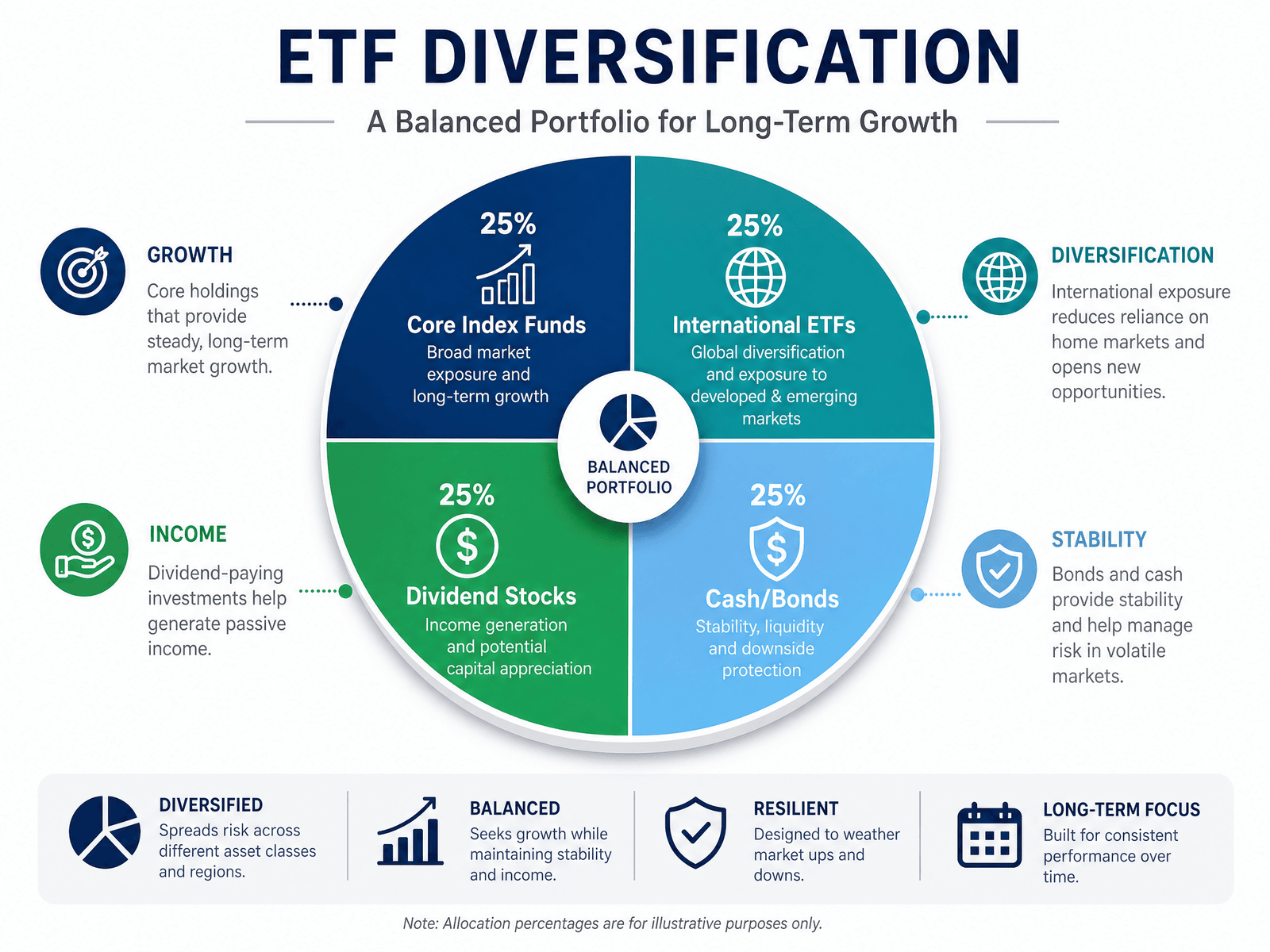
On the ETF front, investors are getting smarter. After years of piling into S&P 500 index funds dominated by a handful of tech giants, money is now rotating into equal-weight ETFs, international funds, and actively managed ETFs. For the first time ever, there are more active ETFs on the market than passive ones — a sign that investors want more control and customization in their portfolios.
And then there’s the dividend comeback. Amid concerns about sky-high valuations and AI-driven volatility, investors are flocking back to stable, income-generating stocks in sectors like consumer staples, utilities, healthcare, and real estate investment trusts (REITs).
The Boomer Perspective: “This Bull Market Has Real Legs — Don’t Miss It”
If you’re an optimist — or what we like to call a “Boomer” in our weekly debate — the current investing landscape looks like a genuine opportunity, not a trap.
Here’s the case for optimism:
Earnings Growth Is Real, Not Hype
Unlike the dot-com bubble of the late 1990s, today’s AI-driven rally is backed by actual profit growth. Companies are spending billions on AI infrastructure because it’s generating real returns. When Goldman Sachs raises its S&P 500 target to 8,000 based on a 24% earnings growth forecast, that’s not wishful thinking — it’s math. For long-term investors, this kind of fundamental earnings growth is exactly what you want to see underpinning a bull market.
Cash Is Finally Paying You Something
With the Fed holding rates elevated, your savings account, money market fund, and short-term Treasury ETFs are actually earning meaningful yields for the first time in years. High-yield savings accounts and instruments like the SGOV ETF (which tracks short-term U.S. Treasury bills) are offering attractive, low-risk returns. For conservative investors or those nearing retirement, this is a genuine gift — you can earn a decent return without taking on significant risk.
Diversification Is Working Again
The smart money is rotating into equal-weight ETFs, international stocks, and dividend payers — and it’s paying off. Non-U.S. markets, particularly in emerging Asia, are offering lower valuations and solid growth prospects. Dividend growth stocks have consistently outperformed the broader market in 2026. The old-school strategy of owning quality companies that pay you to hold them is back in fashion, and for good reason.
AI Tools Are Democratizing Investing
Platforms like Wealthfront, Betterment, and Fidelity Go are using AI to give everyday investors access to sophisticated portfolio management at a fraction of the cost of a traditional financial advisor. Tax-loss harvesting, automatic rebalancing, and goal-based investing are no longer just for the wealthy. At Your Career Place, we see this as a massive win for working professionals who want to grow their wealth without spending hours managing their portfolios.
The “Picks and Shovels” Play Is Smart
You don’t have to bet on which AI company will “win” to profit from the AI revolution. Investing in the infrastructure that makes AI possible — semiconductors, memory chips, data centers, and the utilities that power them — is a more diversified and arguably safer way to participate in the AI boom. Companies like Duke Energy are now being considered growth stocks because of the massive electricity demand from AI data centers. That’s a fascinating shift that creates real opportunities for income-oriented investors.
The Doomer Perspective: “This Market Is Dangerously Overextended”
Now for the other side of the coin. If you’re a “Doomer” — someone who sees the risks lurking beneath the surface — there are some genuinely concerning signals in today’s market that deserve serious attention.
Concentration Risk Is at Historic Levels
The S&P 500 is supposed to represent 500 of America’s largest companies. But in reality, a tiny handful of AI-related mega-caps are driving the vast majority of the index’s gains. If you own a standard S&P 500 index fund, you’re not as diversified as you think — you’re making a concentrated bet on a few tech giants. When those stocks sneeze, your entire portfolio catches a cold. The rotation into equal-weight ETFs is a direct response to this problem, but most everyday investors haven’t made the switch yet.
Valuations Are Historically Expensive
The S&P 500 is currently trading at around 21 times forward earnings. That’s historically expensive. When you pay a high price for future earnings, you’re essentially borrowing returns from the future. If earnings growth disappoints — even slightly — the market could reprice sharply downward. History shows that buying at high valuations tends to lead to lower long-term returns, even if the short-term momentum looks great.
Inflation Isn’t Going Away Quietly
May’s CPI reading of 4.2% — a three-year high — is a flashing warning sign. Persistent inflation erodes the real value of your investment returns. It also keeps the Fed in a holding pattern, or worse, forces them to raise rates further. A rate hike in this environment could be a significant shock to a market that’s priced for perfection. Geopolitical risks, including ongoing conflicts that could trigger energy price spikes, add another layer of uncertainty to the inflation outlook.
The “Yield Trap” Is Real
As investors rush into dividend stocks for safety and income, there’s a real danger of falling into what experts call a “yield trap.” A stock with an unusually high dividend yield can be a sign that the company is in financial distress — the stock price has fallen because the business is struggling, making the yield look attractive on paper. If the company cuts its dividend, you lose both the income and suffer a capital loss. Always look beyond the yield number to the company’s payout ratio, balance sheet health, and competitive position.
AI Hype Could Outpace Reality
The $670+ billion being spent on AI infrastructure is an enormous bet on future returns. But what if the productivity gains from AI take longer to materialize than expected? What if the “AI supercycle” hits a speed bump — a major model failure, a regulatory crackdown, or simply a period where the technology doesn’t deliver on its promises? The companies spending billions on data centers need those investments to pay off. If they don’t, earnings could disappoint dramatically, and the stocks that have been propping up the market could fall hard.
Key Takeaways: What Should You Actually Do?
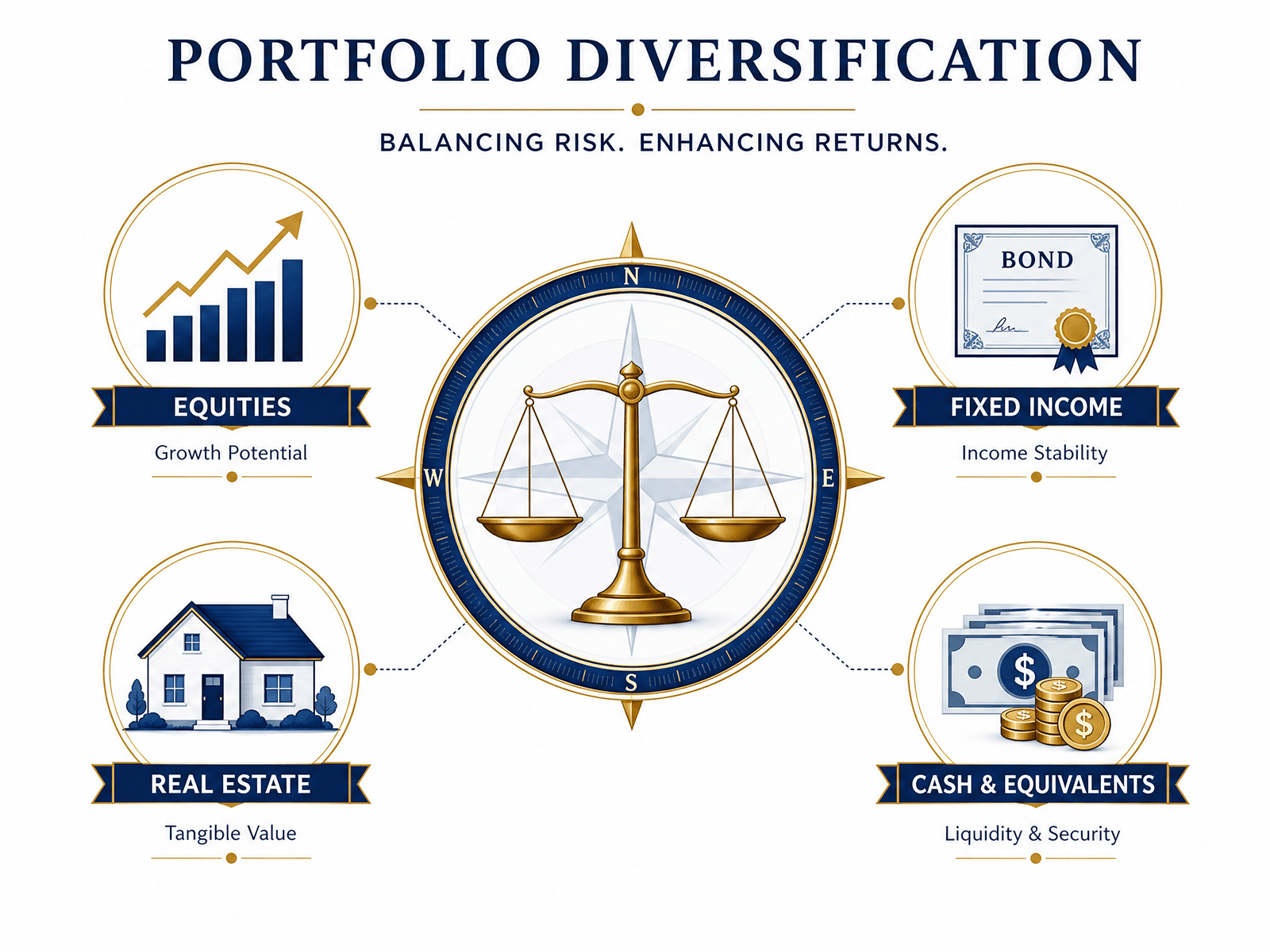
Whether you lean Boomer or Doomer, the smartest investing strategy in mid-2026 is one that acknowledges both the opportunities and the risks. Here’s what the experts — and the team at Your Career Place — suggest you consider:
- Check your concentration. Log into your brokerage account and look at your actual holdings. If your portfolio is heavily weighted toward a few mega-cap tech stocks (directly or through an S&P 500 index fund), consider whether that level of concentration matches your risk tolerance. Equal-weight ETFs like RSP or international funds like VXUS can help you diversify more meaningfully.
- Don’t ignore cash. With rates elevated, keeping a portion of your portfolio in high-yield savings, money market funds, or short-term Treasury ETFs is a legitimate strategy — not just a sign of fear. It provides a buffer during volatility and a source of funds to deploy when opportunities arise.
- Embrace the “Core-Satellite” approach. Use low-cost, broad-market index funds (like VOO or VTI) as the stable core of your portfolio. Then add smaller “satellite” positions in thematic areas — AI infrastructure, international markets, dividend payers — to target specific opportunities and reduce overall risk.
- Prioritize dividend sustainability over yield. If you’re building an income portfolio, focus on companies with strong competitive advantages, healthy balance sheets, and payout ratios below 75%. Sectors like consumer staples, utilities, and healthcare offer a good starting point.
- Consider AI-powered investing tools. Platforms like Wealthfront, Betterment, Fidelity Go, and Schwab Intelligent Portfolios offer sophisticated, low-cost portfolio management. They’re not perfect, but for many working professionals, they’re a significant upgrade over doing nothing or making emotional decisions.
- Rebalance regularly. Markets move fast. A portfolio that was perfectly balanced six months ago may now be dangerously overweight in one sector. Set a schedule — quarterly or semi-annually — to review and rebalance your holdings back to your target allocation.
- Watch the Fed closely. Any shift in tone from Fed Chair Kevin Warsh could move markets significantly. Stay informed, but don’t make knee-jerk reactions to every Fed statement. Your long-term plan should be able to weather short-term rate volatility.
The Bottom Line
The investing landscape in mid-2026 is genuinely exciting — and genuinely risky. The AI revolution is creating real wealth and real opportunities, but it’s also creating a market that’s more concentrated, more expensive, and more vulnerable to disappointment than it’s been in years.
The good news? You don’t have to choose between being a Boomer or a Doomer. The smartest investors are doing both: participating in the upside through diversified, low-cost ETFs and AI-powered tools, while protecting themselves from the downside through cash buffers, dividend stocks, and regular rebalancing.
At Your Career Place, we’re here to help you navigate these decisions — not just in your career, but in every aspect of your financial life. Because the best investment you can make is in your own financial education.
What’s your investing strategy for the second half of 2026? Are you leaning Boomer or Doomer? Share your thoughts in the comments below — we’d love to hear from you!
Disclaimer: This article is for informational and educational purposes only and does not constitute financial advice. Always consult with a qualified financial advisor before making investment decisions.