

Real Estate in 2026: Is the Housing Market Finally Turning in Your Favor?
Real Estate in 2026: Is the Housing Market Finally Turning in Your Favor?
If you’ve been watching the housing market with a mix of hope and frustration, you’re not alone. For the past few years, buying a home has felt like trying to catch a moving train — expensive, fast, and a little terrifying. But something is shifting in 2026, and at Your Career Place, we want to help you make sense of it all before you make one of the biggest financial decisions of your life.
The real estate market this August is sending mixed signals. Prices are softening in some cities while holding firm in others. Mortgage rates are still elevated but showing signs of gradual decline. Inventory is creeping up, giving buyers more options than they’ve had in years. So is now the right time to buy, sell, or invest? Let’s dig into what’s actually happening — and what it means for your wallet.
What’s Actually Happening in the Housing Market Right Now
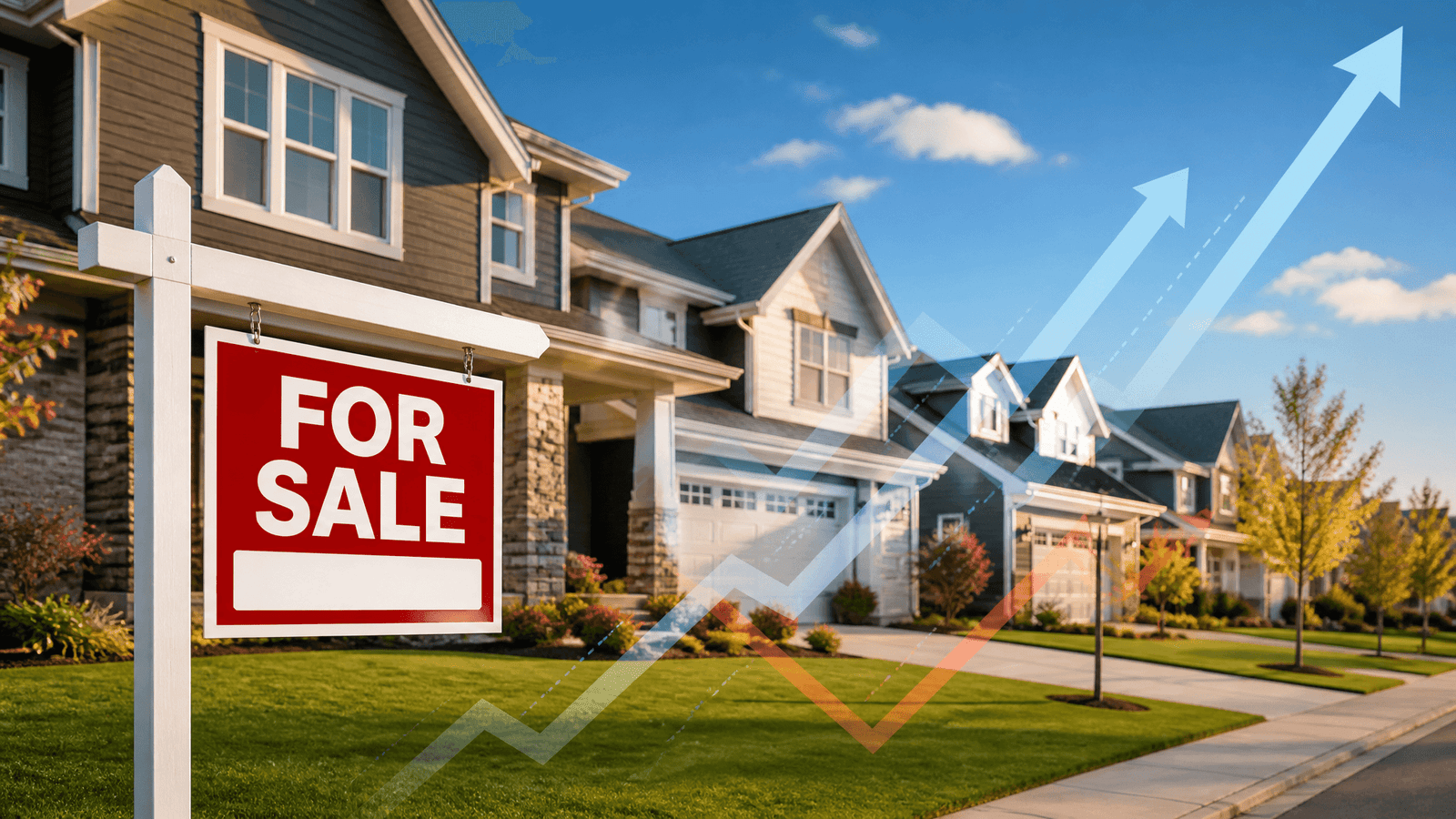
The headline number that’s getting a lot of attention: national median list prices fell about 2.4% year-over-year in July 2026 — the ninth consecutive month of annual price declines. That sounds alarming, but housing economists are quick to pump the brakes on the doom-and-gloom narrative. This isn’t a crash. It’s a rebalancing.
Here’s the key distinction: a crash happens when prices fall sharply because demand evaporates and sellers are forced to unload properties at a loss. What we’re seeing instead is a gradual cooling driven by affordability constraints and rising inventory — not panic selling. Homeowners still have strong equity, and the structural shortage of housing (estimated at 1.2 to 4 million units nationally) is keeping a floor under prices.
Mortgage rates remain the elephant in the room. The 30-year fixed rate is hovering around 6.47% for existing homes, though buyers of new construction are faring better at roughly 5.85% thanks to builder incentives like rate buydowns. Most forecasters expect rates to drift toward the 5.75%–6.0% range by year-end — meaningful relief, but not the 3% era anyone is nostalgic for.
The market is also becoming intensely regional. In the Northeast and Midwest — where new construction has been scarce for decades — prices are holding firm or even rising. Hartford, Connecticut, for example, saw list prices climb 5.7% year-over-year. Meanwhile, former pandemic boomtowns in the Sun Belt are cooling fast. Austin, Texas, saw median list prices drop a stunning 12.2%, with more than half of active listings taking price cuts. The lesson? “The housing market” is really hundreds of local markets, each with its own story.
The First-Time Buyer Squeeze: A Crisis in Slow Motion
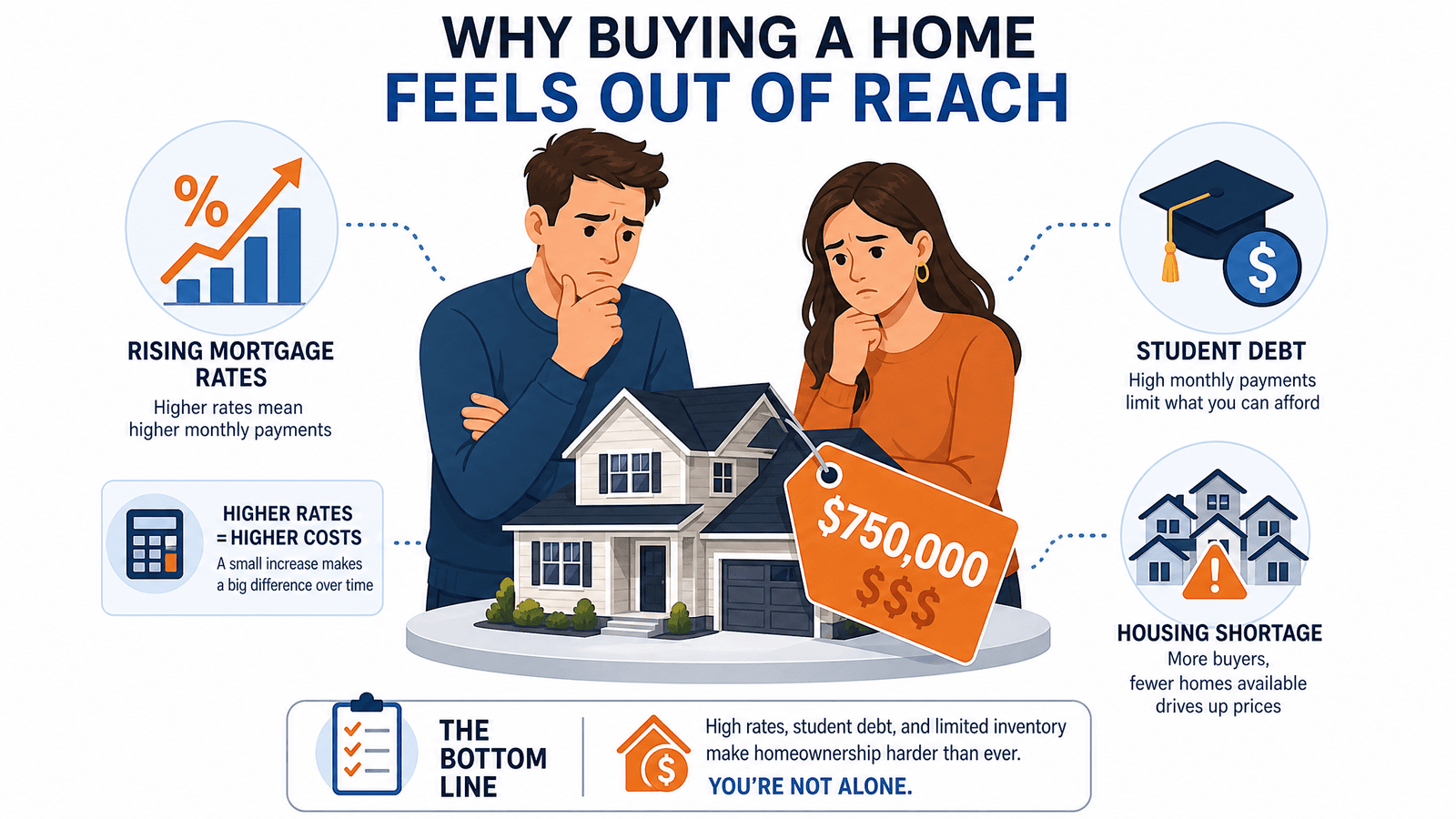
Perhaps the most sobering data point of 2026: the median age of a first-time homebuyer has risen to a record 40 years old. Let that sink in. A generation ago, people were buying their first homes in their late 20s. Today, many Americans are spending their entire 30s renting, saving, and waiting for a market that keeps moving the goalposts.
The math is brutal. In 1985, the median home cost about 3.5 times the median household income. Today, that ratio has ballooned to between 5 and 12 times income depending on where you live. Add in student loan debt eating into debt-to-income ratios, rising insurance costs, and the “lock-in effect” — where homeowners with sub-4% mortgages refuse to sell because they’d have to take on a new loan at 6.5% — and you have a market that’s structurally frozen for many would-be buyers.
There is a silver lining, though. Institutional investors — the big landlords who snapped up tens of thousands of homes during the pandemic — are pulling back. In many markets, they’re selling more homes than they’re buying. That’s quietly returning inventory to the market and reducing competition for everyday buyers. Buyers now have negotiating leverage in 41 of the 50 largest U.S. cities, with roughly 20% of listings featuring price cuts. That’s a meaningful shift from the frenzied bidding wars of 2021 and 2022.
The Boomer View: Patience Pays Off — and the Market Is Finally Cooperating
If you’ve been in the real estate game for a while, 2026 looks a lot like a return to normalcy — and that’s a good thing. The frothy, irrational exuberance of 2020–2022 was never sustainable. Markets that went up 30–40% in two years were always going to correct. What we’re seeing now is healthy price discovery, not collapse.
For buyers who’ve been waiting on the sidelines, the calculus is shifting in your favor. More inventory means more choices. Price cuts mean more negotiating room. And the strategy that savvy buyers are using — “date the rate, marry the house” — makes a lot of sense. Buy the right home now, lock in a rate, and refinance when rates drop further. You’re not married to your mortgage rate forever.
For sellers, the message is equally clear: price it right from day one. The days of listing 20% above comparable sales and waiting for a bidding war are over in most markets. But well-priced, well-presented homes are still selling efficiently. The market rewards realism.
And for investors? Real estate remains one of the most reliable long-term wealth builders available to everyday Americans. The structural housing shortage isn’t going away anytime soon. Demand from millennials finally entering their prime homebuying years, combined with a growing senior population needing specialized housing, means the fundamentals are solid. At Your Career Place, we’ve always believed that real estate — approached thoughtfully — is a cornerstone of a diversified financial plan.
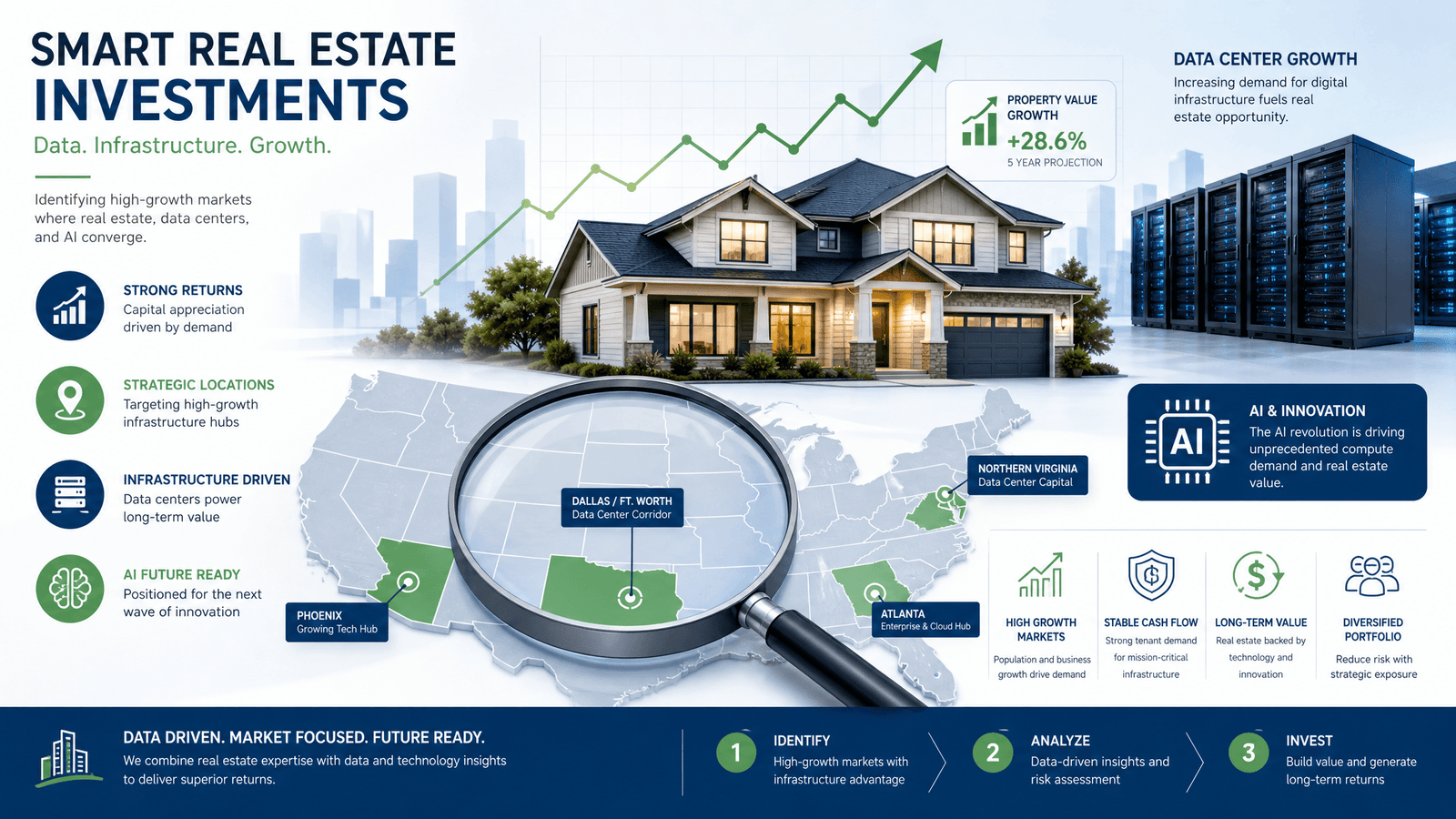
The AI infrastructure boom is also creating fascinating micro-markets. Cities hosting major data center buildouts are seeing localized housing demand spikes. Abilene, Texas, for instance, saw home prices surge 9.5% year-over-year thanks to AI-driven industrial investment — even as the broader Texas market cooled. Savvy investors are paying attention to where the next wave of economic activity is landing.
The Doomer View: Don’t Mistake a Pause for a Recovery
Not everyone is ready to pop the champagne. And honestly, the skeptics have some valid points worth hearing.
Yes, prices are softening in some markets — but “softening” from historically elevated levels still leaves homes deeply unaffordable for most Americans. A 12% price drop in Austin sounds dramatic until you realize prices there nearly doubled between 2019 and 2022. You’d need a much larger correction to restore genuine affordability for median-income households.
Mortgage rates at 6.5% are still historically high. The monthly payment on a $400,000 home at today’s rates is roughly $800–$1,000 more per month than it would have been at 3%. That’s not a rounding error — that’s a car payment, a grocery budget, a retirement contribution. For millions of Americans, that gap is simply unbridgeable.
The lock-in effect isn’t going away quickly either. Millions of homeowners are sitting on 3% mortgages they’ll never voluntarily give up. That means the inventory recovery will be slow and uneven. We’re not going back to a world of abundant starter homes anytime soon.
And then there’s the broader economic picture. Tariff-driven inflation is pushing up construction costs, making new homes more expensive to build. Insurance costs in climate-vulnerable regions — Florida, California, parts of the Gulf Coast — are skyrocketing, adding thousands of dollars per year to the true cost of homeownership. Some buyers are discovering that the mortgage payment is the cheapest part of owning a home in certain markets.
The record-high median age of first-time buyers isn’t just a statistic — it’s a warning sign about wealth inequality. Every year someone spends renting instead of building equity is a year of wealth-building lost. The gap between homeowners and renters in terms of net worth continues to widen, and that has long-term consequences for retirement security and financial stability. At Your Career Place, we take that seriously.
Key Takeaways: What Should You Actually Do?
Whether you’re a buyer, seller, or investor, here’s what the data suggests for navigating real estate in 2026:
- Buyers: Focus on your personal finances, not the market. The classic framework still applies: plan to stay at least 5 years, keep your mortgage payment under 28% of gross income, maintain a 3–6 month emergency fund, and keep your debt-to-income ratio under 36%. If those boxes are checked, waiting for the “perfect” rate may cost you more than it saves.
- Negotiate hard. With 20% of listings taking price cuts and buyers holding leverage in 41 of the 50 largest markets, this is not the time to be shy. Ask for seller-paid rate buydowns, closing cost contributions, and repairs. The market is on your side in many cities.
- Look at new construction. Builder incentives are real. New home buyers are securing rates nearly 0.6% lower than buyers of existing homes. That difference compounds significantly over a 30-year loan.
- Sellers: Price it right from day one. Overpriced homes are sitting. Accurately priced, well-presented homes are still moving. Get a current comparative market analysis and resist the temptation to anchor to 2022 peak prices.
- Investors: Think long-term and think local. The structural housing shortage, aging demographics, and AI-driven economic development are creating real opportunities — but they’re highly location-specific. Do your homework on local supply, demand, and economic drivers.
- Watch the rate trajectory. If rates do drift toward 5.5%–5.75% by late 2026 or into 2027, a refinancing wave could unlock significant savings for buyers who purchased in the past two years. Don’t let today’s rate be the reason you miss the right home.
The Bottom Line
Real estate in 2026 is neither the disaster the pessimists feared nor the easy win the optimists hoped for. It’s a market in transition — one that rewards preparation, patience, and local knowledge over broad generalizations. The affordability crisis is real and won’t be solved overnight. But for buyers who are financially ready, the window of opportunity is wider than it’s been in years.
At Your Career Place, we believe that understanding the market — not just reacting to headlines — is the foundation of smart financial decision-making. Whether you’re dreaming of your first home, thinking about downsizing, or exploring real estate as an investment, the most important step is getting informed and getting your own financial house in order first.
The housing market will keep evolving. Your financial foundation doesn’t have to.
Disclaimer: This article is for informational and educational purposes only and does not constitute financial, investment, or real estate advice. Real estate markets vary significantly by location, and individual circumstances differ. Please consult with a licensed real estate professional, financial advisor, or mortgage specialist before making any real estate or investment decisions. Your Career Place is not a licensed financial advisor or real estate broker.