
The Creative Economy in 2026: Is Content Creation a Dream Career or a Disappearing Act?
The Creative Economy in 2026: Is Content Creation a Dream Career or a Disappearing Act?
The creator economy is worth a quarter of a trillion dollars — but most creators are barely scraping by. Meanwhile, AI is gutting traditional creative jobs at a historic pace. So what does the future really look like for people who want to make a living from their creativity?

If you’ve ever dreamed of getting paid to make content — writing, designing, filming, podcasting, or building a social media presence — 2026 is simultaneously the best and worst time to pursue that dream. The creator economy has exploded into a $250 billion global industry. Goldman Sachs projects it could hit $480 billion by 2027. There are now an estimated 207 million content creators worldwide, with 1.5 million full-time equivalent creator jobs in the United States alone — up from just 200,000 in 2020.
But here’s the catch: the traditional creative jobs that once served as the stable backbone of the industry — graphic designers, film editors, broadcast journalists, publishing professionals — are disappearing at a rate not seen since the recessions of 2001 and 2008. Since generative AI emerged in late 2022, the creative sector has shed over 200,000 jobs, with nearly 50,000 of those losses occurring in just the past year. The film and TV industry alone has lost more than 100,000 jobs over four years — nearly one-third of its entire workforce.
At Your Career Place, we believe in giving you the full, unfiltered picture. So let’s dig into what’s really happening in the creative job market — and what it means for your career.
The State of Creative Jobs in 2026: A Tale of Two Economies
The creative industry in 2026 is not one market — it’s two very different ones running in parallel.
On one side, you have the booming creator economy: independent content creators, influencers, podcasters, YouTubers, and digital entrepreneurs who have built audiences and monetized their creativity directly. This sector is growing explosively. Influencer marketing spending is projected to reach $40.5 billion in 2026, up from $32.55 billion in 2025. Brands are pouring money into creator partnerships, and the most successful creators are operating like diversified media companies — managing licensing deals, equity partnerships, merchandise lines, and subscription communities.
On the other side, you have traditional creative employment: the staff writers, in-house designers, broadcast producers, and publishing professionals who built careers inside established companies. This sector is in freefall. Generative AI has given companies accessible, low-cost alternatives to human labor for tasks involving design, writing, video production, and audio editing. The result is a historic wave of layoffs that shows no signs of reversing.
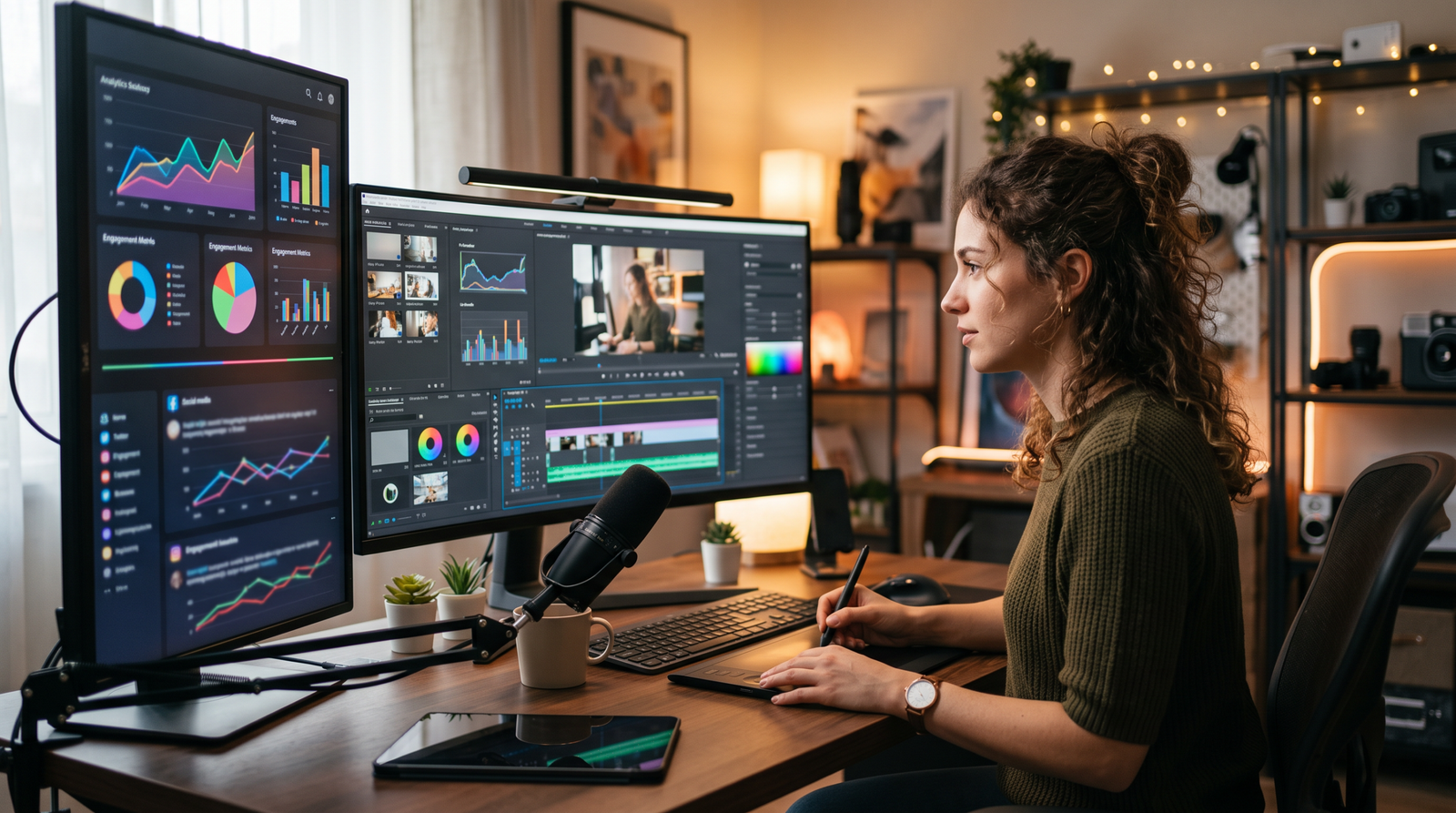
The income picture is equally stark. While the creator economy sounds glamorous, the reality is that only about 4-6% of creators earn more than $100,000 per year. Nearly half — 48.7% — of U.S. creators earn under $10,000 annually. The top 1% of creators captured 21% of all ad-payment volume in 2025, while the top 10% captured 62%. The average brand campaign payment is $11,400, but the median is just $3,000.
In other words: the creator economy has a massive wealth gap, and most people trying to make it as full-time creators are struggling.
What’s Driving the Shift?
Several forces are reshaping creative employment simultaneously:
- Generative AI adoption: 86-91% of creators now use AI tools for ideation, production, and workflow. High-earning creators use AI twice as often as average creators and report 2-5x higher engagement rates. But the same tools that help individual creators scale are also replacing entire creative departments at corporations.
- The “tech-creative” hybrid demand: Employers in 2026 want professionals who blend creative talent with technical proficiency — AI tools, data analytics, marketing technology, and performance measurement. Pure creatives without tech skills are increasingly at a disadvantage.
- Platform algorithm volatility: 76% of TikTok posts, 59% of long-form YouTube videos, and 46% of Instagram posts receive fewer than 1,000 views. Visibility is harder than ever, making it difficult for new creators to break through.
- Media consolidation and outsourcing: Film and TV production is increasingly moving overseas, while media companies merge and cut staff. Publishing has lost 70,000+ jobs since AI tools began automating writing and editing tasks.
- Performance-based compensation: The industry is shifting from flat-fee sponsorships to conversion-based deals, meaning creators must prove measurable ROI — a higher bar that favors established, data-savvy creators over newcomers.
The Boomer’s Perspective: The Creative Renaissance Is Just Beginning
If you’re optimistic about the creative job market — and there are very good reasons to be — here’s the case for why 2026 could be the beginning of a golden era for creative professionals.
First, the sheer scale of the opportunity is unprecedented. A $250 billion creator economy growing at 22-23% annually is not a niche trend — it’s a fundamental restructuring of how content is produced and consumed. The fact that 1.5 million Americans now work full-time in creator-related roles (up from 200,000 just six years ago) represents one of the fastest job creation stories in modern economic history.
Second, AI is a tool, not a replacement — at least for the most skilled creatives. The data shows that high-earning creators who embrace AI tools are outperforming those who resist them. Creators with strong strategic thinking, authentic voices, and the ability to build genuine communities are thriving precisely because those qualities cannot be automated. AI can generate a generic blog post; it cannot replicate a creator’s unique perspective, lived experience, or relationship with their audience.
Third, brands are investing more in creator partnerships than ever before. The shift toward mid-tier creators (100K-500K subscribers) is actually good news for working creatives — it means brands are looking beyond mega-influencers and investing in a broader range of voices. Creators who can demonstrate consistent engagement and authentic audience relationships are finding long-term brand partnerships that provide real income stability.
Fourth, the diversification of revenue streams is creating more resilient creative careers. Creators with three or more income sources earn an average of $75,000 more annually than those relying on a single stream. The playbook for a sustainable creative career — combining brand deals, digital products, subscriptions, affiliate marketing, and live events — is well-established and accessible to anyone willing to treat their creativity as a business.
At Your Career Place, we’ve seen this firsthand: the creatives who are thriving in 2026 are the ones who approached their craft with entrepreneurial discipline, built genuine audiences, and adapted their skills to include the technical tools that amplify their work.
The Doomer’s Perspective: The Creative Middle Class Is Being Hollowed Out
Now for the harder truth. The optimistic narrative about the creator economy obscures a deeply troubling reality: for most people trying to make a living from creative work, 2026 is genuinely difficult — and the structural forces making it difficult are accelerating, not slowing down.
The income inequality in the creator economy is extreme. When nearly half of all creators earn under $10,000 per year, and the top 10% capture 62% of all ad revenue, this is not a healthy job market — it’s a winner-take-most system that resembles a lottery more than a career path. The “creator middle class” that many hoped would emerge is struggling to survive as platform algorithms increasingly favor established accounts and AI-generated content floods every channel.
Meanwhile, the traditional creative jobs that once provided stable, middle-class incomes with benefits, retirement plans, and career ladders are being systematically eliminated. The film and TV industry has lost a third of its workforce in four years. Publishing has shed 70,000 jobs. Graphic design, broadcasting, and sound recording are all contracting. These weren’t just jobs — they were the training grounds where creative professionals developed their skills, built their networks, and established their careers before potentially going independent.
The mental health toll is severe and underreported. 65% of creators report anxiety or depression tied to their work, and 62% report burnout. The “always-on” nature of content creation, combined with the lack of traditional employment structures, health insurance, retirement benefits, and the constant pressure of public evaluation, is creating a mental health crisis in the creative workforce.
And the AI displacement is not slowing down. As generative AI tools become more sophisticated, the tasks that once required human creative professionals — writing, design, video editing, audio production — are increasingly automated. The 200,000+ creative jobs lost since 2022 may be just the beginning. Unlike previous technological disruptions, AI is targeting the cognitive and creative tasks that were supposed to be uniquely human, leaving fewer safe harbors for displaced workers.
Key Takeaways: Navigating the Creative Job Market in 2026

Whether you’re an aspiring creator, a seasoned creative professional, or someone considering a pivot into the creative industry, here’s what the data tells us about how to navigate this landscape:
- Become a tech-creative hybrid. The most in-demand creative professionals in 2026 combine artistic skills with technical proficiency — AI tools, data analytics, performance marketing, and digital strategy. If you’re a writer, learn SEO and content analytics. If you’re a designer, master AI-assisted design tools. If you’re a video creator, understand platform algorithms and audience data.
- Diversify your income streams from day one. Creators with three or more revenue streams earn dramatically more than those relying on a single source. Don’t wait until you’re established to think about diversification — build multiple income channels (brand deals, digital products, subscriptions, affiliate marketing) from the beginning.
- Build an audience you own. Platform algorithms are unpredictable and can change overnight. Prioritize building an email list, a community, or other direct relationships with your audience that don’t depend on any single platform’s algorithm.
- Treat your creativity as a business. The most successful creators in 2026 operate with professional discipline — consistent content schedules, data-driven decisions, professional contracts, and clear financial management. Creativity alone is not enough; business acumen is essential.
- Consider the hybrid path. Many successful creative professionals in 2026 maintain a traditional job or freelance client base while building their creator presence. This provides financial stability while you grow an audience and test monetization strategies.
- Invest in skills that AI can’t easily replicate. Strategic thinking, authentic storytelling, community building, live performance, and human connection are the creative skills most resistant to AI displacement. Double down on what makes you uniquely human.
The creative industry in 2026 is not for the faint of heart. But for those who approach it with clear eyes, entrepreneurial discipline, and a willingness to adapt, the opportunities are genuinely extraordinary. The question isn’t whether there’s a future in creative work — there clearly is. The question is whether you’re building the right skills and strategies to claim your share of it.
At Your Career Place, we’re here to help you navigate exactly that. Whether you’re exploring a creative career for the first time or looking to adapt your existing creative skills to the new landscape, the resources, insights, and community at Your Career Place can help you find your path forward.
What’s your experience with the creative job market in 2026? Are you thriving as a creator, struggling with AI displacement, or somewhere in between? Share your story in the comments below.