

Peer Interviews in 2026: Are Your Future Coworkers Really the Best People to Decide If You Get Hired?
Peer Interviews in 2026: Are Your Future Coworkers Really the Best People to Decide If You Get Hired?
Imagine walking into an interview and realizing the person across from you is not a director, not a VP, and not even the hiring manager. It is Sarah from engineering, who will sit three desks away if you get the job. She is asking if you have worked with their ticketing system, or whether you reply to Slack at 10 p.m. Welcome to the peer interview, the hiring technique that has exploded across companies in 2026 and is now reshaping how candidates get evaluated and sometimes rejected.
At Your Career Place, we have watched this trend evolve from a Silicon Valley curiosity into a standard stage at Fortune 500 firms, healthcare systems, and even government agencies. The logic is seductive: who knows the job better than the people already doing it? But the reality is messier than the LinkedIn posts would have you believe. Let us unpack what is actually happening in peer interviews right now, what the data says, and why the smart money is split on whether this is a revolution or a liability.
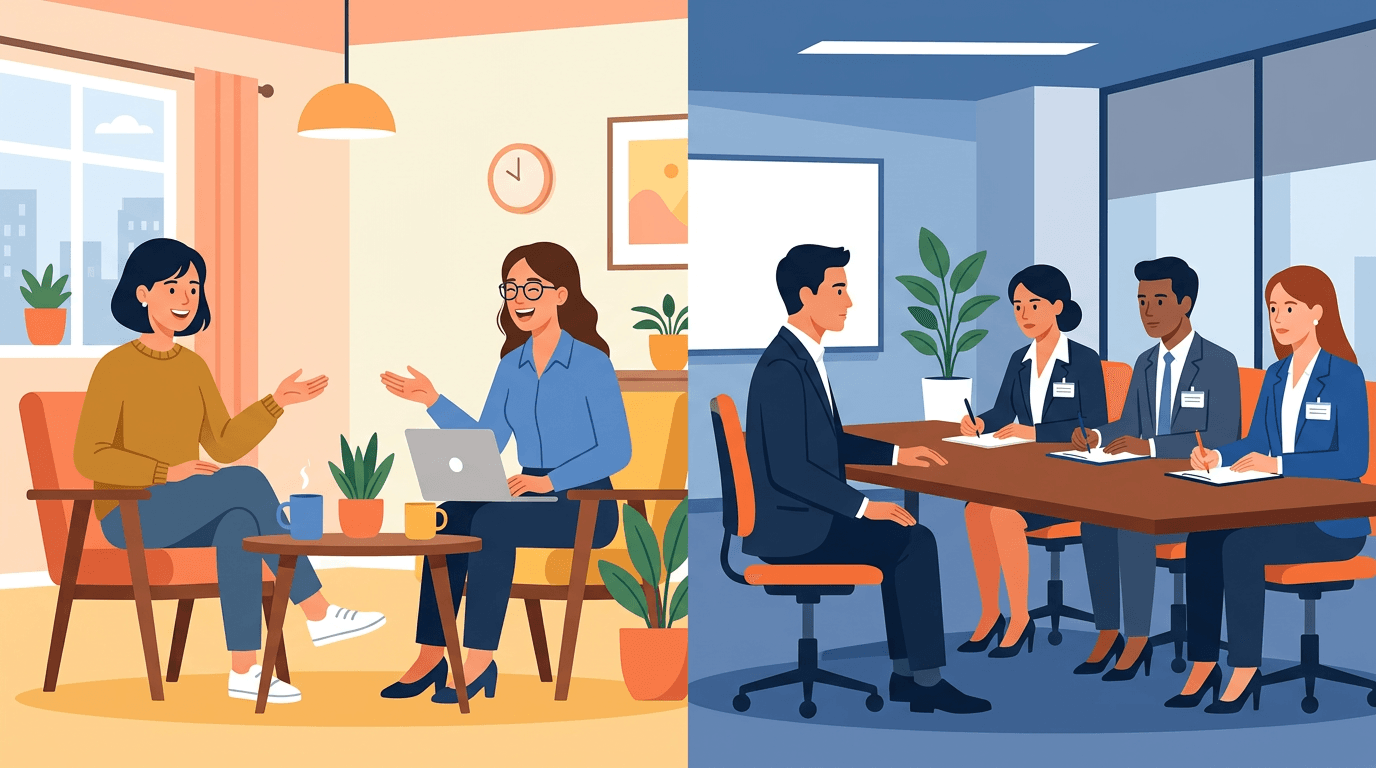
What Is a Peer Interview, and Why Did It Go Mainstream in 2026?
A peer interview is exactly what it sounds like: a candidate sits down with one or more current employees who would be their peers if hired, rather than with managers, recruiters, or executives. The format is not new. Startups and tech firms have used it for years as a culture-fit screen. But in 2026, it has become a deliberate, structured, and sometimes mandatory stage in the hiring process for roles across industries.
Several forces converged to make this happen. First, Your Career Place research shows that recruiters are now handling over 300 applications per open role on average, more than double the volume from just a few years ago. That avalanche of resumes makes it impossible for managers to have a meaningful conversation with every plausible candidate. Peer interviews were introduced as a bandwidth solution: let the team do some screening. But the idea caught on because it appeared to solve something deeper than volume.
Second, the cultural backlash against traditional hiring is real. Candidates in 2026 are savvier and more skeptical than ever. They research companies on Glassdoor, compare interview experiences on Reddit, and screen employers before employers screen them. A standard panel of executives and HR can feel one-sided and corporate. A peer interview signals transparency and mutual respect. It tells the candidate: we trust you enough to let you talk to the people you will actually work with. That is a powerful recruiting message, and companies know it.
Third, the shift toward skills-based and team-oriented hiring has made soft skills and cultural compatibility almost as valuable as technical credentials. In a world where AI can handle many technical tasks, the difference between a good hire and a great one often comes down to how someone collaborates and fits into the team rhythm. Peers, who live the daily grind, are theoretically in a better position to assess them.
The result is a hiring landscape where peer interviews are now standard at the final stage for technical roles, which in 2026 average nearly twice the interview hours and one additional interview event compared to business roles. It is not unusual for a software engineer candidate to face a peer panel, a manager round, a system design interview, and a behavioral screen all in the same week. The peer interview has become part of the gauntlet.
Recent News and the Peer Interview Boom
Over the past several months, peer interviewing has been the subject of several high-profile industry discussions and policy shifts. In mid-2026, major HR technology platforms introduced built-in peer interview modules, allowing companies to assign employee interviewers, distribute standardized scorecards, and collect feedback without spreadsheet chaos. This tooling has made it easier for mid-market companies to adopt peer interviews, not just tech giants.
At the same time, legal and compliance discussions have heated up. Because peer interviewers are not always trained in employment law, there have been documented cases of candidates being asked inappropriate questions about age, family status, disability, and even political views during peer-led sessions. The National Labor Relations Board and several state regulators have issued guidance reminding employers that peer interviewers are subject to the same anti-discrimination rules as formal hiring managers. Some companies have moved to mandatory peer interviewer certification programs, while others have scaled back the practice.
There is also a growing data debate. Some companies report improved quality-of-hire and reduced early turnover. Others say results are indistinguishable from traditional manager-led interviews, and the extra time is not justified by better outcomes. A few firms have A/B tested peer interviews and found no statistically significant improvement in hire performance over six months.
At Your Career Place, we have collected interview data from thousands of job seekers and found a clear pattern: candidates who encounter peer interviews are divided. Some love the authenticity and chance to ask real questions about the day-to-day. Others feel ambushed, pressured, or judged by people with no formal hiring authority. The emotional variance is high, and that alone tells us the experience is not standardized enough yet.
The Boomer’s Perspective: This Is the Hiring Revolution We Needed
The optimist camp has a strong case. Peer interviews are, in their view, one of the most democratic and effective hiring innovations of the decade. Let us walk through the arguments.
Peers know the job better than anyone. A manager who climbed the ladder five years ago may have vague memories of the tools and workflows that define the role today. A peer who opened the same ticketing system this morning can probe with surgical precision. When a peer asks how you handle a Friday 4 p.m. deployment pipeline break, they are not reciting from a script. They are speaking from lived experience, and the candidate’s answer reveals whether they have actually been there or are just winging it.
Cultural fit becomes assessable, not abstract. Most culture-fit screens are vague questions like, “What is your greatest weakness?” Peer interviews flip the script. The peer can explain honestly how the team operates. Do they have daily standups or async updates? This gives candidates a realistic job preview and allows them to self-select out if the fit is genuinely bad. At Your Career Place, we see this as one of the most candidate-friendly innovations in years.
Employee engagement gets a boost. When team members are trusted with hiring decisions, they feel ownership over the team composition. That psychological investment translates into better onboarding, more patience with new hires, and stronger team cohesion. Peers who interview candidates are more likely to mentor them and give honest feedback. The hiring process becomes a team-building exercise, not just a staffing transaction.
Bias can actually decrease. A single manager brings their own biases: affinity for people like themselves, over-weighting of prestigious credentials, or reliance on gut feel. A diverse peer panel can balance those biases. One peer might value communication skills, another technical depth, and a third might notice emotional intelligence the manager misses. When aggregated through a structured scorecard, the result is often more holistic than a single decision-maker could achieve alone.
It is a recruiting weapon. In a 2026 market where candidates have options, the interview experience is a competitive advantage. A well-run peer interview signals that the company trusts its people and treats candidates as equals. Companies that have invested in peer interview training report higher offer acceptance rates and more positive Glassdoor reviews.
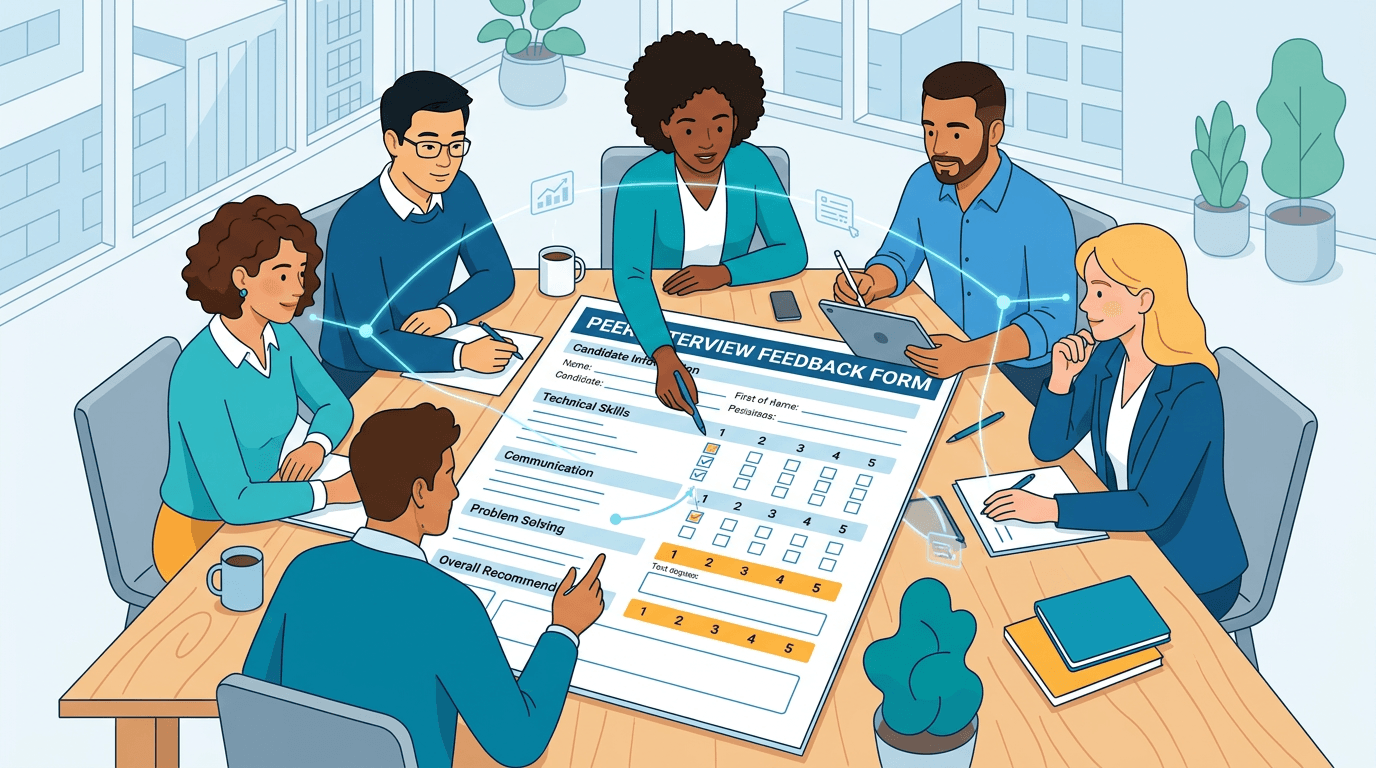
The Doomer’s Perspective: This Is a Disaster Dressed Up as Innovation
The pessimist camp has an equally compelling set of arguments. And in 2026, with application volumes through the roof and hiring processes already bloated, peer interviews look less like a solution and more like another layer of friction.
Peer interviews are a time sink. Pulling two or three employees away from their work for an hour-long interview, plus prep and feedback, adds up fast. In a team that is already understaffed, that is a real cost. Some companies have tried to make peer interviews shorter, but a rushed session is often worse than none at all. The signal-to-noise ratio collapses.
Similarity bias is rampant. Peers evaluate candidates through their own identity, preferences, and social habits. The hiking enthusiast may unconsciously warm up to a candidate who mentions hiking. The quiet peer may write off an extroverted candidate as “scattered.” This is human nature, not malice. But without rigorous training, peer interviews amplify similarity bias rather than reducing it. A peer who interviews once a quarter is unlikely to catch their own patterns.
Untrained peers can do real damage. In 2026, there are documented cases of peer interviewers asking candidates about their age, marital status, whether they have children, or how they voted. These questions are illegal in most jurisdictions, but peers often do not know that. Companies have faced complaints and lawsuits after peer-led interviews crossed lines that formal managers never would. Even a poorly worded question can make a candidate feel disrespected, and that reputation damage spreads online fast.
Peer interviews can be sabotaged by disgruntled employees. Not every current employee wants to help the company hire. Some may feel threatened by a highly qualified candidate. Some may be burned out and resent the time they must spend interviewing. Peer feedback is only as good as the peer’s motivation and professionalism, and those are not guaranteed.
The data is shaky. While some companies report improved quality of hire, others have found no meaningful difference. A/B tests are damning: when companies randomly assign candidates to peer-interview and manager-only tracks, the six-month performance outcomes are often statistically indistinguishable. That means companies are spending extra time and money for results they could have gotten more efficiently. In 2026, with application volumes at 300-plus per role and technical interviews already eating up nearly twice the hours of business interviews, that inefficiency is hard to justify.
Candidates may feel ambushed or ganged up on. For some candidates, especially introverted or anxious ones, the peer interview can feel like a hazing ritual. A panel of three peers firing questions in rapid succession can be more intimidating than a single executive with a polished interview style. Your Career Place has heard from candidates who felt the peer interview was designed to make them fail, not to assess them fairly. That perception alone is a warning sign.
Key Takeaways: How to Survive and Thrive in the Peer Interview Era
Whether you think peer interviews are the future or a fad, they are here now. If you are job hunting in 2026, you will almost certainly face one. Here is how to handle it, from Your Career Place.
1. Treat it as a real interview. The peer may act friendly, but they are taking notes. Be prepared, be professional, and do not let the relaxed tone drop your guard.
2. Ask about the day-to-day. This is your best chance for unfiltered insight into team culture and workload. Ask: “What does a typical Monday look like?” “How does the team handle disagreements?” The answers tell you more than any mission statement.
3. Assess them back. You are evaluating whether you want to work with these people. If the peer seems bitter or disengaged, trust your gut. A peer interview is a preview of the team.
4. Watch for illegal questions. If a peer asks about age, marital status, family plans, or religion, you are not required to answer. It says more about their training than about you.
5. Prepare teamwork stories. Peers care more about collaboration than individual brilliance. Be ready to share how you have resolved conflicts, supported colleagues, and adapted to others’ styles.
6. The final decision is not theirs. Peer feedback is influential but not decisive. Do not let a lukewarm session kill your confidence, and do not assume a great session guarantees an offer.
7. If you are hiring, invest in training. Peer interviews are only as good as the training behind them. Require certification, limit panels to two or three people, and place peer interviews at the final stage.
Peer interviews in 2026 are a Rorschach test. What you see depends on whether you trust the wisdom of crowds or fear the tyranny of the uninformed. The truth is probably somewhere in between. Used well, they are a powerful tool for assessing fit and giving candidates a window into the team. Used poorly, they are a waste of time, a legal risk, and a source of biased outcomes. The smart candidate prepares for both.