
Inflation in Summer 2026
Is the Worst Finally Over — or Just Getting Started?
By Your Career Place | July 22, 2026
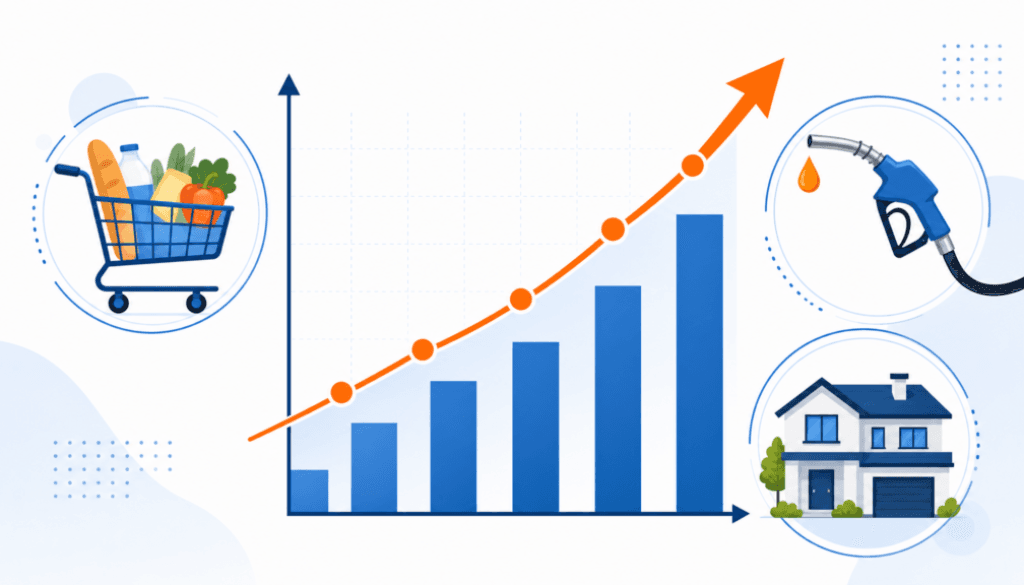
If you’ve been watching your grocery receipts, your gas pump total, or your monthly rent statement with a mix of dread and disbelief, you’re not alone. Inflation has been the financial story of the decade — and in mid-2026, it’s still very much the conversation at kitchen tables, in break rooms, and in the offices of the Federal Reserve. The good news? June brought some genuine relief. The complicated news? One good month doesn’t mean the battle is won.
At Your Career Place, we believe that understanding what’s happening with your money — in plain language, without the Wall Street jargon — is one of the most powerful career and life skills you can develop. So let’s break down where inflation stands right now, what the optimists are saying, what the pessimists are warning, and most importantly, what you can actually do about it.
What the Numbers Are Actually Telling Us
June 2026 delivered the biggest monthly drop in the Consumer Price Index (CPI) since April 2020. The CPI fell 0.4% from May to June — a sharp reversal from the 0.5% increase the month before. On an annual basis, inflation slowed from 4.2% in May to 3.5% in June. That’s real progress, and it’s worth acknowledging.
But here’s the catch: energy prices did most of the heavy lifting. Gasoline fell a whopping 9.7% in June alone. Strip out the volatile energy and food categories, and “core” CPI was essentially flat — unchanged for the month, with its annual rate slowing from 2.9% to 2.6%. That’s encouraging, but it also means the headline improvement was largely driven by something that can reverse quickly if oil markets shift.
Meanwhile, the Federal Reserve’s preferred inflation gauge — the Personal Consumption Expenditures (PCE) index — showed 4.1% annual inflation as of May (the most recent available data). Core PCE, which the Fed watches most closely, was running at 3.4% annually. Both figures remain well above the Fed’s 2% target. The June PCE report isn’t due until July 30, so we’re still waiting on the full picture.
What about your paycheck? Nominal wages rose 0.3% in June, and when combined with falling prices, real average hourly earnings jumped 0.8% for the month — a welcome boost. But zoom out to the full year, and real hourly earnings for all workers rose just 0.1% from June 2025 to June 2026. For production and non-supervisory workers, real earnings actually fell 0.1% over the year. In other words, many workers are running hard just to stay in place.
The Grocery Aisle, the Gas Station, and Your Rent Check
Let’s talk about where you actually feel inflation — in the specific things you buy every week.
Food: Grocery prices rose 0.2% in June and are up 3.0% over the past year. The USDA projects food-at-home prices will increase about 2.8% for all of 2026 — close to the historical average. But that headline number hides wild swings by category. Beef and veal prices are projected to rise 7.5% this year. Fresh vegetables, up 7.7%. Eggs, on the other hand, are expected to fall 30.4% as production recovers from the avian flu crisis — though June’s data showed eggs still rising 4.3% in that single month. The lesson: your personal grocery inflation depends heavily on what’s in your cart.
Energy: Yes, gas prices fell sharply in June. But here’s the context: gasoline was still 26.7% more expensive than a year ago. The national average as of July 20 was $4.00 per gallon. The Energy Information Administration (EIA) projects a $3.64 average for all of 2026 — which would mean further relief ahead — but geopolitical events and refinery constraints (especially on the West Coast) could easily push that higher.
Housing: The shelter index rose just 0.1% in June — its smallest monthly increase since January 2021. That’s a potentially significant sign that rent inflation is finally cooling. But “cooling” doesn’t mean “cheap.” Housing remains one of the biggest budget pressures for working Americans, and a single month of moderation doesn’t undo years of elevated costs.

The Boomer Perspective: Reasons to Be Cautiously Optimistic
If you’re inclined to see the glass as half full — and there are legitimate reasons to — here’s the case for optimism.
June’s data wasn’t just a fluke. Core CPI was flat. Shelter posted its smallest monthly gain in over four years. Real wages rose nearly 1% in a single month. These aren’t random noise — they suggest that the underlying inflation pressures that have been grinding away at household budgets may genuinely be easing.
The Federal Reserve has been doing its job. By holding interest rates at 3.5%–3.75% and signaling patience, the Fed has avoided the kind of premature pivot that could have reignited inflation. Its own projections show PCE inflation falling to 2.3% in 2027 and hitting the 2% target in 2028. That’s not a distant fantasy — it’s a credible path based on current trends.
On the grocery front, the USDA’s forecast of 2.8% food-at-home inflation for 2026 is actually close to the 20-year historical average of 2.6%. After the shock years of 2021–2023, a return to something resembling normal food price growth would be a genuine win for household budgets.
And energy? The EIA projects gasoline prices will average $3.64 for the full year and fall further to $3.09 in 2027. If those forecasts hold, commuters and road-trippers alike will have more money left in their pockets by year’s end.
At Your Career Place, we’ve always believed that financial resilience is built during the tough times — and if the optimists are right, the tough times may be winding down. Workers who have been disciplined about budgeting, building emergency funds, and avoiding high-interest debt are positioned to benefit most as conditions improve.
The Doomer Perspective: Why It’s Too Early to Celebrate
Now for the cold water. Because there are real reasons to stay cautious.
June’s headline improvement was almost entirely driven by a 5.7% drop in energy prices. Energy is notoriously volatile. A single geopolitical event — a conflict in an oil-producing region, a hurricane hitting Gulf Coast refineries, a supply cut from OPEC — could reverse those gains in weeks. The fact that energy was still 15.7% more expensive than a year ago tells you how much ground has already been lost.
The Fed’s preferred PCE measure showed 4.1% annual inflation as of May. That’s more than double the 2% target. And while the Fed projects improvement, its own range of individual forecasts for 2026 PCE inflation spans from 2.7% to 4.1% — a wide band that reflects genuine uncertainty about where things are headed.
Real wages tell a sobering story. Yes, June was a good month. But over the full year, real hourly earnings for all workers rose just 0.1%. For the workers who actually build things, serve customers, and keep the economy running — production and non-supervisory employees — real earnings fell 0.1% over the year. That means, on average, these workers can buy slightly less with their paychecks today than they could a year ago.
The personal saving rate of 3.0% in May is another warning sign. Americans are spending nearly everything they earn, leaving little cushion for the next shock — whether that’s a medical bill, a car repair, or another spike in food or energy prices. When the buffer is thin, even a modest reversal in inflation trends can cause real financial pain.
And don’t forget: the Fed isn’t cutting rates anytime soon. Goldman Sachs has pushed its rate-cut forecast to December. Bank of America expects no cuts for the rest of 2026. That means mortgages, car loans, credit cards, and business loans all stay expensive. For anyone carrying variable-rate debt or planning a major purchase, “higher for longer” is the reality to plan around.
What You Can Actually Do Right Now
Whether you’re feeling cautiously optimistic or genuinely worried, the practical steps are the same. Here’s what the team at Your Career Place recommends for navigating inflation in the second half of 2026:

- Build your personal inflation basket. The national CPI is an average — your inflation rate depends on your specific spending. Track what you actually spend on housing, food, transportation, insurance, and utilities. That’s your real number.
- Think in real terms, not nominal. When you get a raise or evaluate a job offer, compare it to inflation-adjusted purchasing power, not just the percentage. A 4% raise when inflation is 3.5% is a 0.5% real gain — better than nothing, but not a windfall.
- Shop the category, not the headline. Beef is up 7.5% projected for the year. Eggs are falling. Knowing which categories are moving in which direction lets you make smarter substitutions without sacrificing nutrition or quality.
- Use the gas relief wisely. If lower gasoline prices are giving you a few extra dollars each week, resist the urge to spend them immediately. Use that breathing room to rebuild savings or pay down high-interest debt.
- Stress-test your budget. Run your household numbers under two scenarios: one where rates stay flat through year-end, and one where there’s a modest cut in December. Make sure your plan works under both.
- Review recurring expenses. Shelter, insurance, subscriptions, utilities — these are the costs that quietly compound. If you haven’t shopped your car insurance, renegotiated your internet plan, or reviewed your streaming subscriptions recently, now is the time.
- Watch the data, not the forecasts. The July 30 PCE report and the August 12 CPI release will tell us far more than any forecast. Make financial decisions based on what’s actually happening, not what analysts predicted six months ago.
Key Takeaways
Inflation in mid-2026 is a story of genuine progress mixed with real uncertainty. June’s CPI drop was the best monthly reading in years — but it was heavily energy-driven, and the Fed’s preferred PCE measure still shows inflation running well above target. Real wages are barely keeping pace on an annual basis, the saving rate is thin, and borrowing costs remain elevated.
The optimists have a case: core inflation is cooling, shelter costs are moderating, and the Fed has a credible path to its 2% target by 2028. The pessimists have a case too: energy volatility, above-target PCE, and a low savings buffer leave households exposed to the next shock.
The smartest move? Plan for both. Build financial resilience that works whether inflation continues to cool or takes another unexpected turn. Track your personal spending, think in real terms, and make decisions based on data — not headlines.
At Your Career Place, we’re here to help you navigate exactly these kinds of financial crossroads. Whether you’re managing a tight budget, negotiating your next salary, or planning for the long term, understanding the economic environment you’re operating in is the foundation of every smart financial decision. Stay informed, stay flexible, and keep building.
This article is for general educational purposes only and does not constitute individualized financial, investment, tax, or credit advice. Data sourced from the U.S. Bureau of Labor Statistics, Bureau of Economic Analysis, USDA Economic Research Service, U.S. Energy Information Administration, and the Federal Reserve.