

How to Win at Asynchronous Video Interviews in 2026
By the team at Your Career Place | June 12, 2026
Picture this: you open your inbox and see a link from a company you applied to. Instead of a calendar invite for a live interview, you get a one-way video portal. You have 48 hours to record yourself answering 5 questions. No human on the other side. Just you, your webcam, and a ticking clock.
Welcome to the asynchronous video interview (AVI) — the format that has quietly become the front gate to almost every job opportunity in 2026. If you haven’t faced one yet, you will soon. And at Your Career Place, we believe the candidates who understand this format and prepare for it intentionally are the ones who get through the gate and into the real conversation.
Why Asynchronous Video Interviews Suddenly Matter More Than Ever
Asynchronous video interviews aren’t new, but they’ve crossed a tipping point in 2026. Roughly 70% of companies now use one-way video interviews as part of their hiring process, and 81% of recruiters use video interviews in some form. Adoption of one-way formats has grown 67% since 2020, making this one of the fastest-growing changes in how employers screen talent.
What changed? The market just consolidated. In late 2025, Zoom acquired BrightHire and Radancy acquired myInterview — two major acquisitions that reshaped the vendor landscape. The video interviewing software market is now projected to hit roughly $892 million by 2030, and platforms like HireVue, Spark Hire, VidCruiter, Hireflix, Willo, Jobma, and Hirevire are now standard infrastructure inside companies of every size.
At Your Career Place, we’ve been tracking this trend closely, and here’s what stands out: the economics are too strong for employers to reverse. AVIs cut hiring timelines by about 8 days compared to phone screens. Recruiters can screen 3 times more candidates per day. Some organizations report 50% reductions in time-to-fill and 60% reductions in screening time. The average cost savings per hire is around $1,600. Once employers tasted that efficiency, they didn’t look back.
But there’s a catch — and it’s a big one. About 33% of candidates have abandoned applications specifically because of one-way video requirements. Another 70% report losing opportunities due to technical issues. And 38% of U.S. job seekers have withdrawn from AI-evaluated processes because they don’t trust the transparency. That gap between employer enthusiasm and candidate discomfort is exactly why this topic deserves your full attention right now.
The Boomer’s Perspective: “This Is the Best Thing to Happen to Job Seekers”
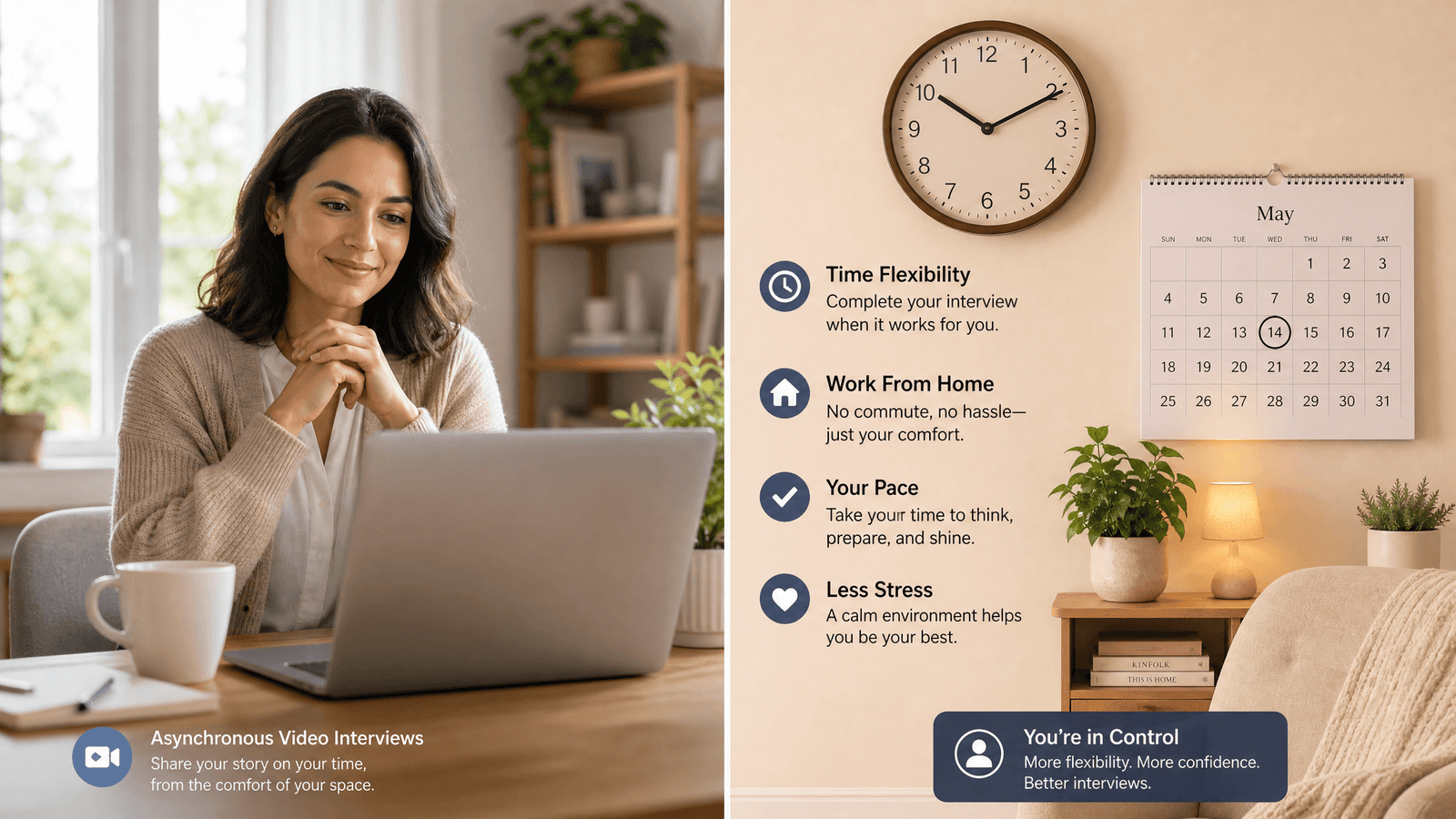
Let’s start with the glass-half-full view. The Boomer — that eternally optimistic voice in your head — sees asynchronous video interviews as a genuine gift to candidates who know how to use them.
First, flexibility is real. You don’t have to coordinate schedules with a recruiter, take time off from your current job, or deal with time zone headaches. You can record your answers at 6 AM, 11 PM, or during your lunch break. For working parents, caregivers, or anyone juggling multiple responsibilities, that flexibility is a game-changer. Research shows that 75% of students find async formats more convenient than live interviews, and nearly 50% of candidates prefer video to in-person.
Second, you can practice and polish. Some platforms let you re-record answers, and even when they don’t, you can rehearse your responses before hitting the record button. You get to control your environment — your lighting, your background, your outfit, your energy level. One study found that 61% of candidates feel more confident when re-records are allowed. The Boomer sees this as leveling the playing field: introverts, non-native speakers, and anyone who gets nervous in high-pressure live settings now gets a chance to present their best self.
Third, the format rewards preparation. Unlike a live conversation where you might get thrown off by an unexpected question or a distracted interviewer, one-way video interviews typically use standardized questions. That means you can prepare. You can research the company, script your STAR-method stories, and practice your delivery until it feels natural. The Boomer argues that AVIs actually favor the hardworking candidate over the charismatic one — and that is a win for merit.
At Your Career Place, we coach candidates to treat AVIs not as a barrier, but as a stage. The employers using these tools — and 98% of candidates view them as more innovative — are often the same ones investing in modern, candidate-friendly hiring. The companies building strong employer brands are the ones making their AVI experiences smooth, transparent, and respectful. If you prepare well, the Boomer says, you can absolutely turn this format into your competitive advantage.
The Doomer’s Perspective: “This Is a Cold, Dehumanizing Performance Test”
Now let’s hear from the Doomer. The pessimist in the room isn’t wrong about everything — and the data backs up some serious concerns.
First, it’s lonely. You’re talking to a camera with no human feedback, no eye contact, no ability to read the room or adjust your tone. Candidates describe the experience as “cold,” “robotic,” and “a performance test in a void.” Academic research flags one-way AVIs as potentially “disrespectful” or “dehumanizing” when poorly designed. For candidates who thrive on interpersonal connection, this format can feel like stripping away the very thing that makes them shine.
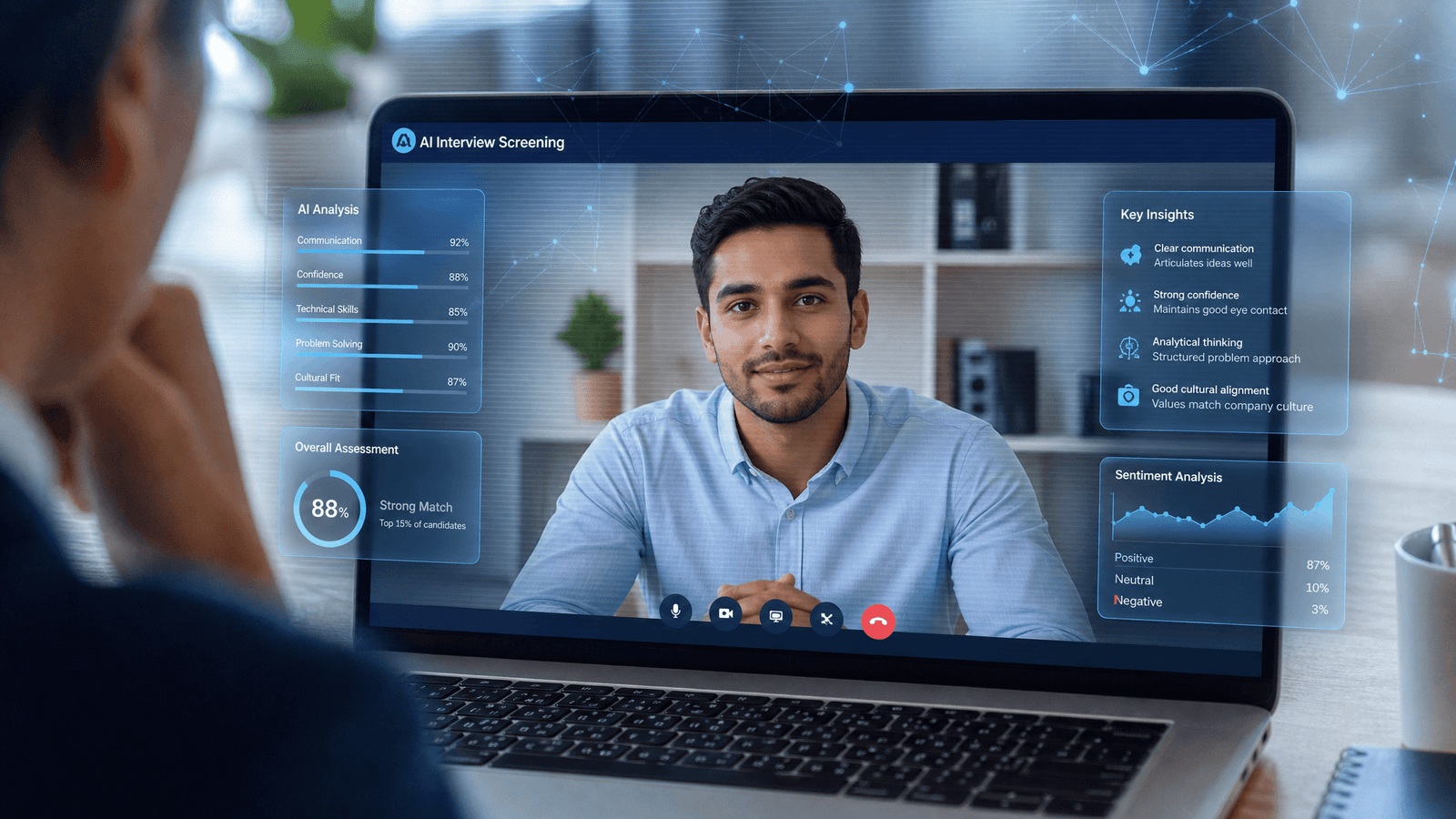
Second, AI evaluation is opaque and unsettling. Many platforms use AI to score your responses, analyze your word choice, measure your tone, and even evaluate your facial expressions. But here’s the problem: you don’t know exactly what the algorithm is looking for. That 38% withdrawal rate from AI-evaluated processes exists for a reason — candidates don’t trust what they can’t see. Research warns of “algorithmic monoculture” when many employers use the same AI vendor, which means you might be filtered out for reasons that have nothing to do with your actual fit for the role.
Third, technical failures are devastating. About 70% of candidates report lost opportunities due to technical issues — bad internet, platform glitches, incompatible browsers, or microphones that cut out at the worst moment. Unlike a live interview where a recruiter might give you a minute to reconnect, a one-way platform often just logs you out and moves on. The Doomer sees this as a system where the burden of perfection falls entirely on the candidate, while the employer gets efficiency and scale.
Fourth, the volume is brutal. HireVue’s 2026 Global Early Careers Benchmark reports UK application volumes at 140 per vacancy, and graduate hiring is down 7%. That means your async video is competing against dozens — sometimes hundreds — of other recordings. The Doomer argues that AVIs exist precisely because employers want to filter faster, not because they want to give every candidate a fair shot. At Your Career Place, we don’t dismiss this perspective. We take it seriously, because understanding the real risks helps you prepare more intelligently.
How to Actually Win: A Playbook from Your Career Place
So who’s right — the Boomer or the Doomer? Both. The truth is that asynchronous video interviews are here, they’re growing, and they create both opportunities and traps. The candidates who win are the ones who treat the format with respect and prepare like it’s a live interview, not a casual video message.
Here’s the Your Career Place playbook for acing your next AVI:
1. Master the STAR Method. Most one-way platforms ask behavioral questions — “Tell me about a time when…” — because structured interviews predict performance at 0.42 to 0.51, versus just 0.20 for unstructured interviews. Have 3 to 5 STAR stories (Situation, Task, Action, Result) ready, rehearsed, and adaptable. Don’t script word-for-word; script the structure and speak naturally.
2. Control Your Environment. Find a clean, neutral background with good lighting. Use a ring light or face a window. Test your camera, microphone, and internet speed before you start. Use a laptop instead of a phone if possible. Dress exactly as you would for an in-person interview — full outfit, not just the top half.
3. Look at the Camera, Not Yourself. It’s tempting to watch your own face on screen, but eye contact with the camera is what creates connection with the viewer. Place a small sticky note or smiley face right next to the camera lens to train your eyes where to go.
4. Manage Your Time. Most platforms give you 1 to 3 minutes per answer. Practice timing yourself. If you get 2 minutes, aim for 90 seconds — concise, punchy, and complete. Don’t ramble. Don’t rush. Breathe between sentences.
5. Be Authentic, Not Performative. The Doomer’s “performance test” fear is real, but the antidote is authenticity. Don’t try to be a TED speaker. Be yourself, but your best-prepared self. Smile genuinely. Use natural hand gestures. Let your enthusiasm for the role come through.
6. Follow Up. Within 24 hours, send a brief thank-you email to the recruiter or hiring manager. Mention that you completed the one-way interview and reiterate your interest. At Your Career Place, we always remind candidates that the async video is just the first gate — your follow-up keeps you top of mind for the human conversations that follow.
Key Takeaways
Asynchronous video interviews are no longer a niche trend — they’re the default first step in modern hiring. That can feel overwhelming, but it doesn’t have to be. The candidates who treat AVIs with the same seriousness as a live interview, who prepare their stories, control their environment, and stay authentic, are the ones who move forward.
Here are the key points to remember:
- AVIs are now mainstream — 70% of companies use them, so you need a standing playbook.
- Preparation beats charisma — the format rewards candidates who rehearse STAR stories and practice delivery.
- Your environment matters — lighting, background, camera angle, and audio quality all influence how you’re perceived.
- AI evaluation is real but not everything — focus on clear, structured, authentic answers rather than trying to game an algorithm.
- Follow up like a live interview — a thank-you message within 24 hours shows professionalism and keeps you visible.
At Your Career Place, our mission is to help you navigate every twist and turn of the modern job market — including the ones that feel robotic, impersonal, or unfair. Asynchronous video interviews aren’t going away. The employers adopting them are doing so because the efficiency gains are undeniable. But efficiency doesn’t have to mean soullessness. With the right preparation and mindset, you can turn this format into a stage where your skills, experience, and personality shine through — even when no one is watching live.
Ready for your next one-way interview? Your Career Place has your back.