
The Great Freeze
Is the 2026 Job Market Stuck — or Just Catching Its Breath?
Published by Your Career Place | June 2026
Introduction: When the Music Stops
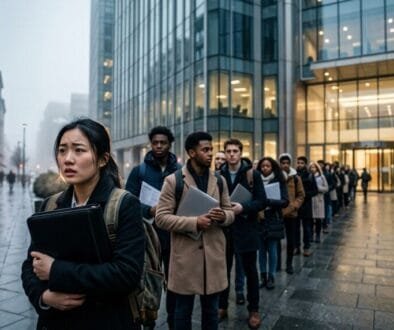
Remember the wild ride of 2021 and 2022? Companies were throwing job offers at candidates like confetti. Sign-on bonuses, remote perks, bidding wars for talent — it felt like the job market would never slow down. Fast forward to 2026, and the music has stopped. The dance floor is empty. Economists, recruiters, and frustrated job seekers are all using the same phrase to describe what’s happening: The Great Freeze.
If you’ve been sending out applications and hearing nothing back, you’re not imagining things. If you’ve been sitting in your current job — not because you love it, but because the outside world looks too risky — you’re not alone. And if you’re an employer wondering why your “Now Hiring” sign isn’t generating the buzz it used to, welcome to the new normal.
At Your Career Place, we believe that understanding the job market — not just surviving it — is the key to making smart career decisions. So this week, we’re diving deep into the hiring freeze of 2026: what’s causing it, what the data actually says, and what two very different types of people think it means for your future.
What’s Actually Happening: The Numbers Behind the Freeze
Let’s start with the facts, because the picture is more nuanced than the headlines suggest.
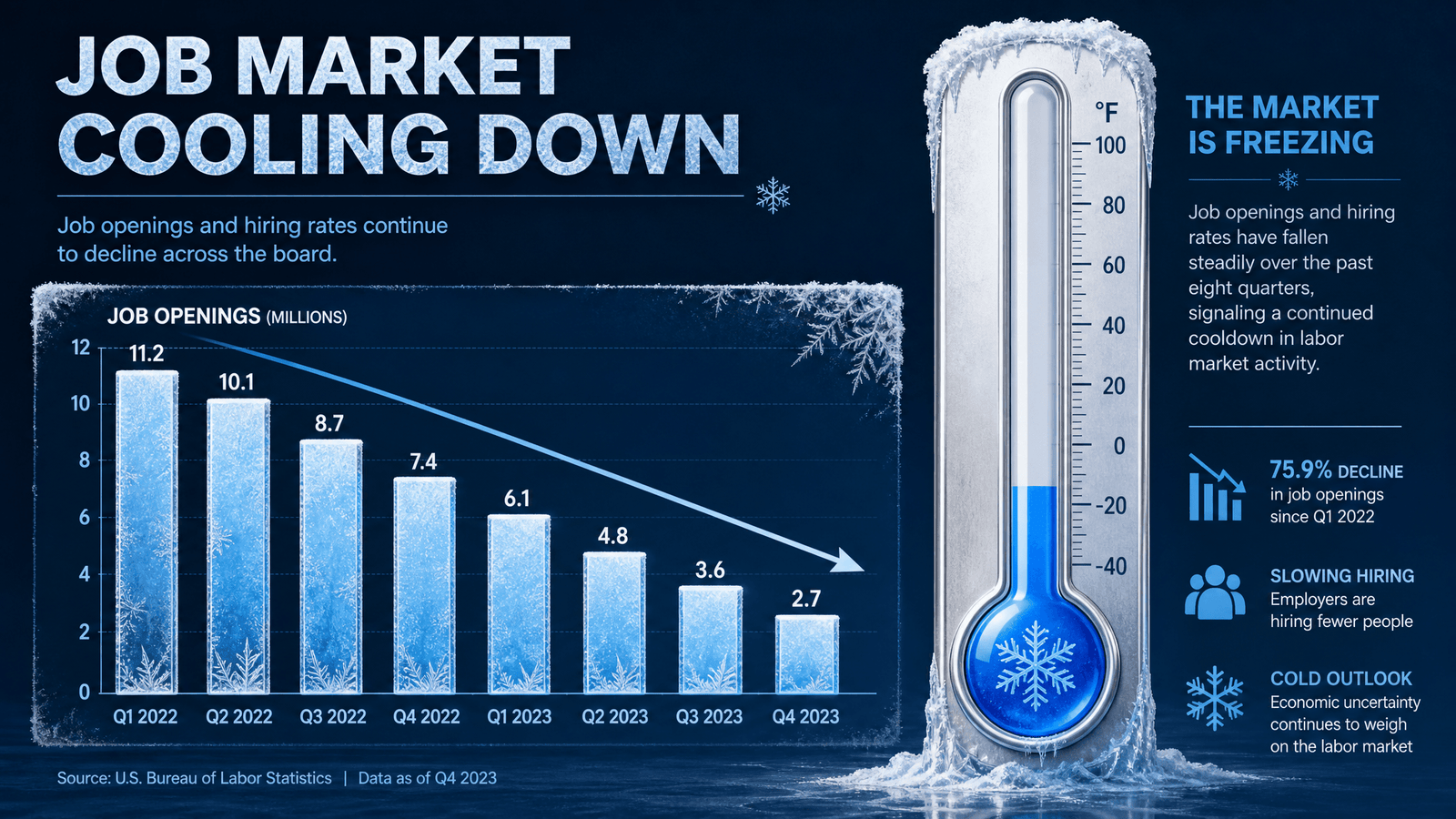
The U.S. labor market in 2026 is operating in what economists call a “low-hire, low-fire” equilibrium. Unemployment sits at a relatively stable 4.3%–4.5%, which sounds reassuring — until you dig deeper. The real story is in the flow of the market, not the stock.
In 2025, the U.S. economy added only 181,000 jobs for the entire year — one of the weakest annual totals since the post-pandemic recovery began. In the first half of 2026, monthly job gains have averaged between 40,000 and 57,000, compared to a pre-pandemic average of over 190,000 per month. That’s not a slowdown — that’s a near-standstill.
The job openings picture is equally confusing. There are 7.6 million job openings as of April 2026, which sounds like plenty of opportunity. But here’s the catch: employers are posting jobs without actually hiring. The vacancy-to-unemployment ratio has dropped to 0.9 — meaning there are now fewer than one job opening for every unemployed worker, a level below 2019 pre-pandemic norms.
Meanwhile, the voluntary quit rate — a key indicator of worker confidence — has fallen to its lowest point in over a decade. Workers aren’t leaving their jobs because they’re afraid there’s nowhere better to go. Long-term unemployment (27+ weeks) now represents 25% of all unemployed Americans, and the broader U-6 underutilization rate sits at 8.1%, suggesting the headline unemployment figure is masking significant hidden slack.
And wages? Posted wage growth has slowed to just 2.3% year-over-year — well below the 3.8% inflation rate. In real terms, many workers are actually earning less than they were a year ago.
Why Is This Happening?
The Great Freeze isn’t the result of one single cause — it’s a perfect storm of overlapping pressures:
- Tariff and trade uncertainty: Unpredictable trade policies have made businesses reluctant to commit to new headcount. When you don’t know what your supply chain will cost next quarter, you don’t hire.
- AI adoption: Companies are using artificial intelligence to squeeze more productivity out of existing staff rather than adding new employees. Entry-level job postings are down approximately 30% since 2022, and middle-management postings have fallen by a staggering 42%.
- Post-pandemic overcorrection: Firms that over-hired in 2021–2022 are still right-sizing. The hangover from the hiring frenzy is real.
- Immigration crackdowns: Tighter immigration policies have reduced the available labor supply, creating a paradox where some industries face shortages while job seekers struggle to find openings.
- High borrowing costs: With the Federal Reserve keeping rates in the 3.50%–3.75% range, the cost of capital remains high, dampening business investment and expansion.
A survey of major company CEOs found that approximately 66% plan to freeze or cut hiring through the remainder of 2026. That’s not a blip — that’s a structural shift.
🌅 The Boomer’s Perspective: “This Is a Healthy Reset, Not a Crisis”
Not everyone is hitting the panic button. There’s a school of thought — call it the optimist’s view — that sees the Great Freeze not as a catastrophe, but as a necessary and ultimately healthy correction.
“Markets don’t go up forever, and neither do hiring cycles,” this perspective argues. The 2021–2022 hiring frenzy was, by most accounts, unsustainable. Companies were paying enormous premiums for talent, making hasty hires, and building bloated teams that didn’t always deliver proportional value. The freeze is the market correcting itself — painful in the short term, but rational in the long run.
Consider the unemployment rate: at 4.3%–4.5%, it remains historically low. We are not in a recession. Mass layoffs have not materialized. The economy is still growing — just not at the breakneck pace of the post-pandemic boom. For workers who are employed, job security is actually quite high right now. The “low-fire” part of the equation is genuinely good news.
The optimist also points to the sectors that are hiring: defense and cybersecurity (driven by geopolitical realities), AI and machine learning (the superintelligence race is very much on), renewable energy, and healthcare. These aren’t niche opportunities — they represent some of the most important and well-compensated career paths of the next decade.
On the AI front, the optimist sees a glass half full. Yes, AI is suppressing some entry-level roles. But it’s also creating entirely new categories of work — AI trainers, prompt engineers, AI ethics officers, automation specialists. The workers who embrace AI literacy now will be the ones who thrive when the freeze thaws. At Your Career Place, we’ve seen this pattern before: every major technological shift initially looks like a threat and eventually reveals itself as an opportunity for those willing to adapt.
The optimist’s advice? Use this time strategically. Upskill. Build your network. Get certified in emerging technologies. When the freeze breaks — and it will break — the employers who come back to the market will be looking for a different kind of worker: leaner, more tech-savvy, more adaptable. Be that worker.
There’s also a demographic argument for optimism. The U.S. workforce is aging, and the retirement wave of Baby Boomers is only accelerating. As experienced workers exit the labor force, they will create vacancies that cannot be filled by AI alone. The structural demand for human talent isn’t going away — it’s just temporarily suppressed by uncertainty. Patience, in this view, is a career strategy.
🌧️ The Doomer’s Perspective: “This Isn’t a Pause — It’s a Structural Collapse”
Now let’s hear from the other side of the table — the pessimists, the realists, the people who look at the same data and see something much darker.
“The Great Freeze isn’t a reset — it’s a preview of the new normal,” this perspective warns. And the evidence, they argue, is hard to dismiss.
Start with the entry-level job market. A 30% decline in entry-level postings since 2022 isn’t a blip — it’s a structural erosion of the traditional career ladder. For recent graduates and early-career workers, the bottom rung of that ladder is disappearing. If you can’t get your first job, you can’t build the experience needed for your second. The pessimist sees a generation of workers being locked out of the labor market at the very moment they should be entering it.
The middle-management collapse is equally alarming. A 42% decline in middle-management postings means that the traditional path from individual contributor to team lead to manager is being systematically dismantled. Companies are flattening their hierarchies, replacing human managers with AI-driven coordination tools. For workers in their 30s and 40s who were counting on that upward trajectory, the ladder isn’t just harder to climb — it’s being removed entirely.
Then there’s the wage picture. Real wages are declining. Inflation at 3.8% is outpacing wage growth of 2.3%. Workers who stay in their current jobs are, in effect, taking a pay cut every year. And because the quit rate is at a decade low, most workers feel they have no leverage to demand more. The pessimist sees a labor market where workers are trapped: too scared to leave, too underpaid to stay comfortable.

The AI argument cuts both ways. Yes, new roles are being created — but are they being created fast enough, and are they accessible to the workers being displaced? The pessimist notes that AI-related roles require significant technical skills that most displaced administrative workers, junior accountants, or entry-level software developers don’t currently possess. Retraining takes time and money, and not everyone has access to either. The “just upskill” advice, while well-intentioned, can feel tone-deaf to someone who is 45 years old, has a mortgage, and just had their role eliminated.
Long-term unemployment is the pessimist’s most powerful data point. When 25% of unemployed Americans have been out of work for 27+ weeks, that’s not a temporary disruption — that’s a structural problem. Long-term unemployment creates skill atrophy, resume gaps, and psychological damage that make re-entry increasingly difficult. The longer the freeze lasts, the harder it becomes for these workers to get back in.
And the pessimist worries about what happens when the freeze does break. If it breaks because of a recession — if the “low-fire” part of the equation finally gives way — the resulting wave of layoffs could be severe. The labor market’s margin for error is shrinking. The Sahm Rule hasn’t triggered yet, but economists are watching closely. A market that looks stable on the surface can crack quickly when external shocks hit.
🔑 Key Takeaways: What You Should Do Right Now
Whether you lean Boomer or Doomer, the practical reality is the same: the 2026 job market requires a different playbook than the one that worked in 2021. Here’s what the team at Your Career Place recommends:
- Don’t wait for the market to come to you. In a low-churn environment, passive job searching doesn’t work. Network actively, reach out directly to hiring managers, and make yourself visible in your industry.
- Invest in AI literacy — now. Regardless of your field, understanding how AI tools work and how to use them will differentiate you from candidates who don’t. This doesn’t mean becoming a data scientist; it means being comfortable with the tools that are reshaping your industry.
- Target the sectors that are still hiring. Defense, cybersecurity, healthcare, renewable energy, and AI/ML are all actively recruiting. If you have transferable skills, consider how they might apply in these growth areas.
- Negotiate smarter, not harder. With wage growth lagging inflation, the real value of your compensation is eroding. Use this moment to negotiate non-salary benefits — remote work flexibility, professional development budgets, equity — that have long-term value.
- Build your emergency runway. If the pessimists are right and the freeze cracks into a recession, having 6–12 months of expenses saved gives you the freedom to be selective rather than desperate in your job search.
- Don’t mistake stability for security. The fact that you haven’t been laid off doesn’t mean your role is safe. Use the relative calm of the current moment to proactively build skills, relationships, and options.
The Great Freeze is real, and it’s uncomfortable. But discomfort has always been the precursor to growth — in markets and in careers. The workers who come out ahead will be the ones who used this period to prepare, not to panic.
At Your Career Place, we’re here to help you navigate every twist and turn of the job market — frozen or otherwise. Whether you’re actively searching, strategically waiting, or just trying to make sense of the headlines, we’ve got the resources, insights, and community to help you move forward with confidence.
Stay informed. Stay adaptable. And remember: even the deepest freezes eventually thaw.
Sources: Bureau of Labor Statistics (BLS), Business Insider, BBN Times, Hiring Lab (Indeed), US Bank Macro Insights, Center for American Progress, Fortune, Investopedia, Stanford SIEPR, JP Morgan Research, ILO World Employment Report 2026.