

Asynchronous Video Interviews in 2026
Are One-Way Interviews the Future of Hiring?
May 22, 2026 | By Your Career Place
Picture this: You just spent two hours tailoring your resume for a dream job. You hit submit, and within minutes, an email lands in your inbox. But instead of a recruiter asking for a phone call, you get a link. “Please record your responses to the following five questions within 48 hours.” No human on the other end. No back-and-forth scheduling. Just you, your webcam, and a countdown timer.
Welcome to the world of asynchronous video interviews — also known as one-way or on-demand interviews — the hiring trend that has exploded across industries in 2026. At Your Career Place, we talk to job seekers every single day, and the one topic that keeps coming up is this strange, sometimes awkward, increasingly unavoidable interview format. Love it or hate it, asynchronous video interviews are here to stay. The question is: are they making hiring better, or are they stripping away the humanity from the process entirely?
What Are Asynchronous Video Interviews?
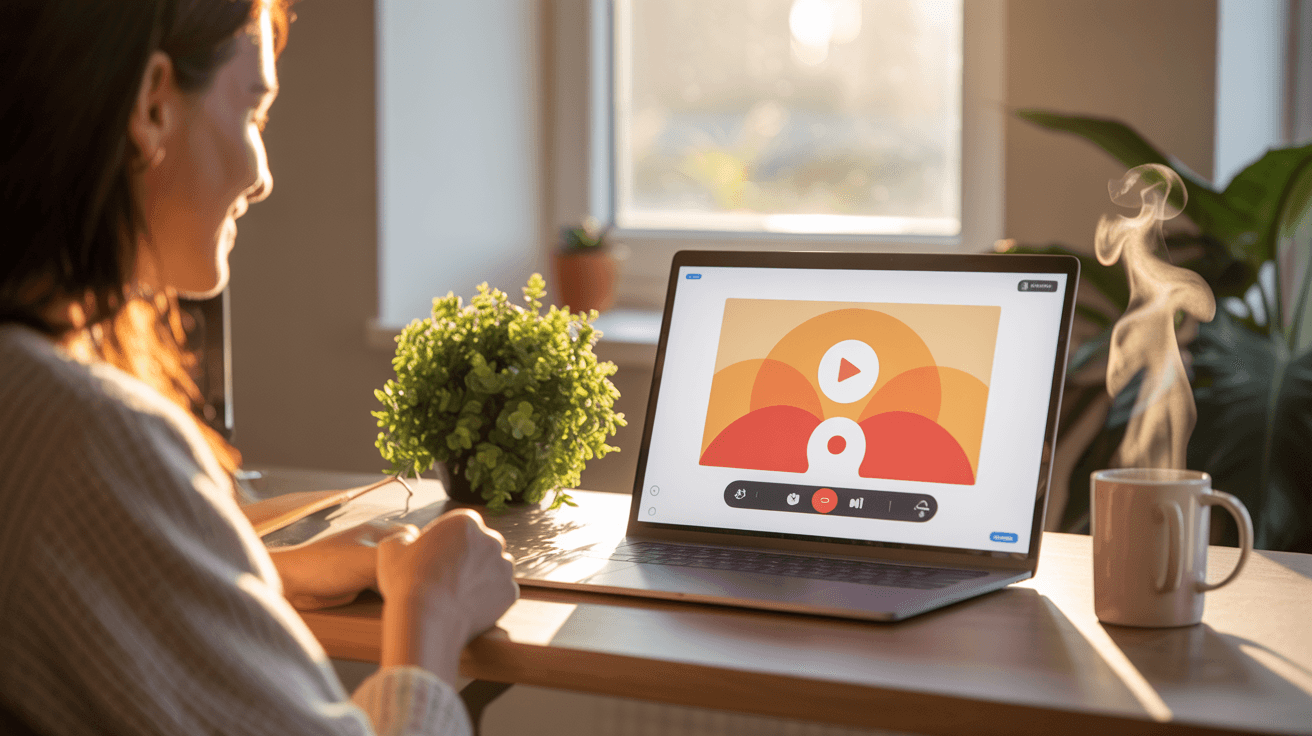
If the term sounds technical, do not worry — the concept is simple. An asynchronous video interview is a screening method where candidates record their answers to pre-set questions on their own time. There is no live interviewer. No real-time conversation. You click a link, see a question pop up on your screen, get a few seconds to think, and then your camera starts recording. Your responses get uploaded to a platform where recruiters and hiring managers review them later at their convenience.
These interviews are almost always used in the early stages of hiring — right after you submit your application but before you ever speak to a real person. The idea is to help employers quickly filter through large applicant pools without spending hours on phone screens. And in 2026, with remote work now the default for so many companies, this approach has gone from niche experiment to mainstream standard.
At Your Career Place, we have seen candidates go from never hearing about these interviews to facing them for nearly every application they submit. It is a dramatic shift, and it is reshaping what “getting your foot in the door” actually looks like.
The Big News: Why Asynchronous Interviews Are Trending in 2026
The asynchronous video interview market is absolutely booming right now. Industry projections put the video interviewing market on track to hit $892 million by 2030, growing at a 17.2% annual rate. That is not a blip — that is a fundamental restructuring of how companies evaluate talent.
Several major developments have pushed this trend into overdrive:
Zoom acquired BrightHire in December 2025, bringing interview intelligence — AI-powered transcripts, structured scorecards, and real-time coaching cues — directly into the world’s most popular video platform. Meanwhile, Radancy bought myInterview, folding one-way video capabilities into a massive unified talent acquisition system used by enterprise employers worldwide.
The platform landscape has become fiercely competitive. HireVue continues to dominate with AI analytics and gamified assessments. Willo and Hirevire have carved out space as simple, candidate-friendly options for startups and small teams. Jobma, Spark Hire, VidCruiter, PMaps, and ScreeningHive all offer slightly different flavors of the same core idea: record once, review forever.
AI has become deeply embedded in these platforms. Modern tools now analyze speech patterns, tone, word choice, and even nonverbal cues to generate candidate summaries. Some platforms auto-score responses for “communication clarity” or “leadership potential.” It sounds futuristic, and in many ways, it is. But it also raises serious questions about fairness, accuracy, and whether an algorithm should have any say in someone’s career trajectory.
At Your Career Place, our advice to candidates has evolved alongside these tools. What worked in 2023 does not cut it anymore. The game has changed, and understanding the rules is half the battle.
Boomer’s Perspective: “This Is the Best Thing to Happen to Job Seekers”
Let us start with the optimists — the people who look at asynchronous video interviews and see opportunity, efficiency, and fairness. And honestly? They have some solid points.
Scheduling is no longer a nightmare. If you have ever played email tag with a recruiter for a week just to find a 20-minute phone screen slot, you know how frustrating traditional scheduling can be. Asynchronous interviews remove that friction entirely. You record when you are ready — early morning, late at night, whenever works for your schedule. For parents, caregivers, people working multiple jobs, or anyone with an unpredictable calendar, that flexibility is genuinely valuable.
Every candidate gets the same shot. In a live interview, the conversation can go in wildly different directions depending on the interviewer’s mood, energy level, or unconscious biases. One candidate might get friendly follow-up questions that let them shine; another gets rushed through a checklist. With asynchronous interviews, everyone sees the exact same questions under the exact same conditions. That standardization can reduce bias and create a more level playing field — at least in theory.
You can prepare and polish your answers. Unlike a live conversation where a tricky question can catch you off guard, asynchronous formats let you think before you speak. Many platforms even allow retakes. You can practice your responses, refine your messaging, and present your best self. For nervous interviewees or non-native English speakers, that breathing room can be a game-changer.
Geography is irrelevant. Companies can screen candidates from anywhere in the world without worrying about time zones. A startup in Austin can evaluate a candidate in Manila as easily as someone across the street. That opens doors for job seekers in smaller markets who previously never had access to big-city opportunities.
Recruiters can actually focus on the best fits. By the time you reach a live interview, the employer has already decided you are worth talking to. That means the human conversation — when it finally happens — is more substantive and targeted. No more wasting 15 minutes explaining your resume to someone who has not read it.
The boomers among us — and we use that term lovingly at Your Career Place — see asynchronous video interviews as a natural evolution. Technology making hiring faster, fairer, and more accessible. What is not to like?
Doomer’s Perspective: “This Is Cold, Alienating, and Fundamentally Unfair”
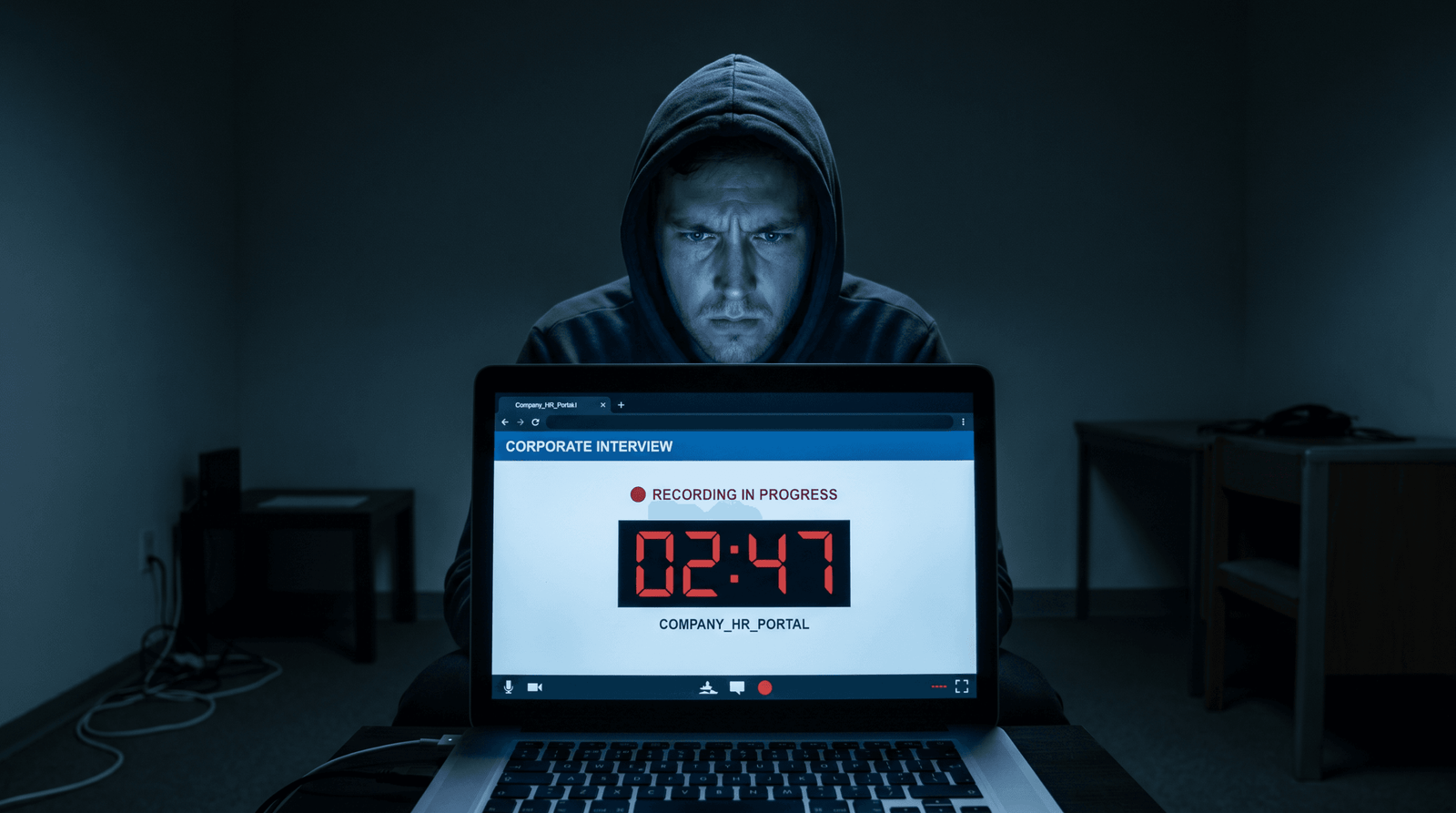
Now for the other side. And if you have ever stared into a webcam at 11 PM, rerecording the same answer for the fifth time because your lighting looked weird, you might already know where this is going.
There is no human connection. A job search is already one of the most emotionally draining experiences a person can go through. Rejection after rejection, ghosting, the constant pressure to sell yourself. Asynchronous video interviews strip away the one thing that makes the process bearable: another human being on the other end. You are talking to a screen. No eye contact. No rapport. No chance to read the room and adjust your energy. It is isolating, and for many candidates, it feels dehumanizing.
You cannot ask clarifying questions. In a live interview, if a question is ambiguous, you can say, “Could you clarify what you mean by that?” In an asynchronous format, you get the question as written — and if you misinterpret it, that is on you. No second chances, no dialogue, no way to recover. That one-way dynamic puts all the pressure on the candidate and none of the accountability on the employer.
AI scoring is biased and opaque. Many platforms now use algorithms to “score” your responses based on speech patterns, vocabulary, tone, or facial expressions. But these algorithms are trained on data, and data reflects existing biases. An AI might penalize a soft-spoken candidate, someone with a regional accent, or a person whose communication style does not match the “ideal” profile the system learned from. The worst part? Candidates rarely know they are being scored by AI, let alone how to appeal a bad algorithmic rating.
It signals a low-touch, transactional employer. When your first interaction with a company is a recorded video submission, what message does that send? For some candidates, it says, “We value efficiency over people.” It can make even a great company feel corporate and distant. Employer branding matters, and asynchronous interviews — done poorly — can torpedo a company’s reputation with talent.
The process can be gamed. Candidates use AI tools to write scripts, practice with ChatGPT, or even have someone off-camera feeding them answers. Employers respond by adding AI detection, eye-tracking, and proctoring — turning the interview into an adversarial arms race. Is this really the foundation we want for professional relationships?
Feedback is basically nonexistent. Remember that statistic we mentioned earlier? Only 5.5% of rejected candidates get even moderately useful feedback. Asynchronous interviews make that worse. When a human never spoke to you, there is no one to explain why you were passed over. You just get a form email and move on. That opacity erodes trust and leaves candidates guessing what went wrong.
At Your Career Place, we hear these frustrations daily. The doomer perspective is not just pessimism for pessimism’s sake — it is a real, visceral reaction to a hiring process that increasingly treats people like data points.
Key Takeaways: How to Navigate Asynchronous Video Interviews in 2026
So where does that leave you? Whether you are a boomer or a doomer about this trend, the reality is that asynchronous video interviews are now a standard part of the job search landscape. Here is how Your Career Place recommends handling them:
1. Treat them like live interviews. Dress professionally. Set up good lighting. Test your camera and microphone. Do not let the “record at home” format trick you into being casual. First impressions matter, even through a screen.
2. Prepare STAR-method stories in advance. Most asynchronous questions are behavioral. “Tell me about a time when…” Have 5-10 stories ready that cover leadership, conflict, failure, teamwork, and problem-solving. Practice delivering them in 60-90 seconds.
3. Look at the camera, not the screen. This is the single biggest mistake candidates make. Eye contact with the camera simulates eye contact with a person. It makes you appear confident and engaged.
4. Use the practice features. Most platforms offer practice questions or retakes. Use them. Get comfortable with the interface before the real thing starts.
5. Keep answers concise and targeted. Recruiters are reviewing dozens — sometimes hundreds — of these responses. Get to the point quickly. Hook them in the first 10 seconds.
6. Research the company and role deeply. Tie every answer back to what the employer actually cares about. Generic responses get skipped. Specific, relevant answers get callbacks.
7. Do not over-rely on AI assistance. It is fine to brainstorm with ChatGPT, but your answers need to sound like you. Employers are getting better at detecting scripted, AI-written responses. Authenticity wins.
Conclusion
Asynchronous video interviews are one of the most divisive trends in hiring right now. For some, they represent a smarter, faster, fairer way to evaluate talent. For others, they symbolize everything wrong with modern recruitment: cold, algorithmic, and disconnected from the human beings at the center of it all.
The truth, as always, lies somewhere in between. Used thoughtfully — kept short, early in the process, supplemented by real human conversations later — asynchronous interviews can be a useful tool. Used poorly — overlong, over-AI-scored, and treated as a replacement for human judgment — they can alienate great candidates and damage employer brands.
At Your Career Place, our mission is to help job seekers navigate whatever the hiring landscape throws at them — whether it is a friendly recruiter on Zoom or a blinking red record button at midnight. The tools will keep evolving. The companies will keep experimenting. But the fundamentals never change: be prepared, be authentic, and remember that on the other side of every algorithm is a human being who once had to interview for a job too.
Happy job hunting. And if you do hit record this week, take a breath, smile at the camera, and show them what you have got.
Looking for more interview tips, career advice, and hiring trend breakdowns? Visit Your Career Place at yourcareerplace.com and subscribe to our weekly newsletter. We are here to help you land the job you deserve — one recording at a time.