

The Return of In-Person Interviews in 2026: Are Face-to-Face Meetings Back for Good?
The Return of In-Person Interviews in 2026: Are Face-to-Face Meetings Back for Good?
For the last few years, job seekers got comfortable. You could interview in pajama pants. You could have notes hidden on a second monitor. You could even—let’s be honest—lean on a little AI help when the interviewer asked something tricky. Virtual interviews were the great equalizer, or so we thought.
Well, 2026 just flipped the script. Employers are done playing defense against AI-assisted interview cheating, and they are responding in the most old-school way possible: they want to see you in person. The return of in-person interviews is not a nostalgic throwback. It is a direct reaction to a hiring landscape where 58% of UK hiring managers now suspect candidates are using real-time AI tools during virtual interviews, and a staggering 98% view that behavior negatively. At Your Career Place, we have been tracking this shift closely, and it is reshaping everything from how you prepare to what you wear on interview day.
What Is Actually Happening Right Now
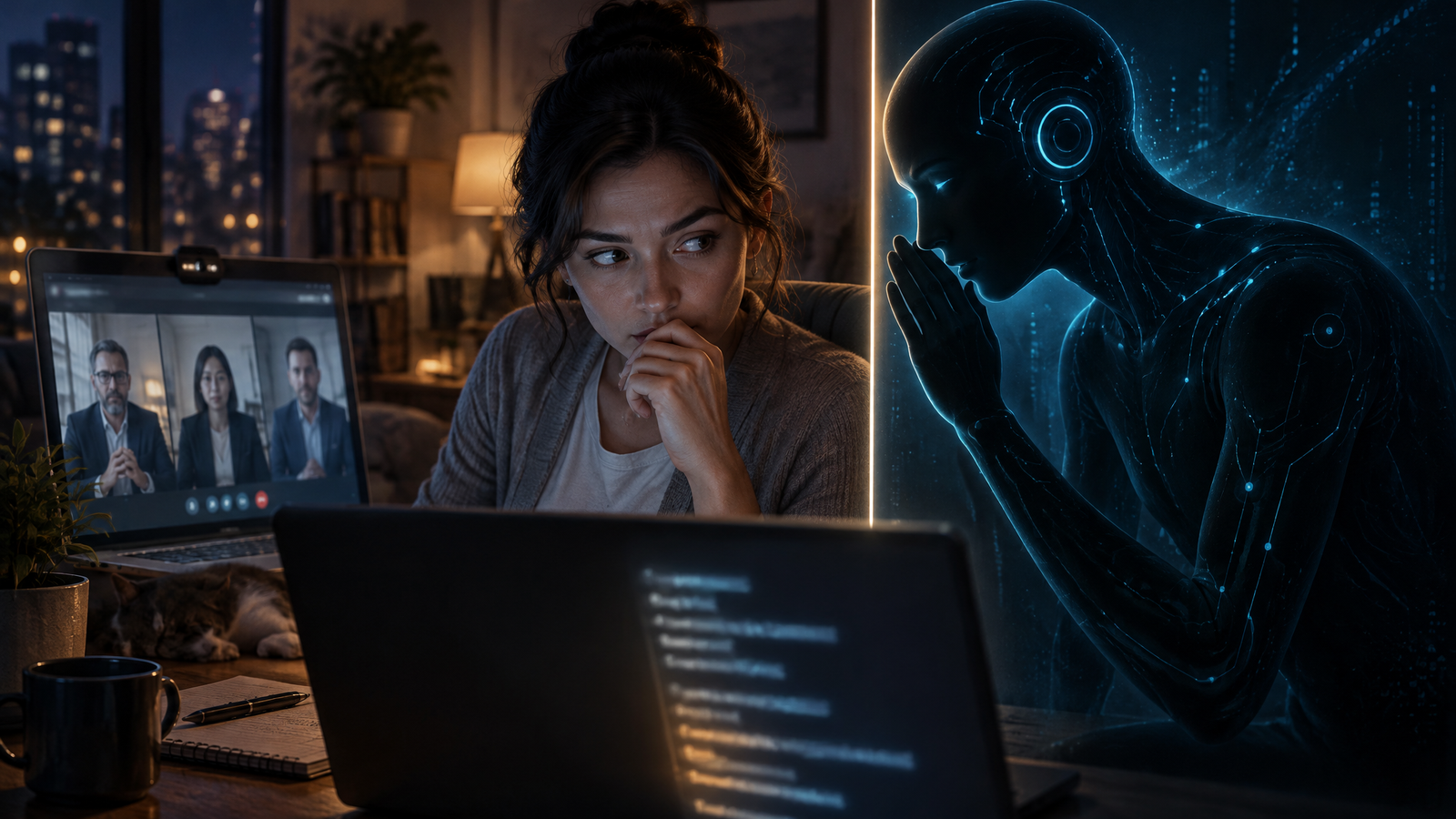
The data tells a clear story. A November 2026 report from the Chartered Management Institute found that nearly three in five hiring managers have caught or suspected candidates using hidden AI assistance during virtual interviews. Recruiters describe watching candidates’ eyes dart across multiple screens while they deliver eerily polished, robotic answers that sound nothing like natural conversation. Some candidates are running stealth-mode AI tools that generate responses in real time, effectively turning the interview into a Turing test the employer never signed up for.
The employer reaction has been swift and unanimous. That same CMI survey revealed that 98% of hiring managers feel negatively about AI reliance during interviews. Break it down and the sentiment is sharp: 56% call it inappropriate, 50% worry about skill misrepresentation, 50% lose confidence in actual abilities, 46% question whether the person can work independently, and 20% flat-out consider it dishonest.
This is not just a UK phenomenon. In the United States, HR Reporter noted in November 2026 that roughly 24% of hiring professionals have lost confidence in resumes entirely, and over a third say they cannot reliably detect when AI is being used to misrepresent a candidate. The traditional signals—resumes, cover letters, even take-home coding tests—have been flattened by mass AI optimization. Every candidate looks equally qualified on paper, which means the real test of competency has shifted squarely to the live interview.
And here is where it gets interesting. Employers are not just tweaking their virtual interview questions. They are abandoning the format altogether. The Globe and Mail reported in early November that global enterprises and recruitment firms are increasingly returning to face-to-face meetings, with some companies flying candidates in for full-day collaborative case studies. Google, the company that basically invented modern technical hiring, re-introduced mandatory in-person interview rounds for technical roles. When Google goes back to the whiteboard, you know the trend is real.
It is not just about catching cheaters, either. The shift reflects a deeper frustration with what virtual interviews cannot measure. Can this person build rapport with a team? Do they think on their feet when there is no screen to hide behind? How do they handle pressure in a room full of strangers? These are the questions employers are now prioritizing, and they are questions that Zoom simply cannot answer.
The Boomer’s Perspective: “Finally, We Can Actually See Who We Are Hiring”
If you are an optimist—or a hiring manager who has been burned one too many times by AI-enhanced candidates—the return to in-person interviews feels like a breath of fresh air. The Boomer perspective is straightforward: this correction was inevitable, necessary, and ultimately good for everyone involved.
First, in-person interviews restore signal integrity. For years, hiring managers complained that virtual interviews made every candidate blend into the same polished, rehearsed persona. With AI now generating those personas in real time, the signal-to-noise ratio has collapsed entirely. In-person interviews cut through the noise. You see body language. You hear tone of voice without latency. You watch how a candidate walks into a room and handles an unexpected follow-up question. These are not superficial details. They are the raw data of human judgment, and they matter enormously for roles that require collaboration, leadership, and client interaction.
Second, the return to face-to-face meetings levels the playing field in unexpected ways. Yes, it disadvantages candidates who cannot afford to travel. But it also disadvantages candidates who were outsourcing their interview performance to AI tools. For genuine, prepared candidates—the ones who actually did the work and can explain their thinking—in-person interviews are an opportunity to shine without competing against a chatbot. Your Career Place has always emphasized authentic preparation over shortcuts, and this trend rewards exactly that approach.
Third, employers are using the in-person format to design richer, more meaningful evaluations. Instead of generic hypothetical questions like “tell me about a time you faced a challenge,” companies are deploying live work sessions, collaborative problem-solving exercises, and role-specific case studies completed in real time. These formats test how candidates think, not what they memorized. A November 2026 article from Talent Signal News highlighted how organizations are observing candidates break down problems dynamically, handle ambiguity, and explain their reasoning aloud—skills that no AI proxy can fake.
Fourth, the Boomer sees anti-fraud measures as proportional and fair. Asking candidates to remove virtual backgrounds, pan their cameras around the room, or wave their hands in front of their faces might sound dystopian in a remote context. But in an in-person setting, none of that is necessary. The room is the room. The candidate is the candidate. There are no hidden screens, no stealth-mode assistants, no carefully staged lighting. The interview becomes what it was always supposed to be: a direct conversation between two humans evaluating fit.
Finally, there is the economic argument. Yes, flying candidates in costs money. But how much does a bad hire cost? How much does it cost to discover three months in that your new engineer cannot actually code without AI assistance? How much does it cost to realize your new sales hire outsourced every client interaction to a chatbot? When framed against the cost of a mismatched hire, the price of a plane ticket starts to look like a bargain. Smart employers are doing the math, and the math says: meet them in person.
The Doomer’s Perspective: “This Excludes More People Than It Helps”
For every hiring manager celebrating the return of face-to-face interviews, there is a job seeker staring at a travel budget they do not have. The Doomer perspective is not anti-authenticity. It is anti-exclusion, and it raises some genuinely difficult questions about who gets left behind when in-person becomes the default.
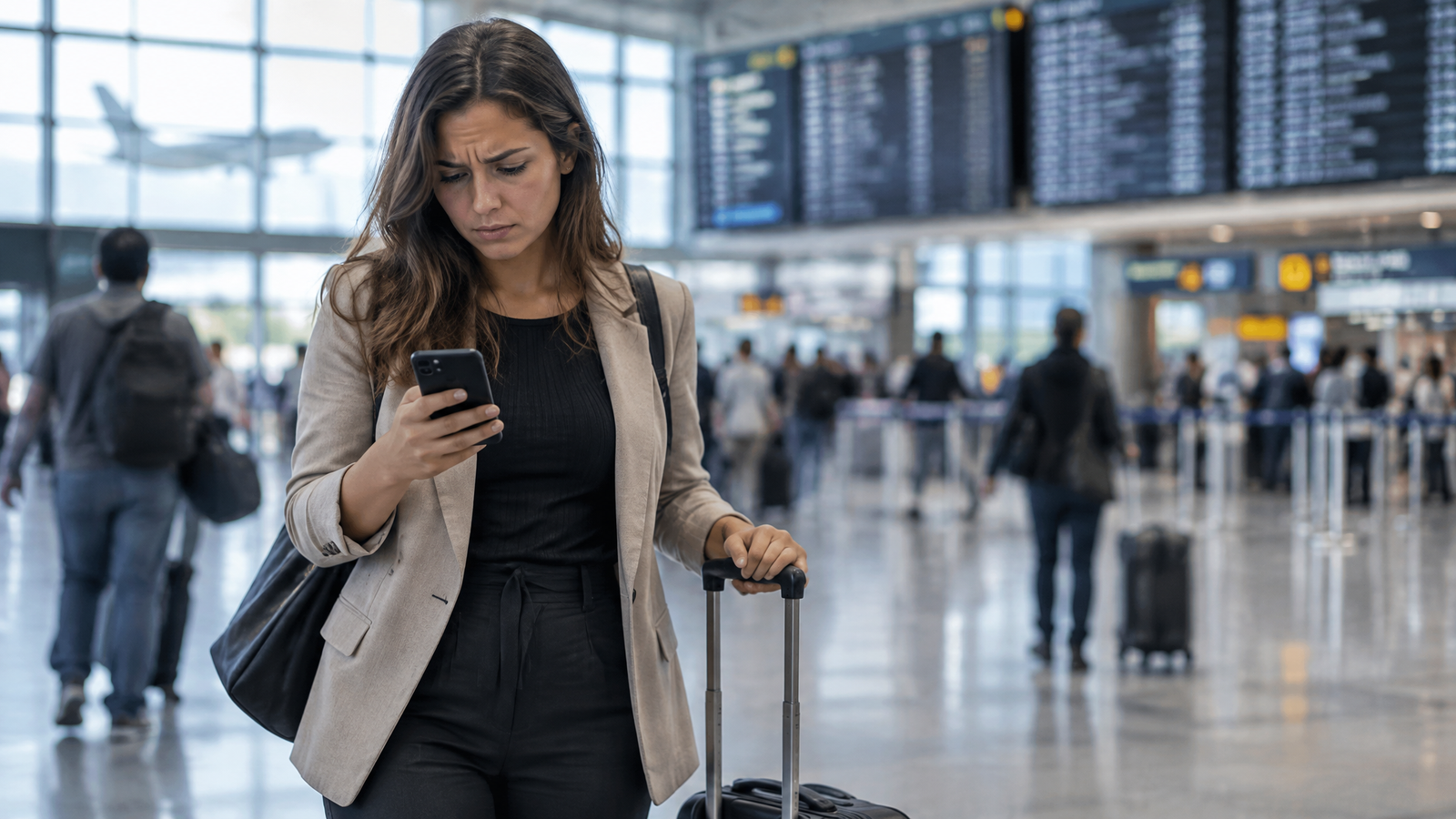
The most obvious problem is access. Not every candidate lives near a major corporate hub. Not every candidate can afford a flight, a hotel, and a day off work for an interview that might not even lead to an offer. A single in-person day can cost hundreds of dollars—sometimes thousands if cross-country travel is involved. For early-career candidates or anyone living paycheck to paycheck, that cost is prohibitive. Virtual interviews democratized access to opportunity in a way that in-person interviews simply cannot replicate. Rolling that back filters candidates by financial means and geography before anyone evaluates their actual qualifications.
Then there is the disability and health angle. Candidates with chronic illnesses, mobility limitations, or immunocompromised conditions often relied on virtual interviews as a reasonable accommodation. Forcing in-person attendance as a default removes that accommodation unless candidates explicitly advocate for themselves—a process that itself carries stigma and can bias hiring decisions.
There is also a fairness concern about the anti-fraud measures themselves. Even in remote contexts, the new verification protocols—camera panning, hand-waving, background removal—can feel invasive and dehumanizing. The Wall Street Journal reported in August 2026 on the rise of these measures, and the candidate response was overwhelmingly negative. People described feeling like suspects rather than applicants. When those same attitudes shape in-person interviews—hyper-vigilant observation, suspicion-first evaluation—the interview experience itself becomes toxic. Candidates sense they are being interrogated, not interviewed, and that changes how they perform.
The Doomer also points to the data on hiring speed. A November 2026 report from Talent Observer found that technical roles now average five interview events per hire, with a median timeline of 76 days from opening to first hire. Technical offer acceptance rates sit at just 73%, compared to 84% for business roles. Thirty-seven percent of US job seekers have voluntarily withdrawn from hiring processes that dragged on too long. Adding in-person rounds—with scheduling complexity, travel coordination, and calendar conflicts—risks making these timelines even worse. The best candidates have options, and they will not wait around for a six-month interview marathon that requires two flights and a hotel stay.
Finally, there is the question of whether in-person interviews actually solve the problem they are meant to solve. AI fluency is increasingly a legitimate job skill. Google allows Gemini in coding interviews. DoorDash rebuilt its entire technical evaluation around AI-assisted working sessions. Shopify, Meta, Canva, and Red Hat all permit AI tools during live evaluations. The forward-thinking employers are not banning AI. They are testing how candidates use it. The Doomer argues that the companies rushing back to in-person interviews are fighting the last war. They are trying to recreate a 2019 hiring process in a 2026 world, and the candidates who thrive will be the ones who find ways to adapt—not the ones who get excluded by geography and cost.
Key Takeaways for Job Seekers
So what should you actually do? Here is the practical breakdown from Your Career Place:
Prepare for in-person as the default. Even if a role starts with a virtual screen, assume there will be an in-person round. Practice your handshake, your eye contact, and your ability to think aloud without notes. These are skills that atrophied during the remote-work era, and they are suddenly valuable again.
Do not rely on AI assistance during live interviews. The data is overwhelming: employers hate it, they are getting better at detecting it, and the consequences for being caught range from immediate rejection to blacklisting. Use AI to prepare, to brainstorm, to practice—but not to perform.
Negotiate travel support early. If an employer requests in-person attendance and you face financial barriers, ask about travel reimbursement before you commit. Many companies budget for this but do not advertise it. The worst they can say is no, and the best they can say is yes.
Practice live problem-solving out loud. The trend toward live work sessions and collaborative case studies means employers want to see your thinking process, not just your final answer. Practice explaining your reasoning, handling ambiguity, and adjusting your approach when new information emerges.
Be ready to discuss your relationship with AI. A September 2026 ZipRecruiter survey found that 82.5% of workers use AI at work. Employers increasingly ask how you use it, how you would implement it in the role, and how you think about ethics and safety. Have a genuine, thoughtful answer ready.
Know that speed matters. With offer acceptance rates dropping and candidate drop-off rising, the employers who move fast have an advantage. If you are in a process, respond promptly, keep momentum alive, and do not let weeks pass between rounds.
The return of in-person interviews in 2026 is not a trend. It is a structural correction driven by real employer frustration with AI cheating, flattened candidate signals, and the limits of virtual evaluation. Whether you see it as a welcome return to authenticity or a troubling barrier to access depends on where you stand. Either way, it is the new reality, and the job seekers who adapt will be the ones who land the offers.
At Your Career Place, we are here to help you navigate that reality—with honest advice, real strategies, and no shortcuts. Because in a world where everyone is trying to game the system, the ones who show up as themselves are the ones who win.