
How Small Businesses Can Recruit Smarter
Without Breaking the Bank
Let’s be honest: hiring is one of the most stressful and time-consuming tasks a small business owner does. You post a job, get flooded with applications (or worse, hear crickets), spend hours sorting through resumes, play phone tag trying to schedule interviews, and then — after all that — sometimes still end up with the wrong person.
Sound familiar? Here at Your Career Place, we hear this story all the time. And in 2026, there’s finally a real solution that doesn’t require a six-figure HR budget: AI-powered recruitment tools.
This week, we’re diving deep into what’s actually happening in the world of AI hiring, what it means for small businesses like yours, and — as always — we’re giving you both sides of the story. Because not everyone agrees that handing your hiring process to an algorithm is a great idea.

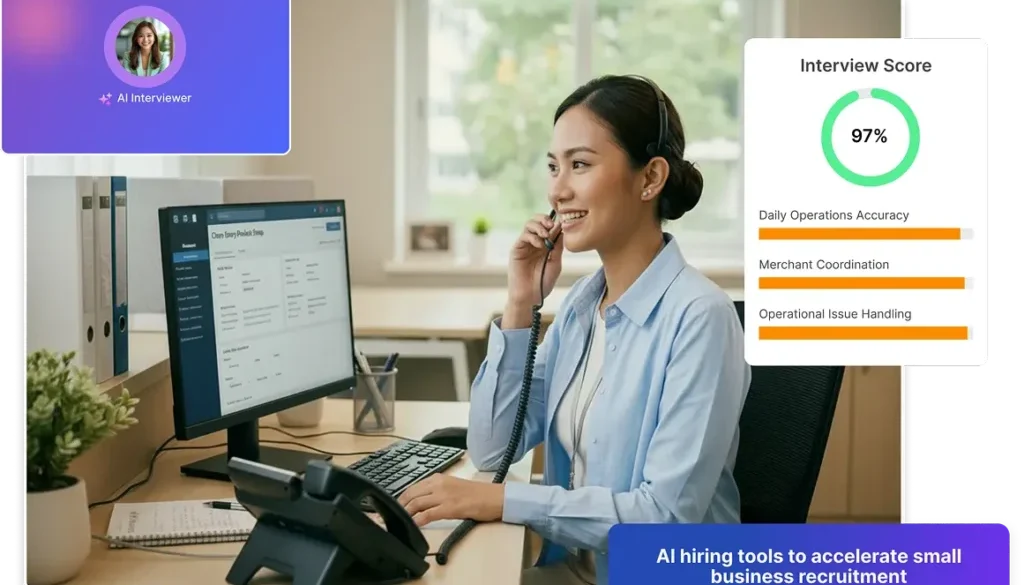
Modern AI recruiting platforms are now built specifically with small businesses in mind. (Source: Kita HQ)
What’s Actually Happening in AI Hiring Right Now
The AI recruitment market in 2026 looks very different from even two years ago. The big story isn’t just that there are more tools — it’s that those tools have gotten dramatically smarter and more integrated.
We’ve moved past the era of AI that just scans keywords on a resume. Today’s platforms use what’s called “agentic AI” — systems that can autonomously manage entire chunks of the hiring process from start to finish. Think of it less like a calculator and more like a very efficient junior recruiter who never sleeps.
Some of the biggest moves in the industry recently: Workday acquired Paradox (the company behind the popular AI scheduling assistant “Olivia”) in late 2025, and SAP snapped up SmartRecruiters around the same time. These consolidations signal that AI hiring isn’t a niche add-on anymore — it’s becoming the backbone of how companies find people.
For small businesses, the most relevant tools fall into a few categories:
- AI-powered Applicant Tracking Systems (ATS) like Workable, Manatal, and Breezy HR — these are your central hub, and most now have AI baked right in.
- Automated screening tools that rank and score candidates based on skills and experience, not just keywords.
- Conversational scheduling assistants like Paradox’s Olivia or candidate.fyi, which handle all the back-and-forth of setting up interviews via text or chat.
- AI interview intelligence tools like Metaview, which record and summarize interviews so you can focus on the conversation instead of furiously taking notes.
The regulatory landscape is also shifting fast. The EU AI Act takes full effect in August 2026, requiring much greater transparency from AI hiring tools. In the U.S., New York City’s Local Law 144 already requires employers using AI in hiring to conduct annual bias audits. The EEOC has made clear that existing anti-discrimination laws apply fully to AI-driven decisions. In short: the rules are catching up to the technology.
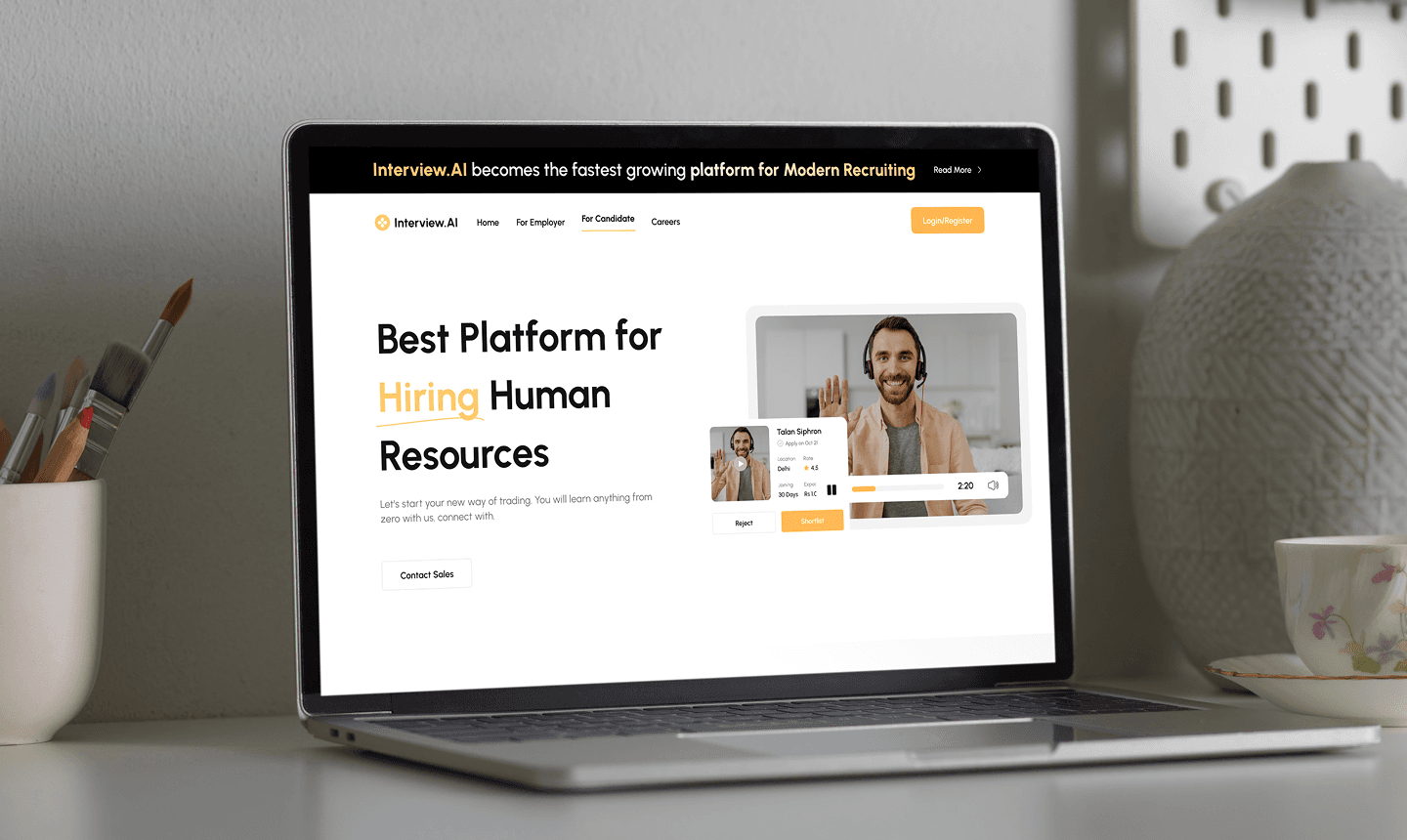
AI interview and screening systems can automate the most time-consuming parts of the hiring funnel. (Source: GeekyAnts)
🌟 Boomer’s Perspective: “This Is the Great Equalizer Small Businesses Have Been Waiting For”
Boomer has been running a small landscaping company for 22 years. He’s hired dozens of people, fired a few, and spent more hours than he can count sorting through applications and playing phone-tag with candidates who never showed up for interviews. When his business coach suggested he try an AI-powered ATS last year, he was skeptical. Six months later, he’s a convert.
“I used to spend my Sunday evenings going through resumes,” he says. “Now the system does it for me, and by Monday morning, I’ve got a ranked list of the five best candidates. I just picked up the phone.”
Boomer’s experience reflects what the data shows. AI hiring tools can cut time-to-hire by 40 to 60 percent and reduce cost-per-hire by up to 30 percent. For a small business owner who’s also the CEO, CFO, and head of operations, that’s not a minor convenience — it’s a game-changer.
Here’s what the optimists at Your Career Place find genuinely exciting about AI hiring in 2026:
You Can Finally Compete With Big Companies for Talent
Large corporations have had dedicated recruiting teams and sophisticated HR software for years. AI tools now give small businesses access to the same capabilities — proactive candidate sourcing, automated screening, structured interviews — at a fraction of the cost. Platforms like Manatal start at around $15 per user per month. Workable’s small business plan runs about $299 per month. Compare that to the cost of a bad hire (typically 30% of that employee’s annual salary) and the ROI math gets very compelling very fast.
It Removes Some Human Bias From the Equation
Here’s something that doesn’t get talked about enough: humans are biased too. We favor candidates who went to schools we recognize, whose names sound familiar, who remind us of ourselves. AI screening tools, when properly designed and audited, apply the same criteria to every single application. That consistency can actually help small businesses build more diverse, higher-performing teams.
It Frees You Up to Do the Human Parts of Hiring
The best use of AI in hiring isn’t to replace human judgment — it’s to eliminate the administrative grind so you can focus on what actually matters: getting to know candidates, assessing culture fit, and making thoughtful decisions. When an AI assistant handles scheduling and a tool like Metaview takes interview notes, you can actually be present in the conversation instead of scribbling on a notepad.
The Tools Are Getting Genuinely Accessible
Two years ago, most of the best AI hiring tools were priced for enterprise clients. That’s changed. There’s now a robust ecosystem of tools built specifically for small businesses — teams of 5 to 50 people — with pricing and features that make sense at that scale. Your Career Place has seen more small business owners successfully adopt these tools in the past 12 months than in the previous five years combined.
⚠️ Doomer’s Perspective: “You’re Trusting an Algorithm With One of the Most Human Decisions You Make”
Doomer runs a small marketing agency and tried an AI screening tool last year after a particularly brutal hiring season. She turned it off after three months. “It kept surfacing candidates who looked great on paper but were completely wrong for our culture,” she says. “And I’m pretty sure it was filtering out some really interesting people who just didn’t write their resumes the ‘right’ way.”
Doomer’s concerns are well-founded, and at Your Career Place, we take them seriously.
AI Bias Is Real and It Can Hurt You Legally
The most famous example is Amazon’s AI recruiting tool, which the company quietly scrapped after discovering it was systematically penalizing resumes that included the word “women’s” — because it had been trained on a decade of resumes submitted mostly by men. That was 2018. The problem hasn’t gone away. In January 2026, a proposed class action lawsuit was filed against Eightfold AI, alleging that its “black-box” model couldn’t explain why it was rejecting certain candidates. Workday is facing similar litigation.
For small businesses, the legal exposure is real. The EEOC has made clear that you are responsible for the outcomes of any AI tool you use in hiring, even if a third-party vendor built it. If your AI screening tool has a disparate impact on candidates of a particular race, gender, or age — even unintentionally — you could be liable.
The “Self-Preference” Problem Is Emerging
Here’s a new wrinkle that researchers flagged in 2026: AI models used to evaluate resumes are tending to favor resumes written by AI. If your screening tool was built on the same underlying model that candidates are using to write their applications, it may systematically disadvantage people who wrote their own resumes in their own voice. That’s a troubling feedback loop.
Privacy and Transparency Concerns
When you use an AI hiring tool, you’re feeding it a lot of sensitive data — about your candidates and about your business. Where does that data go? How is it used to train future models? Many vendors are vague about this. And candidates have a right to know when AI is being used to evaluate them. Under NYC Local Law 144, employers must notify candidates and offer an alternative process. As these laws spread to other jurisdictions, small businesses that haven’t thought about this could find themselves scrambling to comply.
The Human Touch Is a Competitive Advantage You Might Be Giving Away
Here’s the irony: as large corporations automate more and more of their hiring process, the small businesses that keep it personal may actually have an edge. Many talented candidates — especially experienced ones — are turned off by impersonal, automated hiring experiences. If your AI tool sends a rejection email before a human has even looked at the application, you might be burning bridges with people who could have been great fits. Your Career Place has heard from more than a few job seekers who specifically seek out smaller employers because they want to talk to a real person.
.png)
AI recruitment dashboards give small business owners real-time visibility into their hiring pipeline. (Source: RecCopilot)
What This Looks Like in Practice: A Quick Snapshot
To make this concrete, here’s a rough look at what AI hiring tools cost and who they’re built for in 2026:
| Tool | Best For | Starting Price (2026) |
|---|---|---|
| Manatal | Very small teams, budget-conscious | ~$15/user/month |
| Workable | Growing businesses (up to ~300 employees) | ~$299/month |
| Metaview | Interview intelligence & note-taking | ~$50/user/month |
| Spark Hire | Video screening | ~$249/month |
| Breezy HR | All-in-one for small teams | Free tier available |
The practical advice from experts — and from what we’ve seen at Your Career Place — is to start simple. Pick one core ATS with AI built in. Don’t try to layer five different tools on top of each other right away. Make sure whatever you choose can write data back to your central system automatically, or you’ll end up doing double data entry and defeating the whole purpose.
“The businesses that get the most out of AI hiring tools are the ones that use them to handle the administrative grind — and then show up fully present for the human conversations that actually matter.”
🔑 Key Takeaways for Small Business Owners
- AI hiring tools are now genuinely accessible for small businesses — you don’t need an enterprise budget to benefit from automated screening, scheduling, and interview intelligence.
- The biggest wins are in time savings: AI can cut your time-to-hire by 40–60% and reduce cost-per-hire by up to 30%. For a busy owner, that’s real money and real hours back in your week.
- Start with a core ATS that has AI built in (Workable, Manatal, or Breezy HR are solid starting points for most small businesses). Don’t over-complicate it with too many add-ons at first.
- Bias is a real risk — not just a PR problem. The EEOC holds you responsible for your AI tool’s outcomes. Choose platforms that are transparent about how their models work and that undergo third-party audits.
- Keep humans in the loop for final decisions. AI should narrow the field and handle logistics — but the decision to hire someone should always involve a real person who can assess culture fit and context.
- Your personal touch is a competitive advantage. Don’t automate away the parts of hiring that make candidates want to work for a small business in the first place.
The Bottom Line
AI hiring tools in 2026 represent a genuine opportunity for small businesses to level the playing field with larger competitors. The technology has matured, the prices have come down, and the tools are increasingly built with small teams in mind. At Your Career Place, we believe that used thoughtfully — with clear human oversight and a healthy dose of skepticism — these tools can help you build better teams faster.
But “thoughtfully” is the key word. The risks around bias, privacy, and legal compliance are real and growing. The businesses that will get the most out of AI hiring are the ones that treat it as a powerful assistant, not a replacement for human judgment.
As always, Your Career Place is here to help you navigate these decisions. Whether you’re just starting to explore AI tools or you’re already using them and wondering if you’re doing it right, we’d love to hear from you. Drop us a comment below or reach out directly — because at the end of the day, hiring is still about people, and so are we.
© 2026 Your Career Place. All rights reserved. | yourcareerplace.com