

Cryptocurrency in 2026: Is the Latest Bitcoin Boom Your Big Opportunity — or a Big Warning Sign?
Cryptocurrency in 2026: Is the Latest Bitcoin Boom Your Big Opportunity — or a Big Warning Sign?
If you’ve been watching the financial news lately, you’ve probably noticed that cryptocurrency is back in the headlines — and in a big way. Bitcoin just posted its strongest weekly gain since late 2024, surging from around $62,800 to nearly $80,000 in a single week. Ethereum climbed back above $2,500. Institutional investors are piling in. The SEC is proposing new rules. And the White House is pushing legislation to make the U.S. the global crypto capital.
So what does all of this mean for you — a working professional trying to make smart decisions with your money? At Your Career Place, we believe that understanding the financial landscape is just as important as building your career. That’s why we’re breaking down the latest cryptocurrency developments through two very different lenses: the Boomer (optimistic) perspective and the Doomer (pessimistic) perspective. Because the truth, as always, probably lives somewhere in between.

What’s Happening in Crypto Right Now
Let’s start with the facts on the ground, because August 2026 has been a genuinely eventful month for digital assets.
Bitcoin’s explosive rally: On August 19, the U.S. Treasury announced it would double its buybacks of long-dated government bonds. That move eased pressure on bond yields and sent investors scrambling for higher-risk, higher-reward assets — including crypto. Bitcoin shot up 22% in a single week, its best performance since November 2024. As of August 25, BTC was trading around $79,000, though it remains below its all-time high of $126,198 set in October 2025 and its 2026 peak of $94,820 from January.
Ethereum’s comeback: Ethereum, which had dipped below $2,000 earlier in August, climbed back to $2,507 by August 24 — its highest level since early 2026. That’s a significant recovery for the world’s second-largest cryptocurrency.
Regulatory clarity on the horizon: On August 18, the SEC proposed its “Regulation Crypto Assets” framework, which would create formal exemptions for crypto capital formation — including offerings up to $75 million per year. The SEC and CFTC also signed a Memorandum of Understanding earlier this year to harmonize their oversight of digital assets, categorizing them into digital commodities, digital securities, stablecoins, and more. The Clarity Act, which would provide even broader legislative clarity, is being pushed by the White House and industry leaders.
Institutional money keeps flowing in: Strategy (formerly MicroStrategy) now holds 840,447 Bitcoin at a total cost of $63.36 billion. Spot Bitcoin ETFs have reached $102 billion in assets under management. Major banks like JPMorgan and Morgan Stanley are deepening their crypto custody and lending services. And tokenized real-world assets — think Treasury bills and financial instruments on the blockchain — have reached $26.71 billion in distributed value.
Who’s actually buying crypto? About 30% of American adults now own some form of cryptocurrency, with ownership concentrated in the 30–59 age range — prime working years. Roughly 45% of U.S. crypto holders have at least a bachelor’s degree. This is no longer just a young tech-bro phenomenon; it’s increasingly mainstream among educated, income-earning professionals.

The Boomer Perspective: “This Is the Moment Crypto Grows Up”
If you’re in the optimistic camp, the story of August 2026 is one of maturation. Cryptocurrency isn’t just a speculative playground anymore — it’s becoming a legitimate asset class with real institutional infrastructure behind it.
Think about what’s changed in just the past few years. Spot Bitcoin ETFs now hold over $100 billion in assets, meaning everyday investors can get crypto exposure through their regular brokerage accounts — no crypto wallets, no seed phrases, no technical headaches. Major banks are offering crypto custody services. The SEC is finally providing a clear regulatory framework instead of playing whack-a-mole with enforcement actions. And the U.S. government itself is talking about a strategic Bitcoin reserve.
For the optimist, the recent rally is a sign of things to come. Yes, Bitcoin is still below its all-time high. But the infrastructure being built right now — the ETFs, the banking integrations, the regulatory clarity, the tokenization of real-world assets — is laying the groundwork for the next major leg up. When institutional money has a clear, regulated pathway into crypto, the argument goes, the demand will be unlike anything we’ve seen before.
The Boomer perspective also points to the macro environment. With the Federal Reserve signaling that rate hikes are likely done, and with the Treasury actively injecting liquidity into markets, the conditions that historically favor risk assets — including crypto — are falling into place. If you’ve been waiting for a “safer” entry point into digital assets, the optimists say, the combination of regulatory clarity and institutional adoption might be as close as you’re going to get.
At Your Career Place, we’ve seen this pattern before in other asset classes: the early adopters take the risk, the institutions validate the asset, and then the mainstream follows. The question is whether you want to be ahead of that curve or behind it.
The Boomer case for crypto in 2026 isn’t about getting rich quick. It’s about recognizing that digital assets — particularly Bitcoin and Ethereum — have survived multiple boom-bust cycles and emerged with stronger infrastructure each time. A small, disciplined allocation (most advisors suggest 1–5% of a portfolio) could provide meaningful upside without catastrophic downside risk to your overall financial plan.
The Doomer Perspective: “We’ve Seen This Movie Before”
Now let’s pump the brakes — because the pessimists have some very valid points too.
First, let’s talk about what actually caused this rally. Bitcoin didn’t surge because of some fundamental breakthrough in crypto technology or adoption. It surged because the U.S. Treasury announced bond buybacks, which pushed investors into risk assets. That’s a macro-driven, liquidity-fueled rally — the same kind we’ve seen before, and the same kind that can reverse just as quickly when the macro environment shifts. If the Fed changes course, if inflation ticks back up, if the Treasury reverses its policy — the crypto market could give back those gains in days.
Second, consider where Bitcoin actually is relative to its highs. Yes, it rallied 22% in a week. But it’s still roughly 37% below its all-time high of $126,198 from October 2025. And it’s below its 2026 peak of $94,820 from January. For anyone who bought near those highs, this rally is cold comfort. The crypto market has a long history of spectacular gains followed by devastating drawdowns — and the people who get hurt the most are the ones who buy during the excitement and sell during the panic.
Third, regulatory clarity is a double-edged sword. Yes, the SEC’s new framework provides some certainty. But it also means more oversight, more compliance costs, and potentially more restrictions on what crypto projects can do. The Clarity Act is still stalled in the Senate. And as Commissioner Hester Peirce has noted, moving financial activities onto the blockchain doesn’t automatically exempt them from federal oversight. More regulation could mean a more “boring” crypto market — one that looks a lot more like traditional finance, with all the same gatekeepers and fees.
Fourth, analysts are now openly saying that Bitcoin has decoupled from its “digital gold” narrative. It no longer behaves like an inflation hedge — it behaves like a high-risk tech stock, correlated with liquidity conditions and macro sentiment. If that’s the case, what’s the actual investment thesis? Why take on the additional complexity and security risks of crypto when you could just buy a tech ETF?
Finally, the Doomer perspective reminds us that 37% of people — crypto owners and non-owners alike — cite volatility as their primary concern. Security risks are real: forgotten keys, exchange hacks, and scams cost investors billions every year. And the “persuadable middle” of potential crypto investors who haven’t yet committed may stay on the sidelines indefinitely if the next crash arrives before the next rally.
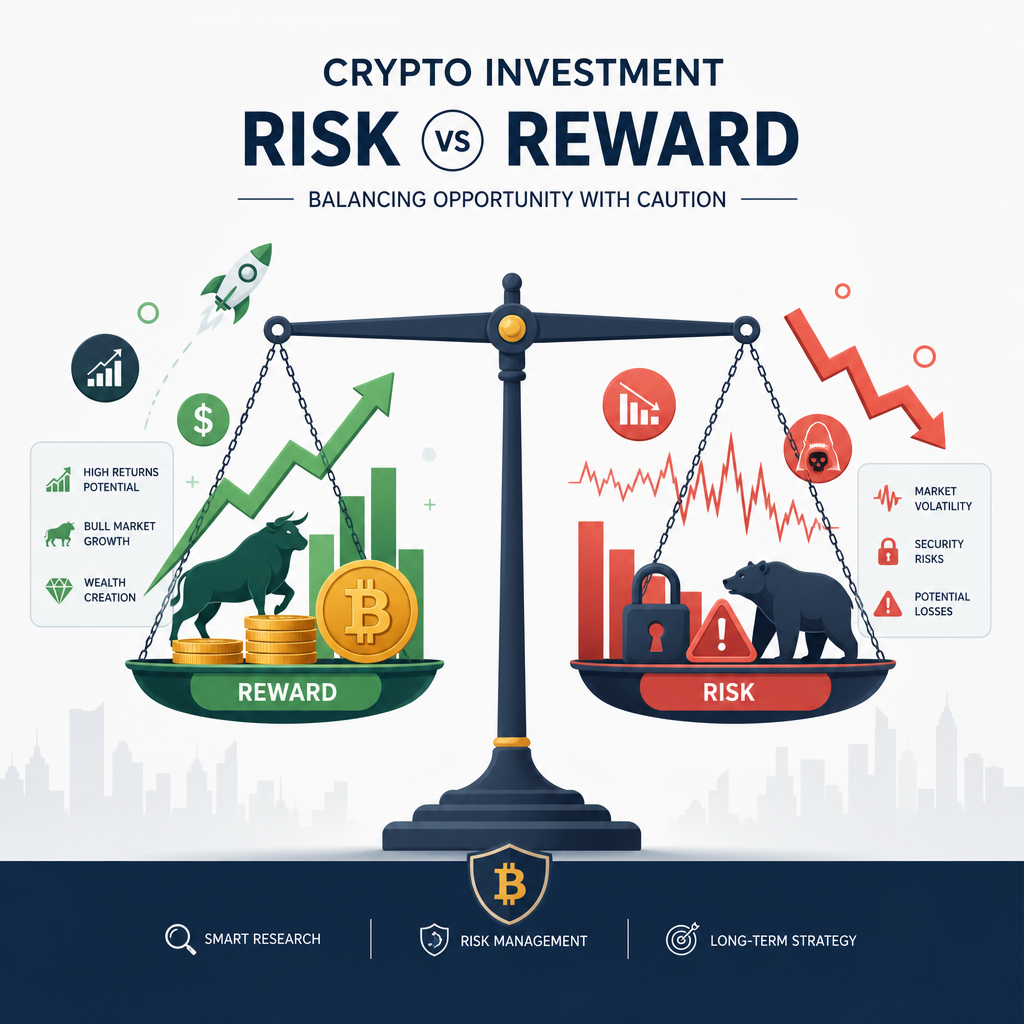
Key Takeaways for Working Professionals
So where does that leave you? Here’s what Your Career Place thinks every working professional should keep in mind when it comes to cryptocurrency in 2026:
- Treat crypto as a high-risk asset — because it is. Bitcoin’s 22% weekly gain is exciting. So was its 37% drop from its all-time high. If you invest in crypto, do so with money you can afford to lose, and size your position accordingly. Most financial advisors suggest keeping crypto to no more than 5% of your total portfolio.
- The regulatory environment is improving — but it’s not done. The SEC’s new framework and the SEC-CFTC harmonization are genuinely positive developments. But the Clarity Act is still pending, and the full regulatory picture won’t be clear for some time. Don’t assume that “more regulation” automatically means “safer investment.”
- ETFs have changed the game for everyday investors. If you want crypto exposure without the complexity of wallets and private keys, spot Bitcoin ETFs are now a legitimate option through your regular brokerage account. With $102 billion in AUM, they’re no longer a niche product.
- Understand what’s driving the market. This rally was triggered by Treasury bond buybacks and macro liquidity — not a crypto-specific breakthrough. That means it could reverse on macro news just as quickly. Stay informed about the broader economic environment, not just crypto prices.
- Don’t let FOMO drive your decisions. The biggest mistake crypto investors make is buying during the excitement of a rally and selling during the fear of a crash. If you’re going to invest, have a plan — a target allocation, a time horizon, and a strategy for what you’ll do if prices drop 50%.
- Security matters more than ever. If you hold crypto directly (not through an ETF), use reputable exchanges, enable two-factor authentication, and consider cold storage for significant holdings. The technology has matured, but the security risks haven’t disappeared.
The Bottom Line
Cryptocurrency in August 2026 is at a genuinely interesting inflection point. The regulatory environment is becoming clearer. Institutional adoption is accelerating. Bitcoin just posted its best weekly performance in nearly two years. And yet, the market remains volatile, macro-driven, and far below its all-time highs.
Whether you’re a Boomer who sees this as the moment crypto finally grows up, or a Doomer who sees another liquidity-fueled rally waiting to reverse, the smart move is the same: stay informed, size your position appropriately, and never invest more than you can afford to lose.
At Your Career Place, we’re here to help you navigate not just your career, but your entire financial life. Cryptocurrency is one piece of a much larger puzzle — and understanding how it fits into your overall financial plan is the key to making decisions you won’t regret.
Disclaimer: This article is for informational and educational purposes only and does not constitute financial, investment, or legal advice. Cryptocurrency investments are highly speculative and involve significant risk of loss. Always consult a qualified financial advisor before making investment decisions.