

AI Cybersecurity in 2026: What Every Small Business Owner Needs to Know Before It’s Too Late
AI Cybersecurity in 2026: What Every Small Business Owner Needs to Know Before It’s Too Late

Small business owners are increasingly on the front lines of AI-powered cyber threats in 2026.
Let’s be honest: most small business owners didn’t get into business to become cybersecurity experts. You’re running payroll, managing customers, keeping the lights on. Cybersecurity feels like something the big corporations worry about — until the day it isn’t.
Here’s the uncomfortable truth that Your Career Place wants you to hear: 62% of confirmed data breaches in 2026 involved the human element — meaning someone was tricked, manipulated, or deceived. And AI is making those tricks dramatically harder to spot.
This isn’t about science-fiction robot hackers. It’s about the email that looks exactly like it’s from your accountant. The phone call that sounds exactly like your business partner. The video meeting where “your CFO” asks you to wire $25,000 — and it’s not actually your CFO at all.
Welcome to AI-powered cybercrime in 2026. Let’s talk about what’s really happening, what it means for your business, and what you can actually do about it.
What’s Actually Changed in 2026
The biggest shift isn’t that hackers suddenly got smarter. It’s that AI has made their existing tricks faster, cheaper, and more convincing — and available to anyone willing to pay a few dollars for a subscription.
The Death of “Bad Grammar” as a Warning Sign
For years, the advice was simple: if an email has typos and weird grammar, it’s probably a scam. That advice is now dangerously outdated. AI can write flawless, personalized phishing emails in any language, tailored to your specific business, your vendors, and even your writing style. 44% of AI-assisted initial-access attacks in 2026 were phishing-related — and they’re getting through.
Voice Cloning Is Real and It’s Being Used
This is the one that should keep you up at night. Attackers can now clone a person’s voice from as little as three seconds of publicly available audio — a YouTube video, a podcast appearance, a voicemail greeting. They use that clone to call your employees and request urgent wire transfers, password resets, or sensitive information.
The most dramatic example: in 2024, a company called Arup lost $25.6 million after an employee joined a video call with deepfake versions of colleagues — including a fake CFO — who authorized a transfer. This is no longer a theoretical threat.
Attacks Are Coming From Every Direction
Here’s a statistic that surprised even us at Your Career Place: 41% of social engineering breaches in 2026 involved channels other than email. Text messages, phone calls, video meetings — attackers are combining them for maximum effect. An email arrives, then a “follow-up call” from someone who sounds exactly like your vendor. The combination is devastatingly effective.
Your Vendors Are Now Part of Your Risk
Breaches involving third parties — your payroll provider, your cloud software, your IT contractor — increased by 60% year over year and represented 48% of all breaches in 2026. You can have perfect security internally and still get hit because someone in your supply chain got compromised.

AI-powered defenses are emerging — but the fundamentals still matter most.
The New AI Defense Tools (And What to Make of Them)
The good news is that the same AI powering attacks is also being deployed for defense. In mid-2026, several major platforms launched or expanded AI-powered security tools aimed at businesses of all sizes:
| Tool / Platform | What It Does | Best For |
|---|---|---|
| Microsoft Project Perception | AI agents that simulate attacks, find weaknesses, and detect threats — unveiled July 2026 | Businesses already in the Microsoft ecosystem |
| Arctic Wolf Aurora Agentic SOC | AI-powered security operations with human expert oversight for complex decisions | Small businesses wanting managed security |
| SentinelOne Purple AI | Natural-language security investigation + AI-native endpoint detection with ransomware rollback | Businesses needing endpoint protection |
| Acronis GenAI Protection | Discovers AI apps employees are using and blocks sensitive data leakage | Businesses worried about “shadow AI” use |
| CISA Free Resources | No-cost vulnerability scanning, assessments, and cybersecurity guidance | Every small business — start here |
A word of caution from Your Career Place: these tools are promising, but they’re also new. Treat vendor claims as starting points, not guarantees. Before giving any AI security tool permission to automatically change your systems, test it in a limited environment first. And remember — managed detection and response services (where humans are still in the loop) may be more practical for most small businesses than fully autonomous AI security.
🌅 Boomer’s Perspective: “This Is the Great Equalizer”
Here’s the optimistic take, and it’s genuinely exciting: for the first time in history, small businesses have access to enterprise-grade security tools at small-business prices. The same AI that’s powering attacks is also powering defenses — and those defenses are getting better, faster, and more affordable every month.
Think about what “managed detection and response” used to cost. You needed a full security operations center, a team of analysts, expensive software licenses. Today, services like Arctic Wolf and others are bringing that capability to businesses with 10 employees. Vodafone and Google Cloud just announced an AI-enabled managed security service specifically targeting small businesses. The cavalry is arriving.
More importantly, the fundamentals still work. The 2026 breach data is clear: well-defended organizations have not experienced a massive jump in successful attacks. Strong multi-factor authentication, rapid patching, and good employee training still stop the vast majority of attacks. AI makes the attacks more convincing, but it doesn’t make good security practices obsolete — it makes them more important.
At Your Career Place, we see this as a moment of opportunity. The businesses that take cybersecurity seriously right now — that implement phishing-resistant authentication, that train their teams on voice cloning, that set up two-person approval for wire transfers — are going to be dramatically better positioned than their competitors who ignore it. Security is becoming a competitive advantage.
And here’s the really good news: CISA (the U.S. Cybersecurity and Infrastructure Security Agency) offers free vulnerability scanning, free assessments, and free guidance specifically for small businesses. You don’t have to spend a fortune to get significantly safer. You just have to start.
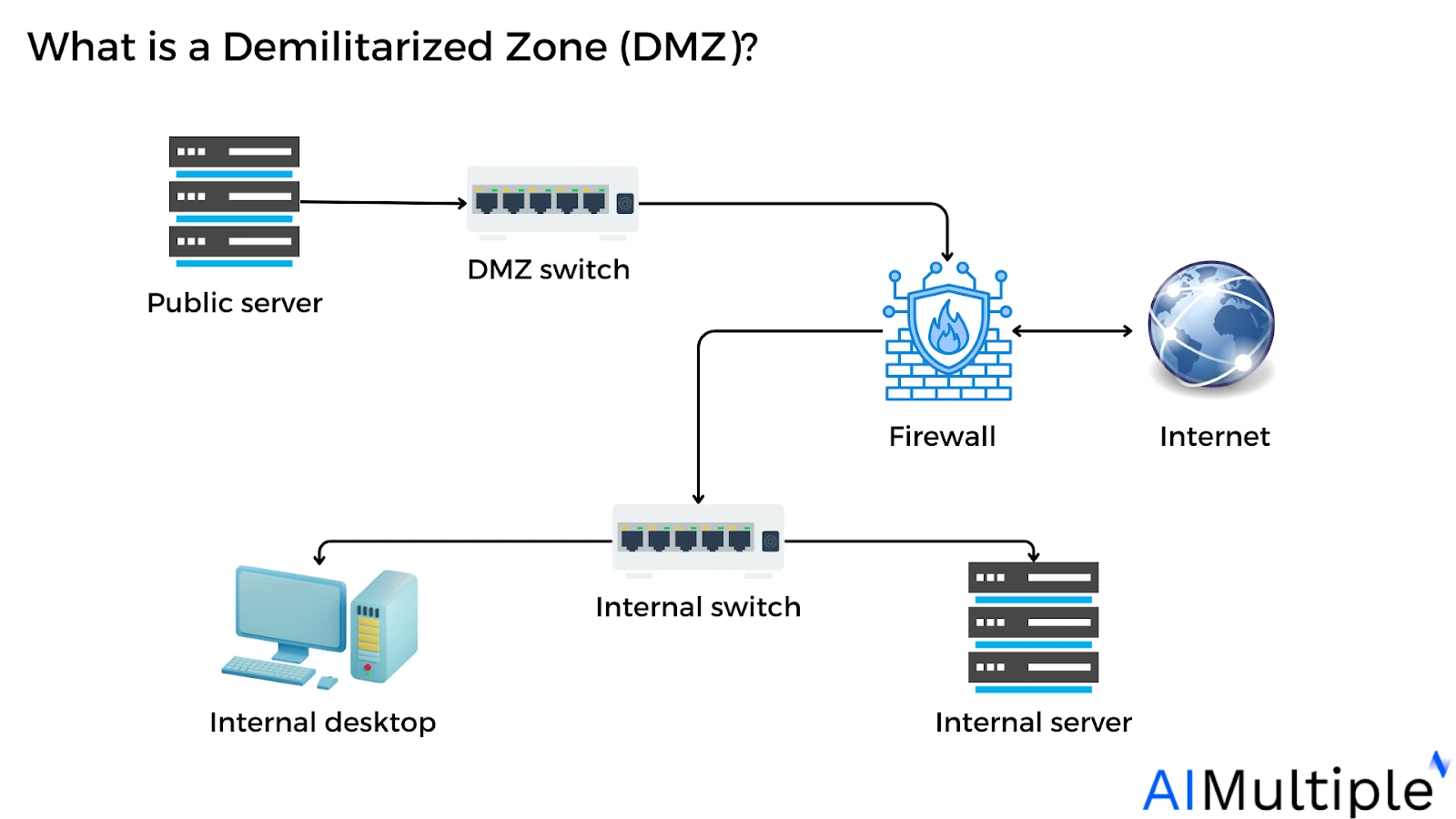
Modern AI-powered security tools can monitor network traffic and detect threats in real time — but human oversight remains essential.
⚠️ Doomer’s Perspective: “The Attackers Are Moving Faster Than the Defenders”
Now for the uncomfortable reality check. The optimistic view assumes businesses will actually implement those defenses. The data suggests most won’t — at least not fast enough.
Consider this: only 26% of critical vulnerabilities in CISA’s Known Exploited Vulnerabilities catalog were fully remediated during 2025. The median time to patch a known vulnerability increased from 32 days to 43 days. Meanwhile, AI is compressing the time from vulnerability discovery to active exploitation — from 120 days in 2025 to just 80 days in the first half of 2026. The gap between “known problem” and “fixed” is getting more dangerous, not less.
And the financial fraud angle is particularly troubling. Many Business Email Compromise attacks contain no malicious attachment or link. Your antivirus has nothing to detect. Your email filter has nothing to flag. It’s just a legitimate-looking email, followed by a convincing phone call, followed by a wire transfer that’s gone forever. The FBI recorded $893.3 million in reported losses from AI-related crimes in 2025 alone — and that’s almost certainly an undercount, since most victims never report.
There’s also a troubling new risk that most small businesses haven’t even considered: the AI tools you’re adopting for productivity are creating new attack surfaces. When you connect an AI assistant to your email, your documents, your cloud storage — you’re creating pathways that attackers can exploit through “prompt injection” attacks, where malicious instructions hidden in a document or website hijack your AI agent’s actions. 67% of employees using unauthorized AI services from company devices were using personal accounts — completely outside company visibility or control.
The honest assessment from Your Career Place: the threat landscape is genuinely more dangerous than it was two years ago. The tools to defend against it exist, but they require time, attention, and consistent follow-through that most small business owners simply don’t have. If you’re not actively working on this, you’re falling further behind — not staying even.
What You Can Actually Do This Week
Here’s where Your Career Place gets practical. You don’t need to become a cybersecurity expert. You need to close the most dangerous gaps first. Here’s a prioritized action plan:
This Week (Days 1–7): Close the Easy Doors
- Enable multi-factor authentication everywhere — email, cloud services, banking, remote access. If you can use a hardware key or passkey instead of SMS codes, do it. SMS can be intercepted.
- Create a “no exceptions” payment rule: No wire transfer, bank account change, or large payment gets approved based solely on an email, text, voice call, or video meeting. Period. Always verify through a separately confirmed phone number.
- Make a list of your internet-facing systems — your website, remote access tools, cloud services, email. These are your highest-risk entry points.
- Brief your team on voice cloning — show them an example of how convincing it sounds. The awareness alone dramatically reduces risk.
Next Two Weeks: Protect Your Money and Identities
- Require two authorized people to approve any high-value or unusual transaction.
- Create a trusted contact directory with independently verified phone numbers for key vendors and partners.
- Check your email for unauthorized forwarding rules (a common sign of compromise).
- Run a free vulnerability scan through CISA’s no-cost services at cisa.gov.
- Test your backups — not just that they exist, but that you can actually restore from them.
This Month: Build Your Safety Net
- Write a one-page incident plan: who do you call if you get hit? Who can stop a payment? Who contacts your insurer?
- Create an approved AI tools list and make it clear that company data doesn’t go into personal AI accounts.
- Consider a managed detection and response service if you don’t have dedicated IT staff.
🔑 Key Takeaways
- AI has made attacks more convincing, not more exotic. The threats are familiar — phishing, fraud, ransomware — just faster and harder to spot.
- Voice cloning and deepfake video are real threats right now. Your team needs to know about them and have verification procedures in place.
- 62% of breaches involve the human element. Training and process changes are as important as technology.
- The fundamentals still work. Strong MFA, rapid patching, two-person payment approval, and tested backups stop the vast majority of attacks.
- Free help is available. CISA offers no-cost vulnerability scanning and assessments for small businesses — use them.
- Your vendors are part of your risk. Third-party breaches are up 60% — review who has access to your systems.
- AI tools you’re adopting create new risks. Set clear policies on what data can go into AI services and which services are approved.
The Bottom Line
Cybersecurity in 2026 is not a technology problem that technology alone will solve. It’s a business process problem. The businesses that get hit aren’t necessarily the ones with the worst software — they’re the ones without clear procedures for verifying payment requests, without trained employees who know what voice cloning sounds like, without tested backups when ransomware hits.
The encouraging reality, as we see it at Your Career Place, is that the most effective defenses are also the most accessible. You don’t need a six-figure security budget. You need consistent habits, clear rules, and a team that knows what to watch for.
Start with the basics. Enable MFA. Create a payment verification rule. Brief your team. Run a free CISA scan. These steps, done this week, will make your business meaningfully safer than it was yesterday.
The threat is real. But so is your ability to defend against it.
Stay Ahead of What’s Coming
Every week, Your Career Place breaks down the AI developments that matter most for small business owners — without the hype or the jargon. Whether it’s cybersecurity, productivity tools, hiring, or marketing, we’ve got you covered.
👉 Visit YourCareerPlace.com for more practical AI insights for small businesses.