

Workplace Culture: What’s Working, What’s Broken, and How to Thrive
If you’ve ever walked into a job and immediately felt something was off — the tension in the air, the hushed conversations, the manager who never makes eye contact — you already understand the power of workplace culture. Culture isn’t just a buzzword on a company’s “About Us” page. It’s the invisible force that shapes how people show up every day, how much they give, and how long they stay. Here at Your Career Place, we’ve been watching the workplace culture conversation evolve rapidly in 2025, and there’s a lot to unpack.
From the rise of employee-driven activism to the quiet epidemic of burnout, workplace culture has never been more front-and-center. Whether you’re a job seeker evaluating your next move, a manager trying to hold your team together, or a professional wondering why you dread Monday mornings, this post is for you.
What the Latest Research Is Telling Us About Workplace Culture
The data coming out of 2025 paints a complex picture. On one hand, organizations are more aware than ever that culture drives performance. On the other hand, many are still failing to act on that awareness in meaningful ways.
Here are some of the most striking findings from recent research and reporting:
- Engagement is at a crisis point. According to research cited by CultureBot, only 30% of global employees report feeling engaged at work. Global disengagement hit a decade low of 21% in 2024, costing the global economy an estimated $438 billion in lost productivity.
- Burnout is getting worse, not better. A staggering 64% of employees reported feeling burnt out at least once a week in 2025 — up from 48% in 2023. High burnout correlates with a 23% increase in absenteeism and nearly 3x higher healthcare costs for organizations.
- Toxic workplaces are shockingly common. According to iHire’s 2025 Toxic Workplace Trends Report, nearly 75% of employees have worked for an employer they consider toxic. Over 50% have quit a job specifically because of a toxic environment — and nearly 60% would accept a lower salary to escape one.
- There’s a massive perception gap. About 82.7% of employers rated their work environment as “very positive” or “somewhat positive” in 2025, while only 45% of employees agreed. That’s a disconnect that should alarm every leader.
- Psychological safety is eroding. As reported by Forbes, less than 50% of employees trust their employers to create an environment where everyone can thrive — a direct result of widespread DEI rollbacks and leadership failures in 2025.
- Flexibility is now non-negotiable. Research from HR Executive shows that 58% of employees would rather quit than return to full-time office work. Organizations offering flexibility see 2x higher retention rates and 30% more job applications.

The bottom line? Culture is no longer a “nice to have.” It’s a business-critical issue with measurable financial consequences. Companies with strong cultures report up to 4x higher revenue growth, while toxic environments are the leading cause of resignation for 45% of employees.
The Middle Management Squeeze and the Leadership Crisis
One of the most talked-about dynamics in 2025 is what researchers are calling the “middle management squeeze.” Managers are caught between the optimism of senior leadership and the burnout of frontline employees. While executives often feel good about company direction and transparency, individual contributors report higher levels of stress, lower motivation, and a lack of clear priorities.
Only 20% of U.S. employees trust their organization’s leadership, according to Kinkajou Consulting’s 2025 Workplace Culture Statistics. And 42% of employees believe executive leadership doesn’t contribute positively to company culture at all. That’s a sobering number.
The solution isn’t just more leadership training — it’s a fundamental shift in how we define good management. The best managers in 2025 are coaches, not controllers. They prioritize empathy, transparency, and psychological safety over output monitoring and micromanagement.
Hybrid Work and the Culture Challenge
The hybrid work debate has largely settled — most knowledge workers now expect some form of flexibility. But building a cohesive culture across distributed teams remains one of the hardest challenges organizations face today.
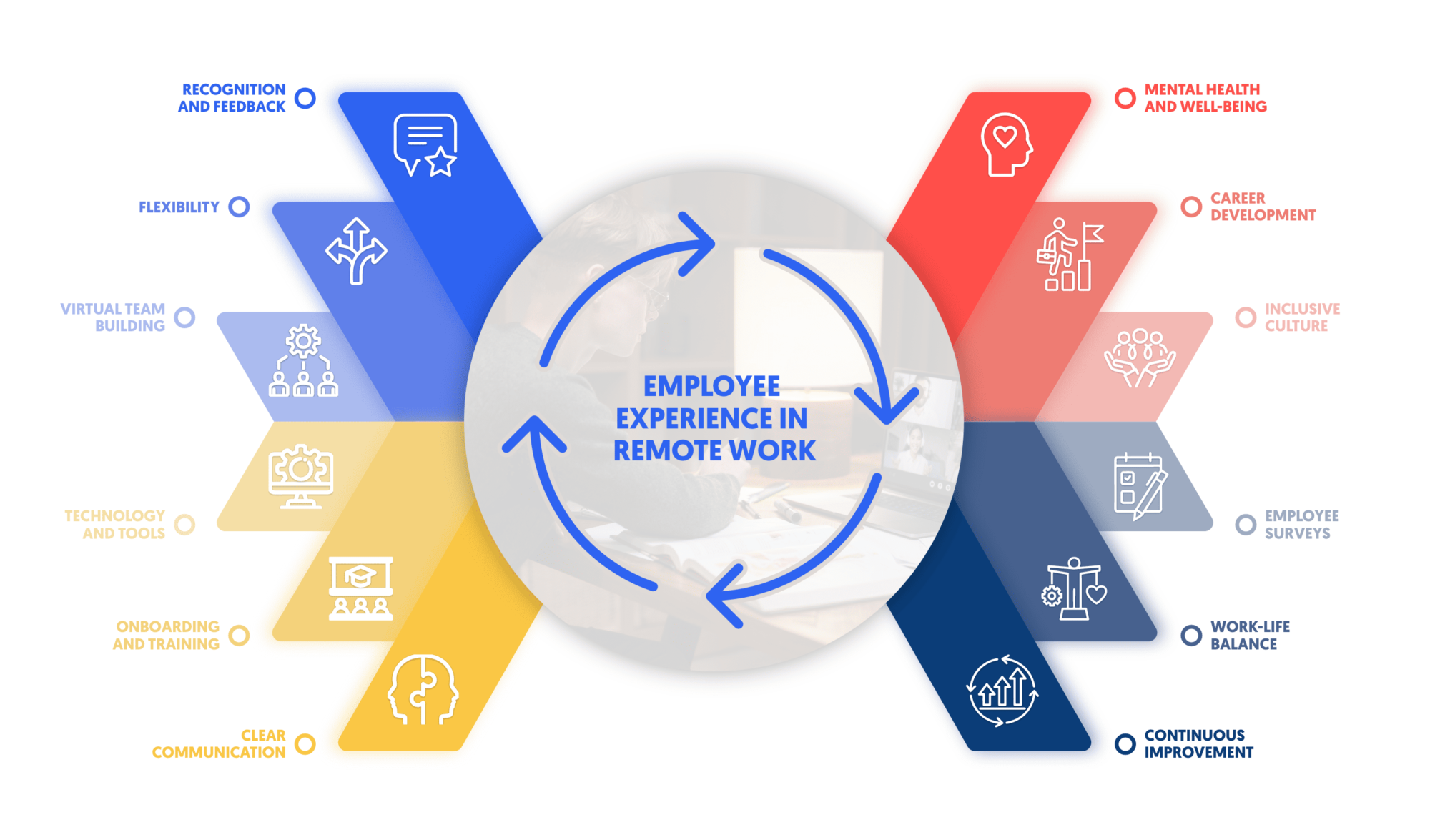
According to Mo.work’s research on hybrid culture, the most successful organizations are focusing on six pillars: belonging, psychological safety, healthy communication, development and mentorship, shared goals, and meaningful recognition. The companies that are getting it right aren’t forcing people back to the office — they’re making the office worth coming to.
At Your Career Place, we’ve seen firsthand how job seekers are now evaluating culture as carefully as they evaluate salary. Questions like “How does your team stay connected remotely?” and “What does psychological safety look like here?” are becoming standard in interviews. And rightly so.
🟢 The Boomer Perspective: Culture Has Always Been the Foundation — We’re Just Finally Measuring It
Let’s be honest: the concept of workplace culture isn’t new. Anyone who’s worked in a great company — or a terrible one — has always known that culture matters. What’s different now is that we have the data to prove it, and organizations are finally being held accountable.
From an optimistic standpoint, the current moment represents a genuine opportunity. Yes, engagement is low and burnout is high — but awareness has never been higher. Leaders are being pushed to do better, and many are rising to the challenge. The rise of employee-driven culture means workers have more power than ever to demand environments that support their well-being and growth.
The tools available to build great cultures have also never been better. Real-time sentiment analysis, peer-to-peer recognition platforms, structured mentorship programs, and flexible work arrangements give organizations everything they need to create workplaces where people genuinely want to show up. The companies investing in these tools are seeing real returns: higher retention, better innovation, and stronger financial performance.
There’s also something deeply encouraging about the generational shift happening in leadership. Younger managers are bringing empathy, authenticity, and a genuine commitment to inclusion into their leadership styles. The “command and control” era is fading, and in its place, we’re seeing a more human-centered approach to management that benefits everyone.
At Your Career Place, we believe this is a pivotal moment — not a crisis, but a correction. The organizations that lean into this shift, that treat culture as a strategic priority rather than an HR checkbox, will emerge stronger, more resilient, and better positioned to attract and retain top talent.

🔴 The Doomer Perspective: The Culture Crisis Is Deeper Than Most Organizations Want to Admit
Here’s the uncomfortable truth: for all the talk about culture, most organizations are still treating it as a surface-level problem with surface-level solutions. Ping-pong tables, free snacks, and “culture fit” hiring aren’t culture — they’re decoration. And the data suggests that employees know the difference.
The perception gap is alarming. When 82.7% of employers think their culture is positive but only 45% of employees agree, that’s not a communication problem — that’s a reality problem. Leaders are either not listening, not asking the right questions, or not willing to act on what they hear. And employees, knowing that speaking up often leads to retaliation or being labeled “difficult,” have largely stopped trying.
The rollback of DEI initiatives in 2025 has made things worse. Less than 50% of employees now trust their employers to create an environment where everyone can thrive. For marginalized groups, that number is even lower. When psychological safety erodes, innovation dies. People stop sharing ideas, stop taking risks, and start doing the bare minimum to keep their jobs — what researchers call “quiet quitting” or the “quit and stay” phenomenon.
The burnout numbers are particularly troubling. When 64% of employees are burning out weekly, that’s not a wellness problem — that’s a structural problem. It means workloads are unsustainable, boundaries are being ignored, and the “always-on” culture is consuming people’s health and personal lives. The fact that 85% of employees receive work communications outside of standard hours, and 34% feel pressured to respond immediately, tells you everything you need to know about where many organizations’ priorities actually lie.
And then there’s the AI anxiety layer. Nearly half of employees fear AI will replace their jobs within five years. This fear leads to a 70% lower likelihood of upskilling and a 45% greater chance of disengagement. If organizations don’t address this fear with transparency and genuine investment in reskilling, they risk a workforce that is simultaneously anxious, disengaged, and unprepared for the future.
The hard truth, as Your Career Place sees it, is that many organizations are not doing enough — and the cost of inaction is mounting. Culture-driven turnover and lost productivity cost U.S. businesses hundreds of billions of dollars annually. At some point, the math becomes undeniable.
Key Takeaways: What You Can Do Right Now
Whether you’re an employee navigating a challenging culture or a leader trying to build a better one, here are the most actionable insights from everything we’ve covered:
- For job seekers: Culture is a legitimate dealbreaker. Ask specific questions in interviews about psychological safety, recognition practices, and how the company handled the shift to hybrid work. Trust your gut — and trust the data you gather.
- For managers: The most important thing you can do is close the perception gap. Conduct regular, anonymous pulse surveys and actually act on the results. Your team needs to see that feedback leads to change.
- For organizations: Stop treating culture as an HR initiative and start treating it as a business strategy. Tie cultural metrics to performance reviews, leadership evaluations, and business outcomes. What gets measured gets managed.
- For everyone: Psychological safety starts with individual behavior. Be the person who speaks up, who gives credit, who admits mistakes. Culture is built one interaction at a time.
- On AI anxiety: If your organization is implementing AI tools, communicate openly about what that means for roles and responsibilities. Invest in reskilling. Make it clear that AI is a tool, not a replacement.
- On flexibility: Rigid return-to-office mandates are backfiring. If you’re a leader, focus on outcomes rather than presence. If you’re a job seeker, prioritize organizations that have demonstrated a genuine commitment to flexibility.
Final Thoughts from Your Career Place
Workplace culture is one of those topics that can feel abstract until it affects you personally — and then it becomes very, very real. The research is clear: culture drives engagement, retention, innovation, and financial performance. It also drives burnout, turnover, and the quiet erosion of people’s well-being when it goes wrong.
Here at Your Career Place, we’re committed to helping professionals navigate these realities with clear eyes and practical tools. Whether you’re looking for your next opportunity, trying to advance in your current role, or building a team you’re proud of, understanding workplace culture is one of the most valuable skills you can develop.
The workplace is changing fast. But the fundamentals of what makes a great culture — trust, respect, transparency, and genuine care for people — haven’t changed at all. Hold onto those, and you’ll be ahead of the curve no matter what comes next.
Want more career management insights like this? Explore more resources at Your Career Place and take the next step in your career journey today.