Why Your Professional Reputation Is Your Most Powerful Career Asset
Personal Branding in 2025
Published by Your Career Place | July 2, 2026
Introduction
Think about the last time you Googled someone before a meeting, a job interview, or a business deal. Chances are, you formed an opinion before you ever shook their hand. Now flip that around — what does Google say about you?
Welcome to the era of personal branding, where your professional reputation is no longer just what you say about yourself in a job interview — it’s the entire digital footprint you leave behind every time you post, comment, publish, or simply exist online. Here at Your Career Place, we’ve been watching this shift unfold for years, and in 2025 and 2026, it has accelerated dramatically.
Personal branding used to be something reserved for celebrities, executives, and motivational speakers. Today, it’s a career survival skill for everyone — from the recent graduate applying for their first job to the seasoned mid-career professional eyeing a promotion. In this post, we’ll break down what’s happening in the world of personal branding right now, explore two very different perspectives on what it all means, and give you practical takeaways you can act on today.
What’s Happening Right Now: The State of Personal Branding in 2025–2026

The personal branding landscape has undergone a seismic shift. Here’s a snapshot of the most important developments shaping how professionals present themselves in today’s market:
1. Recruiters Are Screening You Before You Apply
According to research compiled by HumanToBrand, a staggering 70% of recruiters now use social media to screen candidates — and 54% have rejected applicants based on what they found. On the flip side, 44% of employers have actually hired candidates based on their personal branding content. Your LinkedIn profile, your Twitter/X presence, your blog posts — they’re all part of your application now, whether you submitted them or not.
2. AI Is Reshaping How Brands Are Built
Artificial intelligence has become both a tool and a threat in the personal branding space. As reported by Brand Professor and Forbes, professionals are increasingly using AI to draft content, schedule posts, and analyze engagement — but audiences are getting better at detecting AI-generated content that lacks a human voice. The winners are those who use AI as a strategic assistant while keeping their authentic personality front and center.
3. Authenticity Has Replaced Polish
Gone are the days when a perfectly curated highlight reel was the gold standard. Research from OhMyBrand shows that vulnerability and “flaws-forward” storytelling now outperform slick corporate-style content. Sharing setbacks, lessons learned, and behind-the-scenes struggles builds more trust than a perfectly filtered headshot and a list of accolades.
4. Micro-Niche Positioning Is the New Power Move
Being a generalist is increasingly a liability. The professionals gaining the most traction in 2025 are those who have staked out a very specific corner of their industry. Instead of “marketing consultant,” think “B2B SaaS content strategist for fintech startups.” The narrower your niche, the deeper your authority — and the more you can charge for it, according to The Planet Group.
5. LinkedIn Remains the Professional Branding Hub
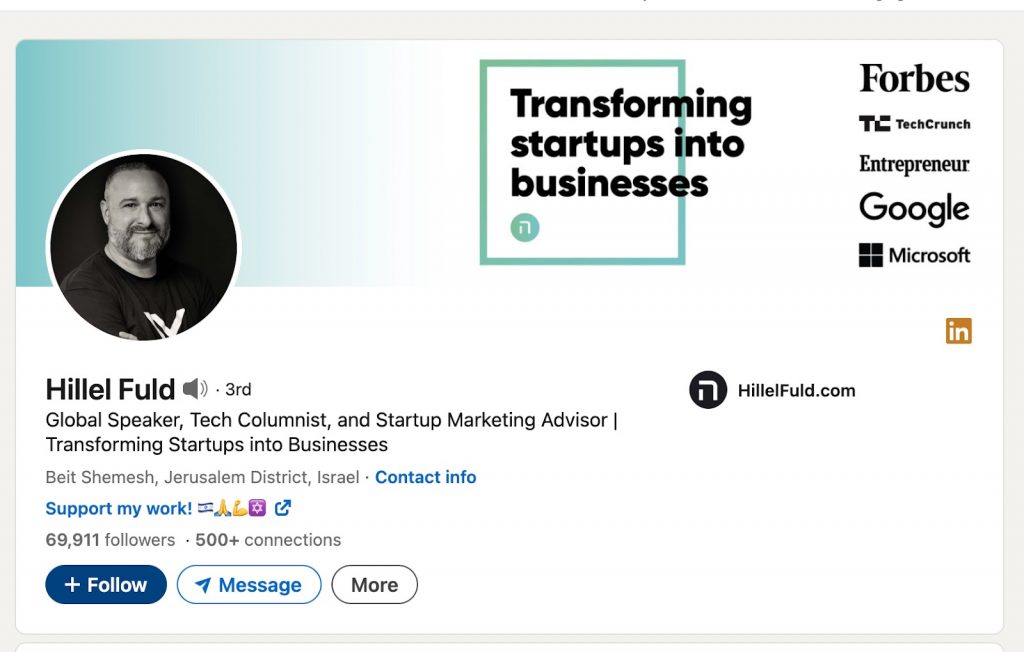
Despite the rise of TikTok, Instagram, and other platforms, LinkedIn continues to dominate professional branding. Forbes reports that professionals with fully optimized LinkedIn profiles — complete with a value-driven headline, compelling About section, and consistent content — are 40 times more likely to attract job offers than those with bare-bones profiles.
6. Video Is the New Business Card
Short-form video has exploded as a personal branding tool. According to Forbes’ William Arruda, one minute of video communicates the equivalent of 1.8 million words in terms of emotional impact. LinkedIn video, Instagram Reels, and even TikTok are now legitimate professional branding channels — not just entertainment platforms.
.png?width=762&height=548&name=Personal%20Brand%20on%20LinkedIn%20-%20Noah%20Kagan%20Profile%20(fun).png)
🌟 The Boomer Perspective: Personal Branding Is the Greatest Career Opportunity of Our Time
Let’s be honest — for those of us who built careers before the internet, the concept of “personal branding” might sound a little self-promotional, even a bit uncomfortable. Back in the day, you let your work speak for itself. You showed up, did the job, and your reputation grew organically through word of mouth and professional relationships built over years.
But here’s the optimistic take: personal branding is simply that same reputation-building, supercharged and democratized.
Think about what personal branding actually gives you access to that previous generations never had. You can now reach thousands of potential employers, collaborators, and clients without ever leaving your home. You can publish your expertise, share your insights, and build credibility in your field — all for free, or close to it. A mid-career professional in Omaha can now have the same visibility as someone in Manhattan, simply by showing up consistently online.
The statistics back this up. HumanToBrand reports that 73% of decision-makers trust an individual’s thought leadership more than traditional corporate marketing materials. That means your voice, your expertise, your perspective — it carries more weight than a company press release. That’s extraordinary.
For experienced professionals, personal branding is a chance to finally get credit for the decades of knowledge you’ve accumulated. You have stories, hard-won lessons, and industry insights that younger professionals simply don’t have yet. A well-crafted LinkedIn post sharing a career lesson you learned the hard way? That’s gold. A short video explaining how you navigated a difficult workplace situation? That’s the kind of authentic, experience-backed content that audiences crave right now.
Here at Your Career Place, we see this every day: professionals who were initially skeptical about “putting themselves out there” online discover that their authentic voice resonates deeply with their audience. The key insight from the optimistic camp is this — personal branding isn’t about becoming someone you’re not. It’s about making sure the right people know who you already are.
The tools have never been better, the audience has never been more receptive to authentic human voices, and the career rewards — more opportunities, higher visibility, stronger professional networks — have never been more tangible. If you’ve been sitting on the sidelines, now is the time to step in.
😟 The Doomer Perspective: Personal Branding Is an Exhausting, Anxiety-Inducing Treadmill
Now let’s talk about the other side of the coin — because here at Your Career Place, we believe in giving you the full picture, not just the motivational poster version.
For many professionals, the pressure to build and maintain a personal brand has become a significant source of stress, burnout, and anxiety. And honestly? Those concerns are completely valid.
Consider what “building a personal brand” actually requires in 2025: you need to post consistently (ideally daily), create video content, optimize your LinkedIn profile, engage meaningfully with others’ content, develop a niche, build a community, track your analytics, stay current with platform algorithm changes, and somehow do all of this while also, you know, doing your actual job. The “always-on” nature of personal branding has blurred the line between professional and personal life in ways that can feel deeply invasive.
There’s also the authenticity paradox. We’re told to be “radically authentic” — but the moment you start strategically crafting your vulnerability for maximum engagement, is it still authentic? Many professionals report feeling like they’re performing a version of themselves rather than actually being themselves. The pressure to share setbacks and struggles publicly can feel exploitative, turning genuine human experiences into content for the algorithm.
Then there’s the equity problem. Personal branding rewards those who are already comfortable with self-promotion — a trait that research consistently shows is more culturally encouraged in some demographics than others. Professionals from backgrounds where humility and collective achievement are valued may find the personal branding game feels fundamentally at odds with their values. And for introverts, the idea of constantly putting themselves in the spotlight is genuinely exhausting, not just uncomfortable.
The AI dimension adds another layer of concern. As more professionals use AI to generate content, the signal-to-noise ratio on platforms like LinkedIn has deteriorated dramatically. Feeds are flooded with AI-generated “thought leadership” that all sounds the same. Standing out now requires even more effort, more creativity, and more time — creating a vicious cycle where the people who can afford to invest the most in their personal brand (those with resources, time, and existing platforms) pull further ahead of everyone else.
And let’s not forget the surveillance aspect. When 70% of recruiters are screening your social media, you’re essentially being evaluated on content you may have posted years ago, in a different context, for a different audience. One poorly worded post, one opinion that aged badly, one moment of frustration shared publicly — and it can follow you for years.
The doomer perspective isn’t that personal branding is worthless — it’s that the current system places an unfair burden on individuals to market themselves constantly in a landscape that was designed to benefit platforms and algorithms, not people.
Key Takeaways: What Should You Actually Do?
At Your Career Place, we believe the truth — and the most useful path forward — lies somewhere between the boomer optimism and the doomer caution. Here are our practical takeaways:
- Start with your LinkedIn profile, not your content calendar. Before you worry about posting frequency or video strategy, make sure your LinkedIn profile is complete, compelling, and up to date. Your headline should communicate value, not just your job title. Your About section should tell your story. This is the foundation everything else builds on.
- Define your niche before you start creating content. What specific problem do you solve? Who do you solve it for? The more specific your answer, the more effective your personal brand will be. “HR professional” is a job title. “HR leader helping tech startups build inclusive cultures during rapid growth” is a personal brand.
- Consistency beats frequency. You don’t need to post every day. You need to post regularly enough that your audience knows you’re there. One genuinely valuable post per week beats seven mediocre ones. Start with what’s sustainable for you.
- Use AI as a drafting tool, not a ghostwriter. AI can help you overcome the blank page, organize your thoughts, and polish your writing — but your ideas, your experiences, and your voice need to be the foundation. Content that sounds like everyone else’s AI output will be ignored.
- Set boundaries that protect your well-being. Personal branding should serve your career, not consume your life. Decide in advance what you will and won’t share publicly. It’s completely fine to keep parts of your life private. Authenticity doesn’t mean total transparency.
- Think long-term, not viral. The goal of personal branding isn’t to go viral — it’s to build a reputation over time that opens doors. Focus on being consistently helpful, insightful, and genuine. The opportunities will follow.
- Audit your digital footprint regularly. Google yourself. Check what comes up. Make sure your online presence tells the story you want it to tell. Clean up anything that doesn’t represent who you are today.
Final Thoughts from Your Career Place
Personal branding in 2025 is not optional — but it doesn’t have to be overwhelming. The professionals who are winning aren’t necessarily the ones posting the most or with the most followers. They’re the ones who have been clear about who they are, what they stand for, and who they serve — and who show up consistently to deliver on that promise.
Whether you’re just starting to think about your professional reputation online or you’re looking to take your existing brand to the next level, the most important step is the first one: decide intentionally how you want to be known, and start showing up that way.
Here at Your Career Place, we’re here to help you navigate every step of that journey. Your career is your most valuable asset — and your personal brand is how you protect and grow it.
Have thoughts on personal branding? We’d love to hear from you. Drop a comment below or connect with us on LinkedIn and Facebook.
Sources
- Forbes – Personal Branding Trends for 2026, Part 1 (William Arruda)
- HumanToBrand – 2025 Personal Branding Insights, Statistics and Trends
- Brand Professor – Emerging Personal Branding Trends 2025
- Forbes – 9 Personal Branding Trends for 2025 (William Arruda)
- The Planet Group – Building a Personal Brand for Specialized Professionals in 2025
- Forbes – 4 Ways to Build Your Personal Brand on LinkedIn (Sarah Hernholm)
- OhMyBrand – How Personal Branding Drives Career Acceleration in 2025
Related articles: