

Stock Market & Investing in April 2026
Record Highs, Real Risks, and What It Means for Your Portfolio
April 2026 has been one of the most dramatic months in recent stock market memory — and not just because the S&P 500 hit a new all-time high of 7,165 on April 26. Beneath the headline-grabbing numbers lies a market full of contradictions: blockbuster earnings season results, a Federal Reserve holding rates steady for the third consecutive meeting, oil prices topping $100 a barrel, and a growing debate about whether this bull run has legs or is running on borrowed time.
Whether you’re a seasoned investor who’s seen it all before or someone nervously watching your 401(k) balance, the current market environment demands attention. This week, we break down what’s happening in the stock market and investing landscape — and we do it through two very different lenses: the Boomer’s Perspective (optimistic, long-term, traditional) and the Doomer’s Perspective (cautious, risk-aware, skeptical). Both views are grounded in the latest data and news. Read both. Think for yourself.

What’s Happening Right Now: The April 2026 Market Snapshot
Let’s start with the facts on the ground before we get into the debate.
The Numbers
- S&P 500: Up 9.77% for April, closing at a record 7,165 on April 26. JPMorgan has raised its year-end target to 7,600.
- Nasdaq Composite: The month’s star performer, rallying to a new all-time high of 24,836. The Nasdaq 100 posted a monthly gain of over 15%, driven by AI-related tech stocks.
- Dow Jones: The laggard — down 0.4% for the week ending April 26, with a 266-point drop on April 29 dragged by Boeing and Travelers Companies.
- Q1 Earnings Season: 84% of S&P 500 companies that have reported beat EPS estimates, with an average earnings surprise of 12.3% — nearly double the historical average. Revenue growth hit 10.3%, the strongest since 2022.
- Federal Reserve: Held rates steady at 3.50%–3.75% on April 28–29, with four dissenting votes — the most since 1992. The Fed signaled a “high-for-longer” rate environment.
- Inflation (CPI): Rose 3.3% year-over-year in March, with energy prices jumping 10.9% in a single month. Gasoline surged 21.2%.
- Oil: WTI crude topped $100/barrel; Brent surged past $110, driven by escalating Middle East tensions and the closure of the Strait of Hormuz.
Notable Stock Moves
Alphabet crushed expectations with an EPS of $5.11 (vs. $2.62 forecast) and its first-ever $20 billion quarter for Google Cloud. General Motors raised its annual profit outlook, sending shares up 4%. On the downside, Spotify fell 11% on a weak quarterly forecast, and biotech Erasca cratered 40% after a patient death in a clinical trial. ServiceNow beat Q1 estimates but still dropped 13% after hours — a reminder that even good news can disappoint an overheated market.
On social media, the hottest investing themes of the month were nuclear energy stocks (Goldman Sachs and J.P. Morgan both flagged a “nuclear renaissance”), AI-driven portfolio management, and growing public outrage over congressional stock trading — with Rep. Anna Paulina Luna calling Nancy Pelosi’s 17,000% portfolio gain since joining Congress “statistically not possible” without insider information.
🟢 The Boomer’s Perspective: “Stay the Course — The Fundamentals Are Solid”
“I’ve lived through Black Monday, the dot-com crash, 2008, COVID — and every single time, the market came back stronger. This is no different.”
If you’re an optimist — or a long-term investor who’s been through a few market cycles — April 2026 looks like a validation of everything you’ve believed about the stock market. Here’s why the bulls have a strong case.
Earnings Are the Real Story
Strip away the noise, and what you have is one of the strongest earnings seasons in years. When 84% of companies beat estimates and revenue growth hits 10.3% — the best since 2022 — that’s not a bubble. That’s a real economy generating real profits. Alphabet’s $20 billion Google Cloud quarter isn’t a fluke; it’s a sign that AI is already generating massive, tangible revenue for the companies leading the charge.
Goldman Sachs projects 12% EPS growth for the S&P 500 in 2026, with AI-related investment accounting for 40% of that growth. Loomis Sayles expects double-digit growth rates for most S&P 500 companies. These aren’t pie-in-the-sky projections — they’re grounded in the earnings data we’re already seeing.
The Fed Is Being Responsible, Not Restrictive
Yes, the Federal Reserve held rates steady again. But consider the alternative: a Fed that cuts rates prematurely and lets inflation reignite. The current 3.50%–3.75% range is not historically high — it’s roughly in line with the long-term average. And with inflation at 3.3%, real rates are still positive, which is healthy for the economy. The Fed’s caution is a feature, not a bug.
For long-term investors, higher rates actually mean better returns on bonds and savings accounts — a welcome change after years of near-zero yields. If you’re in your 50s or 60s and rebalancing toward fixed income, this environment is working in your favor.
The Long Game Always Wins
One of the most viral investing posts of the month said it all: a couple who spent 12 years living below their means and aggressively investing in the stock market just hit a record high portfolio balance. That’s not luck — that’s the power of compounding. Stocks have returned 6.9% annually in real terms over 200 years. The Rule of 72 tells us that at 8% returns, your money doubles every 9 years.
The S&P 500 is up 9.77% in a single month. Even if the market corrects 20% tomorrow, a long-term investor who has been in the market for a decade is still well ahead. The Boomer’s message: don’t let short-term volatility shake you out of a long-term winning strategy.
New Opportunities Are Emerging
The nuclear energy renaissance is real. J.P. Morgan and Goldman Sachs are both calling it. As AI data centers demand unprecedented amounts of electricity, nuclear is the only scalable, carbon-free solution. For investors willing to look beyond the Magnificent 7, this is a generational opportunity — similar to getting into tech stocks in the early 1990s.
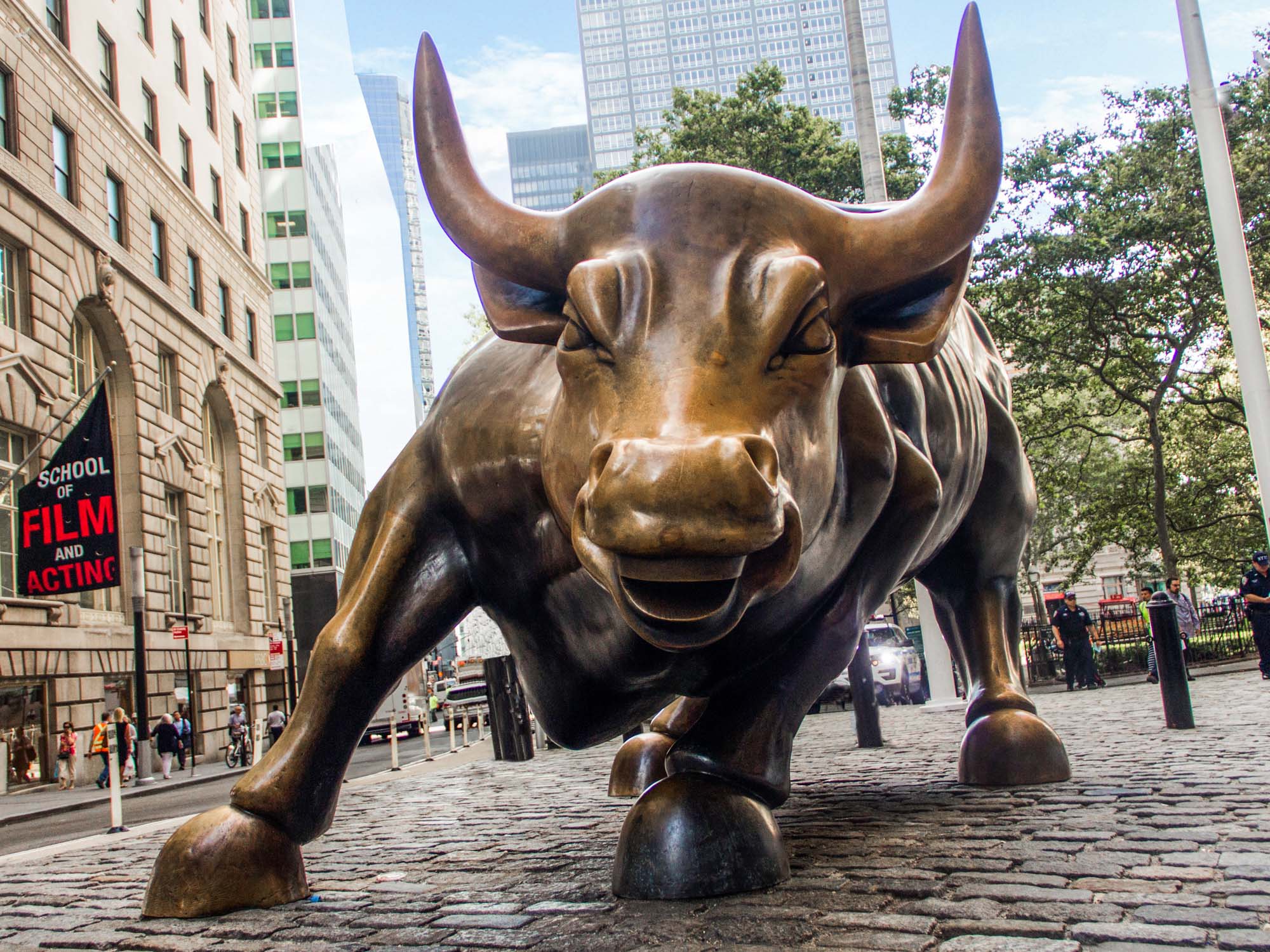
🔴 The Doomer’s Perspective: “This Rally Is Built on Sand — Proceed With Extreme Caution”
“Record highs don’t mean the market is healthy. They can mean the market is dangerously overextended.”
Now let’s look at the same data through a different lens — one that sees the warning signs hiding beneath the record-breaking headlines.
The Market Is Dangerously Narrow
Here’s a number that should give every investor pause: if you remove NVIDIA from the S&P 500’s earnings calculation, the “Magnificent 7” earnings growth drops from a headline-grabbing figure to just 6.4%. The other 493 companies in the index are growing at 10.1% — solid, but not spectacular. The entire bull narrative rests on a handful of mega-cap tech stocks. When the market’s fate depends on one or two companies, that’s not a healthy market — that’s a house of cards.
Analysts at I/O Fund have identified a “classic warning sign”: the S&P 500 index hitting new highs while its most dominant component stocks show technical weakness. Historically, this kind of divergence precedes significant corrections. Meanwhile, commodities are outperforming stocks for the year — another pattern that historically characterizes late-stage bull runs.
Oil at $100 Is a Tax on Everything
When WTI crude tops $100 a barrel and Brent surges past $110, it doesn’t just hurt at the gas pump. It flows through the entire economy: higher transportation costs, higher manufacturing costs, higher food prices. The Middle East conflict that closed the Strait of Hormuz isn’t going away anytime soon. And with gasoline prices already up 21.2% in a single month, the inflation that the Fed has been fighting is about to get a lot worse.
This puts the Fed in an impossible position. Cut rates to support the economy? Inflation explodes. Keep rates high? Growth slows and the debt burden on consumers and corporations becomes crushing. There’s no clean exit from this trap.
The Fed’s Dissent Is a Red Flag
Four dissenting votes at the April FOMC meeting — the most since 1992 — is not a minor footnote. It signals deep disagreement within the Fed about the path forward. Three dissenters opposed even the language hinting at future rate cuts, believing inflation is still too dangerous. When the people responsible for managing the economy can’t agree on what to do, that uncertainty gets priced into markets as volatility. Treasury yields climbed to their highest levels since March after the meeting. Asian markets slipped. The dollar strengthened — which hurts U.S. exporters and multinational corporations.
Historical Cycles Are Flashing Warning Signs
J.P. Morgan — the same firm with a bullish year-end S&P 500 target — assigns a 35% probability to a U.S. and global recession in 2026. That’s more than one-in-three odds. Meanwhile, I/O Fund analysts note that 2026 marks the convergence of two historically challenging cycles: Gann’s 60-year Great Cycle and the 4-year Presidential Cycle. The second year of a presidential term is historically the weakest for stocks, characterized by policy uncertainty and below-average returns.
And then there’s the ServiceNow lesson: the company beat Q1 estimates and still dropped 13% after hours. When good news causes stocks to fall, it means expectations are so elevated that reality can’t keep up. That’s a dangerous environment for investors chasing momentum.
The Fairness Problem Is Getting Worse
The viral outrage over congressional stock trading isn’t just political noise — it reflects a deeper crisis of confidence in market fairness. When retail investors believe the game is rigged (and the data on Pelosi’s returns makes it hard to argue otherwise), they either disengage from markets entirely or take on reckless speculative risks trying to “beat the insiders.” Neither outcome is healthy for long-term wealth building. Michael Burry putting one-third of his portfolio into GameStop is another signal that even sophisticated investors are making bets that look more like gambling than investing.

Key Takeaways: What Should You Actually Do?
After hearing both sides, here’s what the evidence suggests for the average personal finance investor in April 2026:
- Don’t abandon equities, but don’t go all-in on momentum. The earnings data is genuinely strong. But a market this concentrated in a handful of stocks is fragile. Make sure your portfolio is diversified across sectors — not just tech.
- Take the Fed seriously. “High-for-longer” rates are not going away soon. If you have variable-rate debt, pay it down aggressively. If you’re building a portfolio, higher yields on bonds and CDs are now a real alternative worth considering.
- Watch energy prices closely. Oil at $100+ is an economic headwind that will show up in corporate earnings and consumer spending over the next two quarters. Energy sector stocks may benefit, but the broader economy will feel the squeeze.
- Think in decades, not months. The viral post about 12 years of disciplined investing paying off is the most important investing lesson of the month. Compounding works — but only if you stay in the game through the volatility.
- Be skeptical of hot themes. Nuclear energy may well be a generational opportunity. AI-driven investing is fascinating. But every “can’t miss” theme in history has also produced spectacular losses for investors who chased it at the wrong time. Do your homework before concentrating in any single sector.
- Ignore the noise, focus on your plan. Congressional stock trading scandals, Michael Burry’s GameStop bet, AI picking stocks — these are distractions. Your financial plan should be built around your goals, timeline, and risk tolerance — not the latest viral tweet.
The Bottom Line
April 2026’s stock market is a Rorschach test. Optimists see record highs, blockbuster earnings, and the dawn of an AI-powered economic era. Pessimists see a narrow, fragile rally built on a handful of stocks, threatened by $100 oil, a divided Fed, and historical cycle headwinds. Both are looking at the same data.
The truth, as always, is somewhere in between — and the right answer for your portfolio depends entirely on your personal situation. What’s not debatable is this: the market is demanding more attention, more diversification, and more discipline than it has in years. Whether you’re a Boomer or a Doomer at heart, now is not the time to be passive about your financial future.
Stay informed. Stay diversified. And as always — invest in yourself first.
Thank you for visiting Your Career Place. Here are some artilces to review.
Sources & Further Reading:
- CNBC: S&P 500 ticks higher to another record close
- Kiplinger: Nasdaq, S&P 500 Reach New All-Time Highs
- CNBC: Fed interest rate decision April 2026
- FX News Group: Strong Earnings, Fragile Leadership — Q1 Reality Check
- Goldman Sachs: US Stocks Forecast to Rise in 2026
- J.P. Morgan: 2026 Market Outlook
- I/O Fund: 2026 Stock Market Outlook — Cycle Convergence
- Moss Adams: Q1 2026 Market Outlook and Economic Signals
- BLS: Consumer Price Index Summary — March 2026
- Loomis Sayles: April 2026 Investment Outlook