
Resume Tips: What’s Working, What’s Not, and How to Stand Out
Published by Your Career Place | May 14, 2026
Introduction
Your resume is still the single most important document in your job search — but the rules for what makes a great resume have changed dramatically. In 2025, the hiring landscape is shaped by artificial intelligence, Applicant Tracking Systems (ATS), and recruiters who spend an average of just six seconds scanning each application. Here at Your Career Place, we’ve been watching these shifts closely, and we want to make sure you’re armed with the most current, practical advice to get your resume noticed — and get you hired.
Whether you’re a recent graduate entering the workforce for the first time, a seasoned professional eyeing a career pivot, or a mid-career specialist looking to level up, the fundamentals of a great resume have evolved. Gone are the days of colorful graphics, lengthy objective statements, and one-size-fits-all templates. Today’s winning resume is clean, keyword-rich, achievement-focused, and tailored to every single job you apply for.
In this post, we’ll walk you through the latest trends, share what the experts are saying, and give you two very different perspectives on what all of this means for job seekers in 2025. Let’s dive in.
What the Latest Research and News Is Saying About Resumes in 2025

The resume landscape in 2025 is being reshaped by technology, shifting employer expectations, and a hyper-competitive job market. Here’s a roundup of what leading career experts and platforms are reporting:
1. ATS Is Now the Gatekeeper — And It’s Getting Smarter
According to research compiled by The Interview Guys and Resumly.ai, over 97.8% of Fortune 500 companies and approximately 75% of all employers now use Applicant Tracking Systems to screen resumes before a human ever sees them. Even more striking: 88% of employers believe they’ve lost qualified candidates because ATS filtered out non-optimized resumes. The takeaway? Your resume must be “robot-friendly” first. That means clean formatting, standard section headers, and strategic keyword placement drawn directly from the job description.
2. Minimalist Design Is In — Fancy Templates Are Out
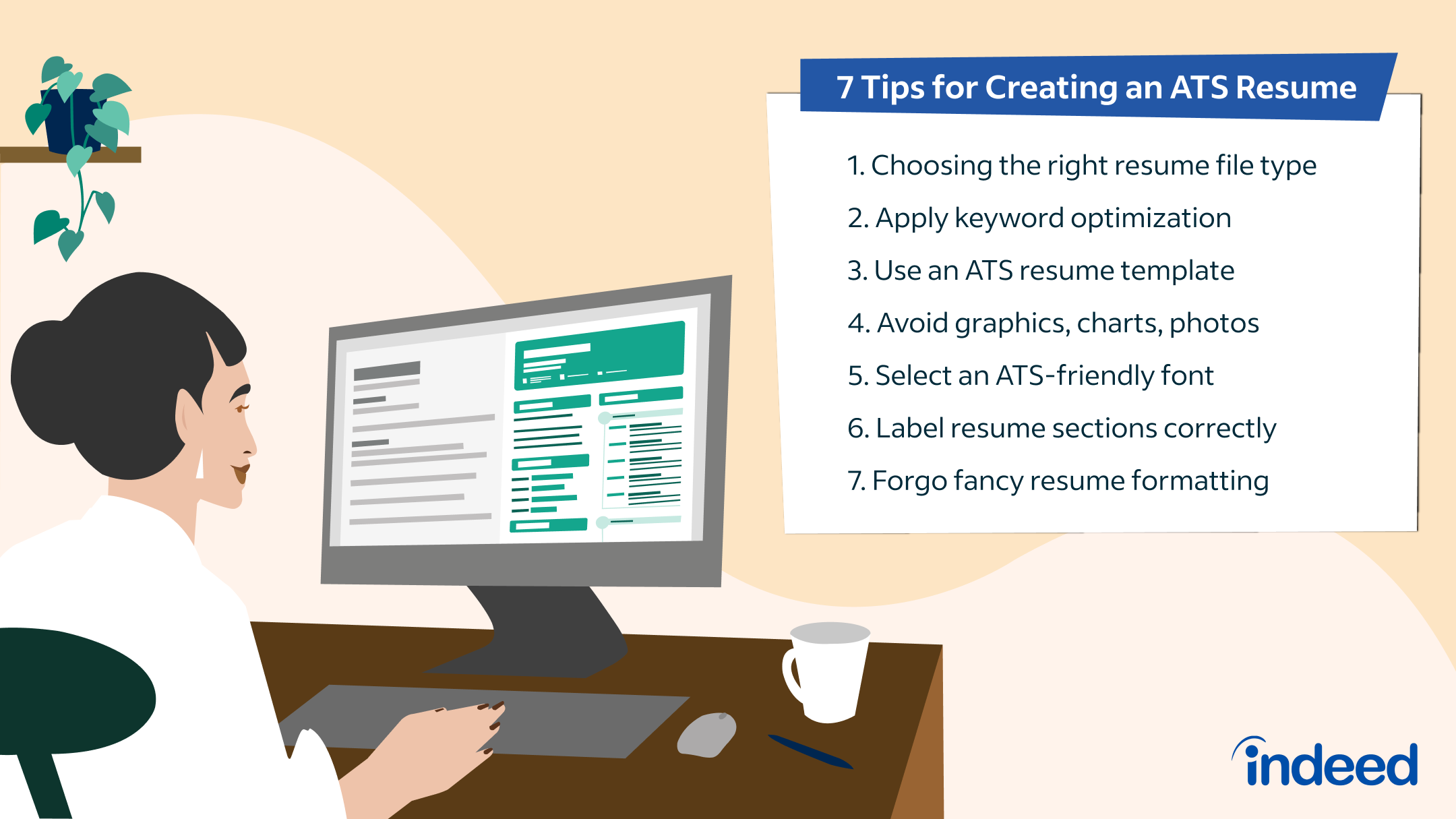
Career platforms like Rezi.ai and Resume Builder are reporting a clear trend toward minimalist, single-column resume designs. Colorful graphics, percentage bars, pie charts, and icons — once considered creative differentiators — are now widely seen as ATS-killers. Most hiring experts recommend black text on a white background, standard fonts like Arial or Calibri, and clean bullet points. The message is clear: let your achievements do the talking, not your design choices.
3. Quantifiable Achievements Are Non-Negotiable
Harvard’s Career Services, Coursera, and UC San Diego’s Extended Studies blog all emphasize the same point: recruiters want to see numbers. “Managed social media” tells a recruiter nothing. “Increased Instagram engagement by 150% and generated 200+ qualified leads in six months” tells them everything. Every bullet point on your resume should ideally answer the question: What was the measurable impact of what I did?
4. AI Literacy Is Now a Standout Skill
Multiple sources, including LinkedIn Pulse and Resume Builder, note that familiarity with AI tools — ChatGPT, Copilot, Notion AI, and others — is increasingly valued by employers across industries. Including AI literacy in your skills section, where relevant, can set you apart from candidates who haven’t kept pace with the technology revolution.
5. Tailoring Every Application Is Essential
Career advisors at UC San Diego and The Interview Guys recommend what they call the “80/20 rule”: keep 80% of your resume consistent across applications, but customize the remaining 20% — especially your professional summary and top bullet points — for each specific role. Generic resumes are among the top reasons candidates get rejected, both by ATS and by human reviewers.
6. Speed Matters More Than Ever
With AI-powered screening accelerating the hiring cycle, career experts now recommend applying within 48–72 hours of a job posting going live. Early applicants often receive better algorithmic scoring, and positions can be filled faster than ever before.
The Boomer Perspective: Resumes Are Still Your Best Foot Forward
If you’re someone who believes in the enduring power of hard work, clear communication, and professional presentation, the 2025 resume landscape actually has a lot to offer. Here at Your Career Place, we think there’s a genuinely optimistic case to be made for today’s resume environment — and here it is.
The rules are clearer than ever. For decades, job seekers were bombarded with conflicting advice: use color, don’t use color; one page, two pages; include a photo, don’t include a photo. In 2025, the guidance has converged. The best resume is clean, concise, achievement-focused, and tailored. That’s actually great news — it means if you follow the current best practices, you have a real shot at standing out.
Hard work and real results still win. All the ATS optimization in the world won’t save a resume that lacks substance. The emphasis on quantifiable achievements rewards people who have genuinely delivered results in their careers. If you’ve managed teams, grown revenue, improved processes, or solved hard problems, 2025’s resume format is designed to showcase exactly that. The focus on metrics and impact is a meritocratic shift that benefits people who have actually done the work.
Technology is a tool, not a replacement for you. Yes, AI is screening resumes — but it’s screening them to find the best human candidates. The goal of ATS isn’t to eliminate good people; it’s to surface them faster. If you take the time to optimize your resume properly, you’re not gaming the system — you’re communicating clearly in the language that modern hiring uses. Think of it like dressing appropriately for an interview: it’s not about being fake, it’s about showing respect for the process.
Continuous learning is being rewarded. The emphasis on certifications, microcredentials, and ongoing professional development on resumes is a genuine win for people who invest in themselves. Platforms like Coursera, LinkedIn Learning, and Google Career Certificates mean that anyone — regardless of their formal educational background — can add credible, verifiable credentials to their resume. The playing field is more level than it’s ever been.
Your online presence amplifies your resume. A strong LinkedIn profile, a professional portfolio, or even a well-maintained GitHub page can extend your resume’s reach far beyond the page. For the first time in history, a job seeker in a small town has the same digital visibility as someone in a major metropolitan area. That’s a remarkable opportunity.
The bottom line from the optimistic corner: the 2025 resume landscape rewards preparation, authenticity, and genuine achievement. If you put in the work — both in your career and in crafting your resume — the tools and systems in place today are designed to help you succeed.
The Doomer Perspective: The Resume Game Is Rigged — And Getting Worse
Not everyone is feeling optimistic about the state of resumes in 2025 — and honestly, their concerns deserve to be heard. Here at Your Career Place, we believe in giving you the full picture, including the uncomfortable parts.
ATS is filtering out qualified candidates at an alarming rate. The same research that praises ATS efficiency also reveals its dark side: 88% of employers admit they’ve lost qualified candidates because the system filtered them out. Think about that. Nearly nine out of ten companies are using a technology that they know is rejecting good people. The burden has been placed entirely on job seekers to learn the arcane rules of ATS optimization — rules that change with every software update and vary from system to system.
The resume has become a keyword-matching exercise, not a human document. When career experts advise you to “mirror the exact language of the job description,” they’re essentially telling you to write for a machine, not a person. The result is a generation of resumes that all sound the same — stuffed with the same buzzwords, structured identically, and stripped of the personality and nuance that actually make someone a great hire. The irony is that the more everyone optimizes for ATS, the harder it becomes to stand out.
The speed imperative is exhausting and exclusionary. Apply within 48–72 hours, or risk being passed over. For anyone juggling a current job, caregiving responsibilities, a disability, or limited internet access, this timeline is punishing. The acceleration of hiring cycles doesn’t just favor the fast — it systematically disadvantages people who need more time to craft thoughtful applications.
The “quantify everything” mandate doesn’t work for everyone. Not every valuable job produces easily measurable outcomes. Teachers, social workers, caregivers, artists, and many others do work that is profound and important but difficult to reduce to percentages and dollar figures. The relentless emphasis on metrics risks devaluing entire categories of meaningful work and the people who do it.
AI is making the problem worse, not better. As AI tools make it easier to generate polished, keyword-optimized resumes, employers are being flooded with applications that all look and sound the same. Some companies are now receiving thousands of applications for a single role — many of them AI-generated. The result is a vicious cycle: more AI screening to handle more AI-generated applications, with real human beings increasingly lost in the noise.
The digital divide is real. The advice to maintain a strong LinkedIn profile, build an online portfolio, and stay active on professional social media assumes a level of digital access, literacy, and time that not everyone has. For older workers, people in lower-income brackets, or those in industries that haven’t traditionally required a digital presence, the new resume landscape can feel like a game designed for someone else.
The uncomfortable truth from the pessimistic corner: the 2025 resume system is increasingly optimized for efficiency at the expense of equity and humanity. Until employers take responsibility for fixing their own hiring tools, job seekers are left playing a game with constantly shifting rules — and the house almost always wins.
Key Takeaways: What You Can Do Right Now
Wherever you fall on the optimism-pessimism spectrum, the practical reality is that you need a resume that works in today’s environment. Here are the most important action items from Your Career Place:
- Go minimalist. Use a clean, single-column layout with standard fonts (Arial, Calibri, or Times New Roman) and plenty of white space. Ditch the graphics, icons, and color bars.
- Optimize for ATS. Use exact keywords from the job description in your professional summary, skills section, and experience bullets. Stick to standard section headers like “Work Experience” and “Education.”
- Quantify your achievements. For every bullet point, ask yourself: can I add a number here? Revenue generated, percentage improvements, team sizes, budgets managed — any metric that shows real-world impact.
- Tailor every application. Use the 80/20 rule: keep your core resume consistent, but customize your summary and top bullets for each specific role.
- Keep it concise. One page for most professionals; two pages maximum for those with 10+ years of experience. Every line should earn its place.
- Update your LinkedIn. Your resume and LinkedIn profile should complement each other. Make sure your LinkedIn expands on your resume rather than just repeating it.
- Apply quickly. Set up job alerts and aim to apply within 48–72 hours of a posting going live.
- Proofread obsessively. Typos and grammatical errors are still among the top reasons resumes get rejected. Read it out loud, use spell-check, and ask someone else to review it.
- Highlight continuous learning. Include relevant certifications, online courses, and microcredentials — especially anything related to AI tools and digital skills.
- Save as .docx or PDF. These are the most universally accepted formats. Name your file professionally: FirstName-LastName-Resume.pdf.
Final Thoughts from Your Career Place
The resume landscape in 2025 is more complex than ever — but it’s also more navigable than ever, if you know the rules. Here at Your Career Place, our mission is to make sure you have the knowledge, tools, and confidence to present yourself at your absolute best, no matter where you are in your career journey.
Whether you’re optimistic about the opportunities that modern hiring technology creates, or frustrated by the barriers it erects, one thing is certain: a well-crafted, strategically optimized resume is still your most powerful tool for opening doors. Invest the time to get it right — and don’t hesitate to reach out to us for personalized guidance along the way.
Your next opportunity is out there. Let’s make sure your resume is ready to find it.
— The Team at Your Career Place
Sources:
- The Interview Guys – Top 10 Resume Tips for 2025
- Resume Builder – Resume Trends 2025
- Coursera – 16 Top Resume Tips to Help You Land a Job
- BuzzFeed – 10 Things to Remove From Your Résumé in 2025
- UC San Diego – 12 Resume Best Practices from a Career Advisor
- Resumly.ai – How to Make Your Resume Stand Out in 2025
- Andy Thomas Careers Now – ATS Optimization Guide 2025