
Remote Work in 2026: The Great Tug-of-War Between Flexibility and the Office
Remote Work in 2026: The Great Tug-of-War Between Flexibility and the Office
If you’ve been following the remote work debate over the past few years, you know it’s been anything but settled. In 2026, the conversation has reached a fascinating — and sometimes contradictory — turning point. Companies are pushing harder than ever for employees to return to the office, yet workers are digging in their heels, and the data tells a story that neither side can fully claim as a victory. Here at Your Career Place, we’ve been watching these trends closely, and we want to break it all down for you in plain language so you can make the best decisions for your own career.

What’s Happening Right Now: The Latest Remote Work News
The numbers coming out of late 2026 paint a picture of real tension in the workplace. According to Robert Half’s November 2026 research, fully in-office job postings have surged from 65% in Q4 2025 to a striking 85% by Q3 2026. That’s a dramatic shift in just nine months. Only 11% of positions are now listed as hybrid, and a mere 4% are fully remote — at least in terms of new job postings.
But here’s where it gets interesting. Gallup’s August 2026 data shows that 54% of remote-capable U.S. employees are currently working in hybrid arrangements, and 25% are still fully remote. So while employers are advertising more in-office roles, the actual working reality for millions of Americans looks quite different.
One of the most striking findings comes from the Federal Reserve Bank of New York, which published research in October 2026 revealing what they call the “remote-from-office” phenomenon. Approximately 48.8% of college-educated workers had zero in-person meetings on their most recent day in the office. They commuted in, sat down, and spent the day on Zoom calls — just like they would have at home. It raises a real question: what exactly is the point of the commute?
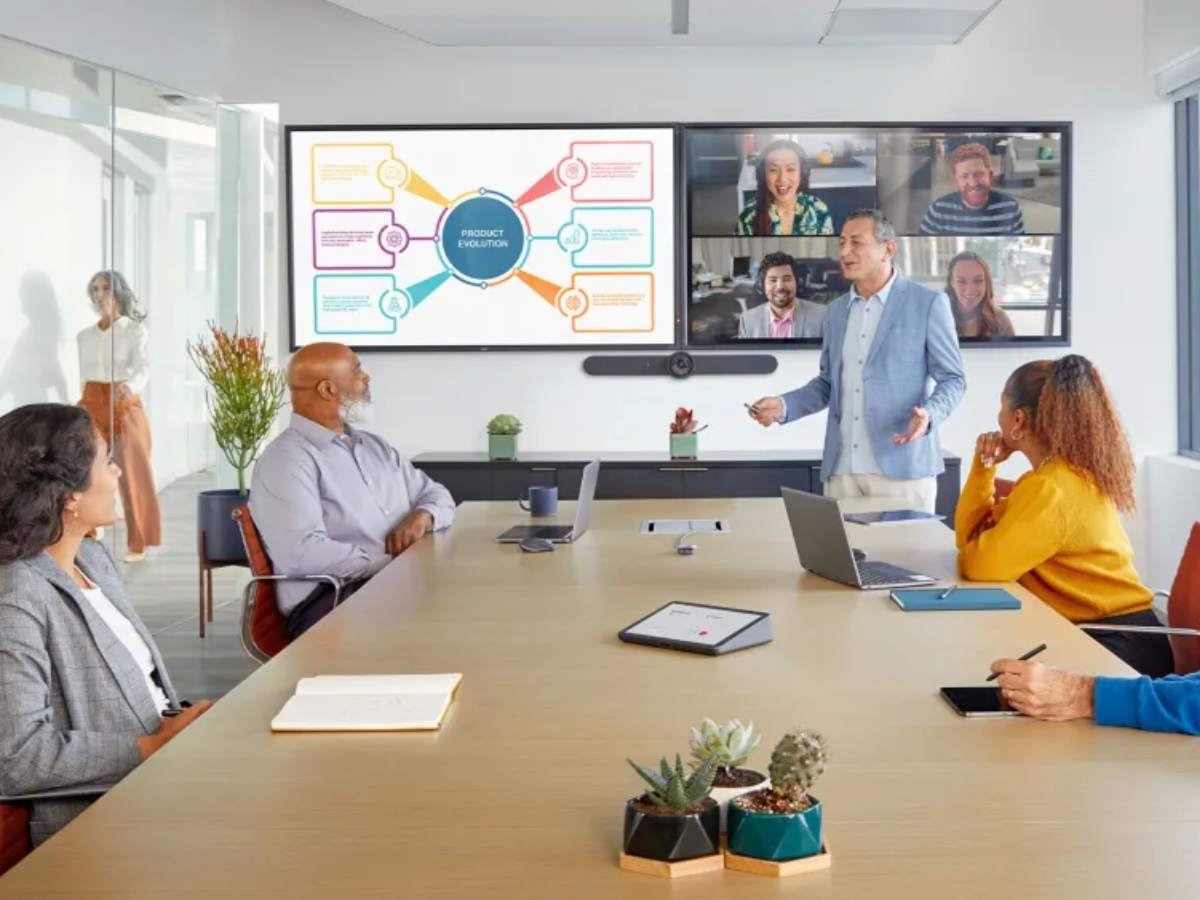
Meanwhile, Scripps News reported in October 2026 that FlexJobs saw a 33% increase in fully remote job postings during Q3 2026 — three consecutive quarters of growth. So while big corporations are tightening their mandates, a different segment of the market is quietly expanding remote opportunities. The job market, it seems, is splitting into two distinct camps.
On the employee side, the Owl Labs 2026 State of Hybrid Work report found that 41% of hybrid and remote workers say they would look for a new job if their flexibility were taken away, and 6% would quit outright. And 45% of fully on-site workers say they’d accept a pay cut just to gain remote access. Flexibility, it turns out, has a very real dollar value in people’s minds.
Internationally, a November 2026 ruling from an Amsterdam District Court found that Booking.com could legally require employees to be in the office at least 40% of the time — a sign that courts in Europe are beginning to weigh in on the RTO debate as well.
The Boomer Perspective: “The Office Is Where Real Work Happens”
Let’s be honest — there’s a strong case to be made for the return-to-office movement, and it’s not just nostalgia talking. Many experienced professionals and business leaders see the push back to the office as a necessary correction after years of pandemic-era improvisation.
From this perspective, the office isn’t just a building — it’s a culture incubator. It’s where mentorship happens organically, where junior employees absorb professional norms by watching their colleagues, and where the kind of spontaneous collaboration that sparks real innovation takes place. You can’t replicate a hallway conversation on Slack. You can’t build the same kind of trust over a video call that you can over lunch.

The data on “coffee badging” — where 40% of hybrid workers come in for just a few hours to show their face before heading home — actually supports this concern. If people are gaming the system to avoid being in the office, are they really getting the benefits of in-person collaboration? Or are they just checking a box?
There’s also the productivity question. While many studies show remote workers are productive, there’s a growing body of evidence that certain types of complex, creative, or collaborative work genuinely benefit from physical co-presence. The “remote-from-office” phenomenon cuts both ways: yes, it shows that RTO mandates can be performative, but it also shows that many teams are so geographically dispersed that they’ve lost the ability to collaborate effectively in person at all.
For career advancement, the office still matters. Visibility, relationships, and being “in the room where it happens” continue to influence who gets promoted, who gets the interesting projects, and who builds the kind of network that opens doors. Here at Your Career Place, we’ve seen this play out time and again — the people who are present tend to be the people who advance.
And from a business continuity standpoint, having employees in a shared physical space makes it easier to onboard new hires, maintain security protocols, and ensure that institutional knowledge doesn’t walk out the door when someone closes their laptop at home.
The Doomer Perspective: “RTO Mandates Are a Power Play, Not a Productivity Strategy”
Now let’s flip the coin. There’s an equally compelling — and increasingly well-documented — case that the return-to-office push is less about productivity and more about control, real estate costs, and a generational power struggle playing out in corporate boardrooms.
Consider this: WFH Research published in October 2026 found that returning to fully in-office work would result in an estimated 3.5% decline in effective labor productivity (when accounting for commute time) and a 2.6% reduction in overall worker welfare. In other words, forcing people back to the office doesn’t just make them unhappy — it actually makes the economy less efficient.
The compliance gap tells a similar story. While the number of required office days rose by 12% between 2024 and 2025, actual office attendance increased by only 1–3%. Workers are being told to come in more, but they’re not actually doing it — and companies are struggling to enforce their own mandates without triggering mass resignations.
The mental health implications are serious too. Hubstaff’s State of the Workweek report found that 69% of workers experienced burnout in the last 12 months, often hidden from leadership. And a 2026 study in Frontiers in Psychology found that remote employees reported the highest levels of well-being compared to hybrid and on-site counterparts.

There’s also a diversity and inclusion angle that often gets overlooked. Remote work has been a lifeline for workers with disabilities, working mothers, neurodivergent professionals, and caregivers. Stripping away flexibility doesn’t just inconvenience these workers — it can effectively push them out of the workforce entirely. That’s not just bad for individuals; it’s bad for companies that claim to care about building diverse teams.
And then there’s the “in-office remote” problem. If nearly half of all in-office days are spent on solo tasks or virtual calls, what exactly are companies paying for? The commute costs workers time and money. The office costs companies real estate dollars. And the productivity gains? According to the New York Fed research, they may be largely illusory.
Perhaps most damning is the generational divide in leadership. Research from the National Bureau of Economic Research shows that younger CEOs are more likely to embrace remote work as a deliberate operational strategy — viewing digital-first collaboration as a core business asset, not a compromise. As leadership demographics shift, the rigid RTO mandates of today’s old guard may look increasingly out of step.
Key Takeaways for Your Career
- Know your market. Remote and hybrid opportunities vary significantly by industry, geography, and company size. Finance and tech are going heavily in-office; legal and HR roles still offer more hybrid flexibility. Research your specific field before making career moves based on flexibility expectations.
- Flexibility has a price tag — know yours. Nearly half of workers say they’d take a pay cut for remote access. Before you negotiate, know what flexibility is worth to you in real dollars, and factor that into your total compensation calculations.
- Don’t “coffee badge” your way to irrelevance. If you’re in a hybrid role, make your in-office time count. Show up for the meetings that matter, build real relationships, and be visible in ways that advance your career — not just to check a box.
- Watch the job market signals. The 33% surge in fully remote postings from FlexJobs suggests that a parallel remote-friendly job market is growing alongside the RTO-heavy corporate world. If flexibility is a priority, that market may be worth exploring.
- Burnout is real and often invisible. Whether you’re remote, hybrid, or in-office, 69% of workers experienced burnout last year. Be proactive about your well-being — don’t wait for your employer to notice.
- AI is changing the equation. With 82% of workers now using AI in their roles, the nature of work itself is shifting. Remote or in-office, the workers who thrive will be those who learn to direct, evaluate, and collaborate with AI tools effectively.
Conclusion: Navigating the New Normal
The remote work debate of 2026 isn’t really about where you work — it’s about power, productivity, trust, and what we value in our professional lives. The data is clear that hybrid work has become the “emerging equilibrium” for millions of Americans, even as employers push for more in-office time. The gap between what companies mandate and what employees actually do tells us that this negotiation is far from over.
Here at Your Career Place, we believe that the best career decisions are informed ones. Whether you’re navigating an RTO mandate, searching for a remote-friendly employer, or trying to make the most of a hybrid arrangement, understanding the landscape is the first step. The tug-of-war between flexibility and the office will continue to shape hiring, retention, and career advancement for years to come — and the workers who understand the dynamics will be the ones who come out ahead.
Stay flexible, stay informed, and as always — Your Career Place is here to help you navigate whatever comes next.