
Technical Interviews: How AI Is Rewriting the Rules
How AI Is Rewriting the Rules for Every Job Seeker
If you’ve been preparing for a technical interview the same way you did three years ago — grinding LeetCode problems at midnight, memorizing sorting algorithms, and praying you don’t blank on a binary tree question — we have some news for you. The game has changed. Dramatically. And if you’re not paying attention, you might walk into your next interview completely unprepared for what’s actually waiting on the other side of the screen.
At Your Career Place, we track the shifts in hiring culture so you don’t have to do it alone. And right now, one of the biggest earthquakes in the job market is happening inside the technical interview room. AI tools have upended decades of conventional wisdom about how companies test engineering talent — and the ripple effects are being felt by everyone from fresh bootcamp graduates to seasoned software architects.
So what’s actually happening? Let’s dig in.
The State of Technical Interviews in 2026
For years, the technical interview followed a familiar script: you’d get a coding puzzle, maybe a whiteboard problem, and a system design question if you were applying for a senior role. Companies like Google, Meta, and Amazon built entire hiring ecosystems around this format. LeetCode became a second job for ambitious engineers. Entire communities formed around “grinding” hundreds of problems to crack the FAANG code.
Then AI happened — and it happened fast.
Tools like GitHub Copilot, Cursor, and Claude Code have made it trivially easy for candidates to generate working code in seconds. According to a 2026 report from Karat, a leading technical interview platform, 71% of engineering leaders now say AI has made it significantly harder to assess technical skills using traditional methods. The old formats — take-home projects, automated coding tests, no-AI whiteboarding — are losing their ability to separate genuinely skilled engineers from those who are simply good at prompting a language model.
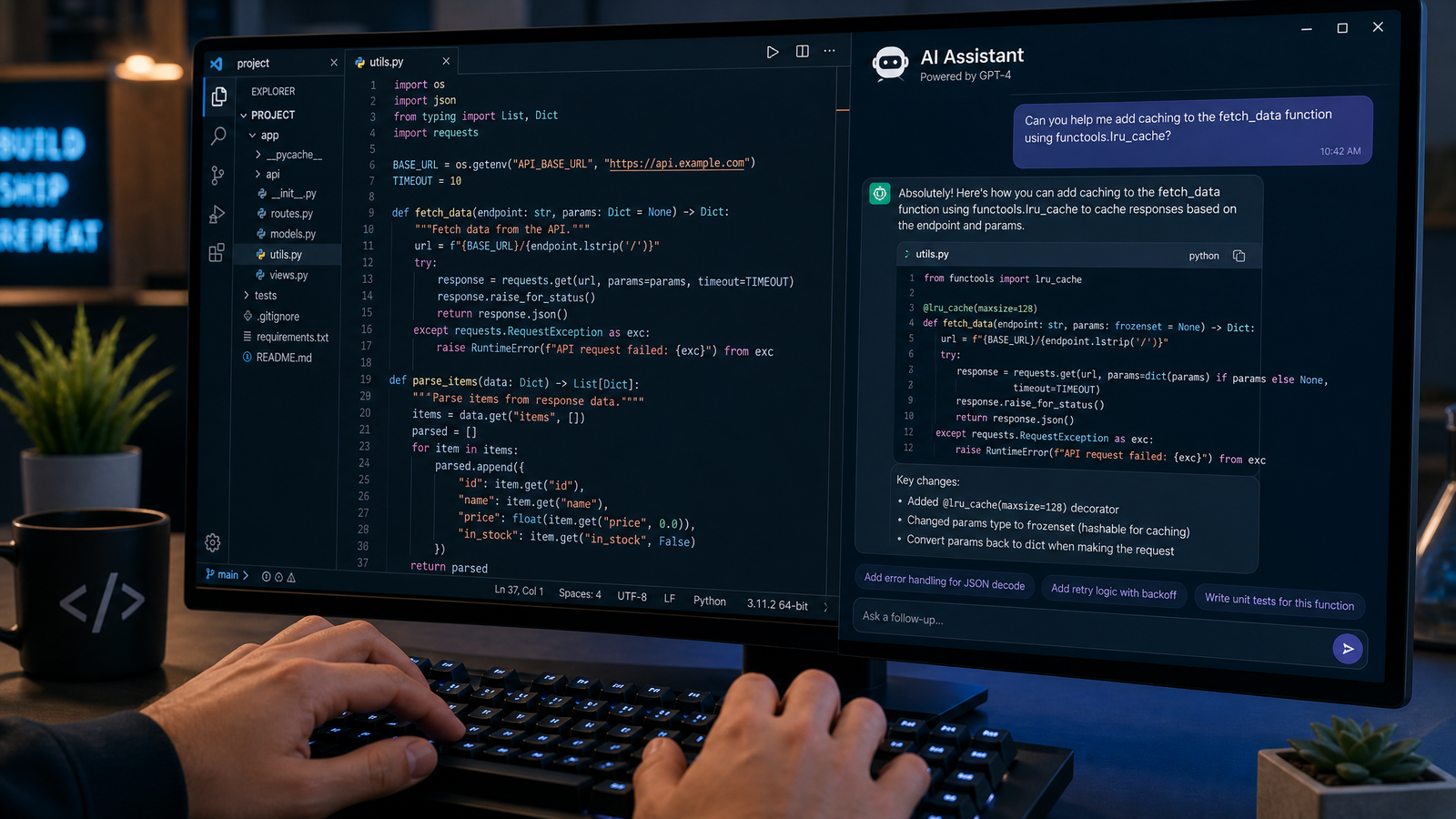
The numbers are striking. Industry estimates suggest that over 50% of candidates use AI tools during technical assessments, even when explicitly prohibited. Platforms like CodeSignal have responded with AI proctoring and “LeakSweep” technology to detect cheating, but many hiring leaders argue this is a losing battle. As one viral tweet put it: “Cheating tools get 61% of candidates who use them past the pass bar in a technical round. What they can’t get them past is the follow-up. Ask ‘why’ twice and a borrowed answer falls apart.”
That insight captures the new reality perfectly. The question is no longer whether candidates can produce code — it’s whether they actually understand what they’re building.
What’s Replacing the Old Format?
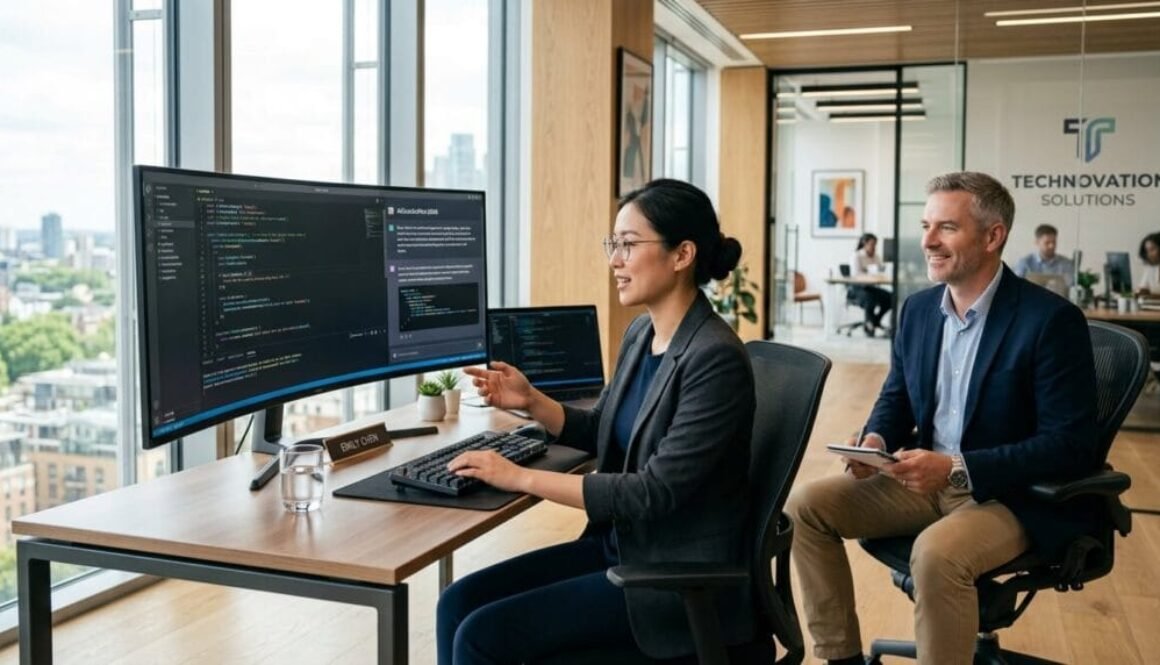
Forward-thinking companies are pivoting to what’s being called “AI-allowed, live pair-programming sessions” — 60 to 90-minute collaborative interviews where candidates are given access to AI tools and evaluated not on whether they use them, but on how they use them. Interviewers are trained to assess:
- Problem decomposition: Can you break down a complex, ambiguous problem before you start prompting the model?
- Tool judgment: Do you know when to lean on AI for boilerplate and when to take manual control for high-stakes architectural decisions?
- Verification habits: Can you catch the subtle errors and hallucinations that AI models introduce?
- Communication: Can you explain your trade-offs, defend your decisions, and recover gracefully when things go sideways?
Meanwhile, FAANG companies are making their own adjustments. Google now emphasizes “escalation” — problems that evolve in difficulty mid-interview to test adaptability. Meta still demands speed, often requiring two problems solved in 35 minutes. Amazon has introduced dedicated debugging rounds and weaves behavioral questions directly into coding sessions. Netflix and Apple have largely moved away from abstract puzzles toward applied, domain-specific problems that mirror real engineering work.
System design — once reserved for senior engineers — is now showing up earlier in the process, sometimes for mid-level roles. And many companies have quietly reintroduced in-person final rounds to prevent candidates from gaming remote interview loops with AI assistance.
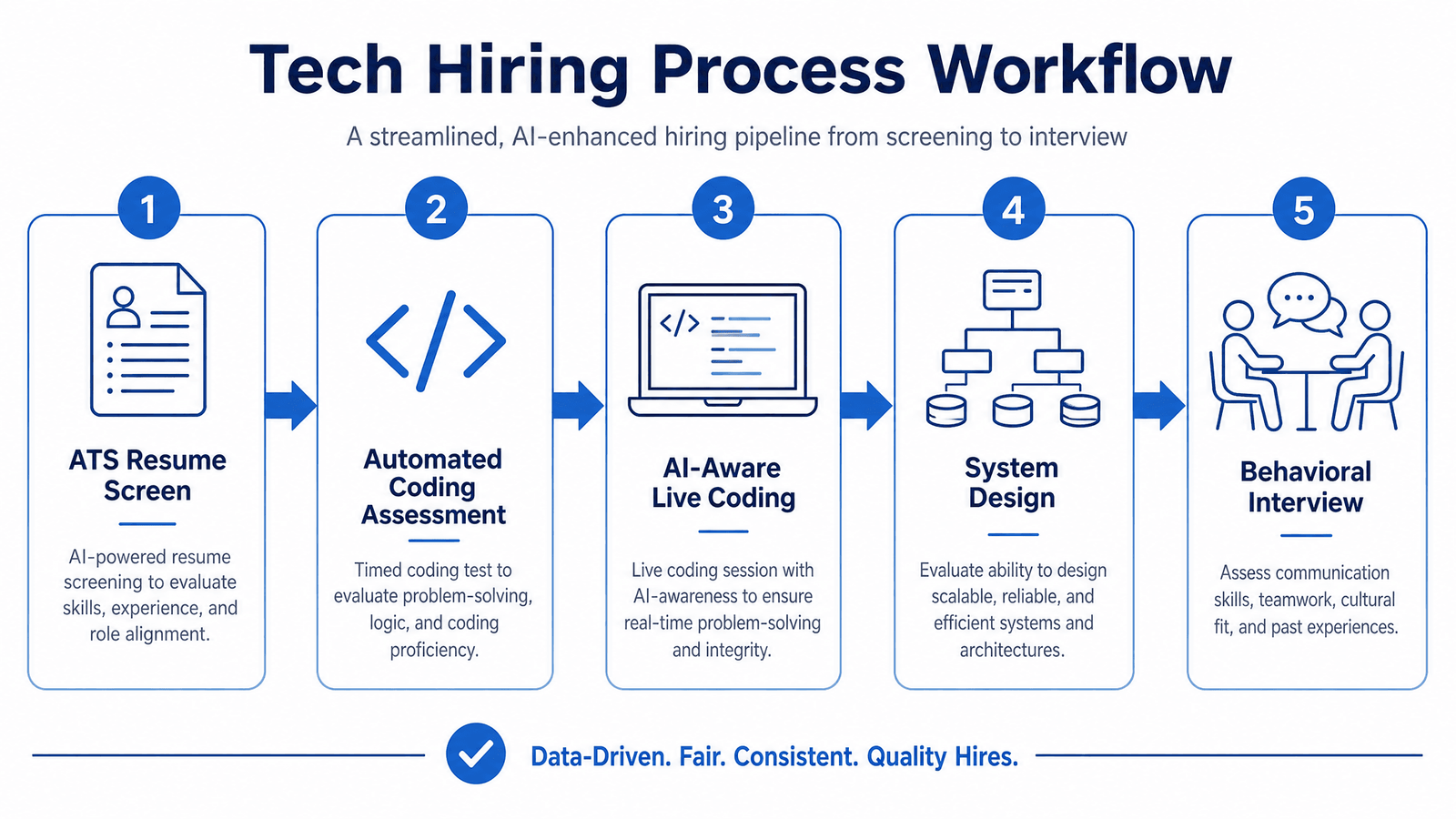
The New 5-Stage Pipeline
If you’re preparing for a technical role in 2026, here’s the pipeline you’re likely to face:
- ATS Resume Screen: Automated systems parse for specific tool names, version context, and scale metrics.
- Automated Coding Assessment: Timed, proctored environments on platforms like HackerRank or CodeSignal.
- AI-Aware Live Coding Round: The new frontier — collaborative, real-world problems with AI tools available.
- System Design: Now standard for L4+ roles, focused on trade-offs and failure modes.
- Behavioral Interview: Accounts for 30–40% of total interview time, with mandatory questions about AI usage.
That last point deserves emphasis. Most major tech firms now require candidates to share an “AI Story” — a specific, concrete example of how you’ve used AI tools to improve your engineering work. If you don’t have one ready, you’re already behind.
The Boomer’s Perspective: This Is Progress, and It’s About Time
Let’s be honest: the old technical interview format was never that great. Asking a senior engineer to implement a linked list reversal on a whiteboard — something they’d never do in a real job — was always a bit of theater. The LeetCode grind rewarded people who had the time and resources to spend months memorizing patterns, not necessarily the people who would be the best engineers on your team.
From an optimistic standpoint, the AI revolution in technical interviews is a long-overdue correction. Here’s why this is actually good news:
It levels the playing field. The old system heavily favored candidates who could afford to spend months grinding problems — often younger, single candidates without family obligations, or those from elite universities with strong alumni networks. The new format, which rewards judgment, communication, and real-world problem-solving, is more accessible to experienced professionals who’ve been building things in the real world for years.
It tests what actually matters. In a real engineering job, you’re never working in isolation without access to documentation, Stack Overflow, or AI tools. The new interview format mirrors actual working conditions. Companies that adopt AI-allowed assessments report better hiring outcomes, including improved code quality and faster time-to-market. That’s not a coincidence — they’re hiring people who can actually do the job.
It rewards genuine expertise. As that viral tweet noted, AI can get you past the first question, but it can’t save you when an interviewer asks “why” twice. Deep expertise — the kind that comes from years of building, debugging, and shipping real systems — is more valuable than ever. The new format is designed to surface exactly that kind of knowledge.
It’s pushing the industry forward. The fact that 71% of engineering leaders are rethinking their assessment methods is a sign of a healthy, self-correcting industry. Companies that cling to outdated formats will lose talent to competitors who’ve adapted. That competitive pressure is good for everyone.
At Your Career Place, we’ve always believed that the best career advice is grounded in reality, not nostalgia. And the reality is that the engineers who thrive in 2026 will be the ones who embrace AI as a tool, not a crutch — and who can demonstrate that distinction clearly in an interview setting.
The Doomer’s Perspective: We’re Creating a Mess We Can’t Clean Up
Not everyone is celebrating the new technical interview landscape. And honestly? Some of the concerns are hard to dismiss.
The cheating problem is real and getting worse. Yes, the “ask why twice” approach can catch some AI-assisted candidates. But sophisticated cheating tools are evolving just as fast as detection methods. We’re in an arms race, and it’s not clear that interviewers are winning. When over half of candidates are using AI during assessments despite explicit prohibitions, you have to ask: what are we actually measuring anymore?
The new format favors a different kind of privilege. AI-allowed interviews sound democratic, but they actually require candidates to be fluent in the latest AI tools — tools that cost money, require fast internet, and are more accessible to people in certain geographic and economic contexts. A brilliant engineer in a developing country with limited access to premium AI subscriptions may be at a significant disadvantage compared to a candidate in San Francisco who’s been using Cursor and Claude Code daily for two years.
We’re losing signal, not gaining it. The old formats had problems, but they provided consistent, comparable data points. The new AI-aware formats are highly variable — the quality of the assessment depends heavily on the skill of the interviewer, the specific problem chosen, and dozens of other factors. With only a ~3% applicant-to-interview conversion rate in technical hiring, companies can’t afford to get this wrong. And many of them are figuring it out in real time, on real candidates.
The “AI Story” requirement is a trap for experienced engineers. Requiring candidates to share a specific story about using AI in their work sounds reasonable — until you realize it systematically disadvantages engineers who built their careers before AI tools were ubiquitous. A 45-year-old architect with 20 years of experience building mission-critical systems may have only started using AI tools recently. Penalizing them for that is a form of age discrimination dressed up as a skills assessment.
The in-person return is a step backward for inclusion. Many companies reintroducing in-person final rounds are doing so to prevent AI cheating. But in-person requirements disproportionately burden candidates with disabilities, caregiving responsibilities, or geographic constraints. The remote interview revolution opened doors for millions of people. Slamming those doors shut in the name of assessment integrity is a real cost that often goes unacknowledged.
The team at Your Career Place takes these concerns seriously. Progress isn’t always linear, and the transition to AI-aware technical interviews is creating genuine winners and losers. Being clear-eyed about that isn’t pessimism — it’s preparation.
Key Takeaways: What You Need to Do Right Now
Whether you’re optimistic or skeptical about where technical interviews are heading, the practical reality is the same: you need to adapt. Here’s what the Your Career Place team recommends:
- Build your AI fluency deliberately. Don’t just use AI tools — understand their limitations. Practice catching hallucinations, debugging AI-generated code, and knowing when to override the model’s suggestions. This is now a core interview skill.
- Prepare your “AI Story.” Have a specific, concrete example ready of how you’ve used AI to improve your engineering work. Quantify the impact if possible. This is now a mandatory question at most major tech firms.
- Don’t abandon the fundamentals. Data structures, algorithms, and system design principles still matter — especially for FAANG roles. The format has changed, but the underlying knowledge hasn’t become irrelevant.
- Practice explaining your thinking out loud. Communication is now a primary differentiator. Use tools like Interviewing.io or Pramp to practice narrating your problem-solving process under pressure.
- Research each company’s specific format. Google, Meta, Amazon, Netflix, and Apple all have meaningfully different interview structures in 2026. One-size-fits-all preparation is no longer sufficient.
- Know your rights. If you have a disability or caregiving responsibility that makes in-person interviews difficult, you have the right to request accommodations. Don’t assume the answer is no before you ask.
The technical interview landscape in 2026 is genuinely more complex than it’s ever been. But complexity creates opportunity for the prepared. At Your Career Place, we’re here to help you navigate every twist and turn — because your career deserves more than guesswork.
Stay sharp, stay adaptable, and keep building.