
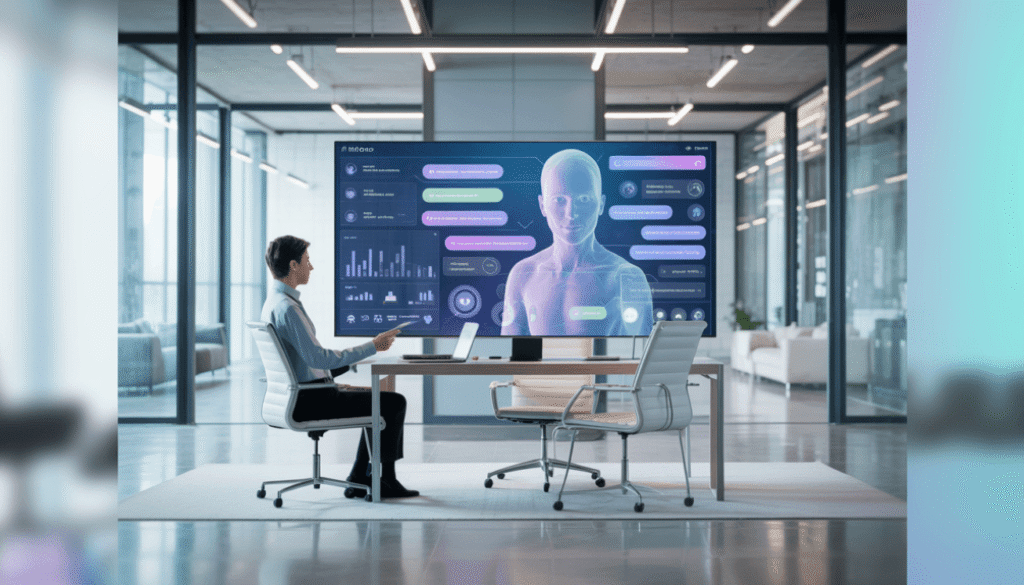
AI-Driven Interviews in 2026
What Every Job Seeker Needs to Know
Published by Your Career Place | May 8, 2026
Picture this: You’ve just applied for your dream job. A few hours later, you receive an email with a link — not to schedule a call with a recruiter, but to complete an interview with an AI. No human on the other end. Just you, your webcam, and an algorithm that’s going to decide whether you move forward in the hiring process.
Sound futuristic? It’s not. It’s Tuesday in 2026.
At Your Career Place, we keep a close eye on the trends shaping the job market so you don’t have to navigate them alone. And right now, the single biggest shift in how companies hire is the rise of AI-driven interviews. Whether you love the idea or it makes your stomach drop, understanding this trend is no longer optional — it’s essential.
Let’s break it all down: what AI interviews actually are, what the latest data says, and two very different perspectives on whether this is a revolution worth celebrating or a disaster waiting to happen.

So, What Exactly Is an AI-Driven Interview?
An AI-driven interview uses artificial intelligence — specifically machine learning and natural language processing — to screen and evaluate job candidates, often without a human recruiter in the room (or on the screen). The process typically works like this:
- The AI reads the job description and identifies the key skills and competencies needed for the role.
- It generates questions — either standardized for all candidates or tailored to your specific resume.
- You record your answers via video, voice, or text chat, usually on your own schedule.
- The AI analyzes your responses — evaluating not just what you say, but how you say it: your word choice, tone, clarity, and communication style.
- You get scored and ranked, and a shortlist is handed off to human recruiters for the next stage.
There are a few different flavors of AI interviews you might encounter:
- One-way video interviews: You record answers to pre-set questions on your own time. No live interaction.
- AI chat interviews: A conversational chatbot asks you questions and adapts based on your answers.
- Technical assessments: Coding challenges or skill tests evaluated by AI, common in tech hiring.
- AI-assisted interviews: A human interviewer is present, but an AI tool is helping them — suggesting follow-up questions, taking notes, and generating summaries.
The Numbers Don’t Lie: AI Interviews Are Everywhere
If you’ve been job hunting recently and felt like something was different, you’re not imagining it. The data tells a striking story:
- An estimated 87% of companies now use AI in some stage of their hiring process.
- 45% of global organizations use AI-powered tools specifically for large-scale candidate screening.
- AI can reduce resume review time by 75% and cut overall time-to-hire by 50–60%.
- The global AI recruitment market was valued at $704 million in 2025 and is projected to surpass $1.12 billion by 2032.
- And yet — only 26% of job seekers trust AI to evaluate them fairly.
- A remarkable 66% of U.S. adults say they would avoid applying for a job that uses AI in hiring decisions.
- Nearly 4 in 10 candidates have actually withdrawn from a hiring process because it required an AI interview.
That last set of numbers is where things get really interesting. Employers are racing to adopt AI. Candidates are pushing back hard. And that tension is exactly what makes this topic so important to understand right now.
Here at Your Career Place, we believe in giving you the full picture — including the parts that are messy and complicated. So let’s look at this from two very different angles.
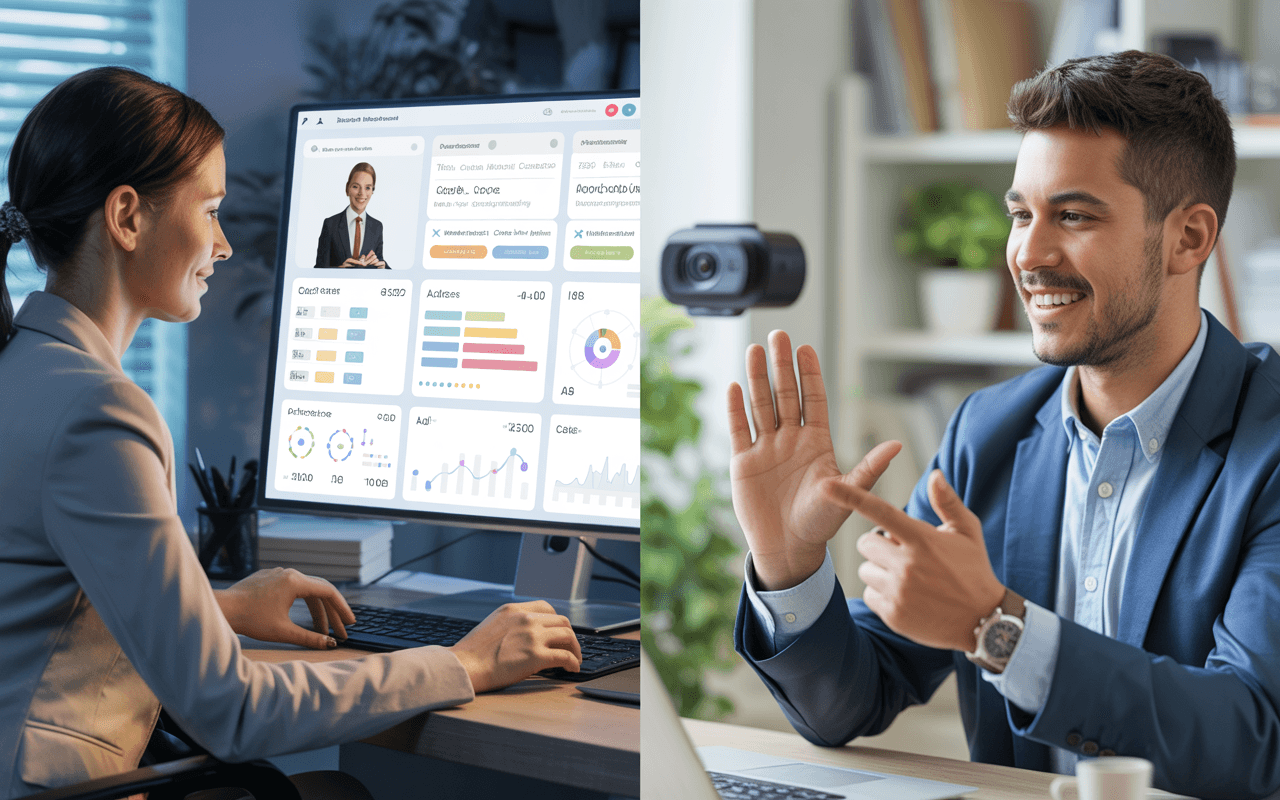
The Boomer’s Perspective: “This Is Progress, and Here’s Why You Should Embrace It”
The optimistic take — for those who see AI interviews as a genuine step forward.
Let’s be honest: the old way of hiring wasn’t exactly fair either. Think about how many qualified candidates got screened out because a recruiter skimmed their resume for 6 seconds, or because they didn’t go to the “right” school, or because they didn’t have a mutual connection on LinkedIn. Human bias in hiring is well-documented and deeply entrenched.
AI interviews, at their best, offer something genuinely valuable: consistency. Every candidate gets the same questions. Every response is evaluated against the same criteria. There’s no interviewer who’s tired on a Monday morning, no unconscious preference for candidates who remind them of themselves, and no “culture fit” judgment that’s really just code for “looks like us.”
Some studies even suggest that AI scoring systems rate women and underrepresented minorities higher than human interviewers do — a finding that, if it holds up, would be a meaningful step toward more equitable hiring.
Then there’s the practical side. For job seekers, AI interviews mean flexibility. You can complete your interview at 10 PM after the kids are in bed, or on a Sunday afternoon when you’re most relaxed. No more scrambling to take a “dentist appointment” when you’re actually sneaking out of your current job to interview. No more scheduling conflicts across time zones. You do it on your terms.
And the speed? Faster feedback means less of that agonizing silence after an interview. Companies using AI screening are moving candidates through the process in days, not weeks. For anyone who’s ever sent an application into the void and heard nothing for a month, that’s a genuine improvement.
The technology is also getting smarter fast. Today’s AI interview tools have moved well beyond simple keyword matching. They understand context, evaluate communication clarity, and can assess problem-solving approaches in real time. Google is even piloting a new interview format for software engineers where candidates are encouraged to use AI tools during the interview — because that’s the actual skill they need on the job.
The bottom line from the optimist’s corner: AI interviews aren’t perfect, but they’re a tool that — when used thoughtfully — can make hiring faster, fairer, and more accessible. The key is to prepare for them strategically rather than resist them emotionally.
The Doomer’s Perspective: “This Is a Problem, and We Should Be Worried”
The pessimistic take — for those who see serious red flags in the AI interview trend.
Let’s not sugarcoat it: there are real, serious problems with AI-driven interviews, and the fact that they’re becoming mainstream doesn’t make those problems go away.
Start with bias. The promise of AI is objectivity, but the reality is more complicated. A recent study found that 47% of companies identified age bias in their AI hiring tools, with 44% citing socioeconomic bias and 30% reporting gender bias. AI systems are trained on historical data — and if that historical data reflects decades of discriminatory hiring practices, the AI learns to replicate those patterns. You’re not eliminating bias; you’re automating it and making it harder to challenge.
Then there’s the question of what AI actually can’t measure. Emotional intelligence. Empathy. The ability to read a room, build trust, or inspire a team. These are often the qualities that separate a good employee from a great one — and they’re nearly invisible to an algorithm. Companies that over-rely on AI screening risk building teams that look great on paper but struggle to actually work together.
The candidate experience is also taking a hit. Survey after survey shows that people find AI interviews dehumanizing. They feel “processed rather than considered.” And when top candidates — the ones with options — encounter an AI interview, many of them simply walk away. That 40% withdrawal rate isn’t just a statistic; it’s a signal that companies using AI interviews may be systematically losing their best applicants to competitors who still treat candidates like human beings.
There are also serious data privacy concerns. AI interviews collect video, audio, and behavioral data. Where does that data go? How long is it stored? Who has access to it? In many cases, candidates have no idea — and the companies collecting it may not have robust protections in place.
Finally, there’s the regulatory wildcard. The EU AI Act, with full enforcement beginning in August 2026, classifies recruitment AI as “high-risk” and mandates strict transparency, bias testing, and human oversight. Non-compliance carries fines of up to €15 million or 3% of global turnover. Companies that have rushed to adopt AI hiring tools without doing the hard work of auditing them for bias and ensuring transparency are going to face a reckoning — and the candidates who were screened out unfairly in the meantime won’t get those opportunities back.
The bottom line from the pessimist’s corner: AI interviews are being adopted faster than the safeguards to govern them. Until the technology is more transparent, more rigorously tested for bias, and more accountable to the humans it affects, we should be pushing back — not just accepting this as inevitable progress.
How to Actually Prepare for an AI Interview
Wherever you land on the optimist-to-pessimist spectrum, the practical reality is that AI interviews are here, and you’re likely to encounter one. Here at Your Career Place, we want to make sure you’re ready. Here’s what actually works:
- Practice with AI tools first. Use platforms like Interviews by AI or LinkedIn’s interview practice feature to get comfortable with the format. The more you practice, the less jarring the real thing will feel.
- Use the STAR method. Structure your answers around Situation, Task, Action, and Result. AI systems are designed to evaluate clear, logical responses — and STAR gives you exactly that framework.
- Nail your technical setup. Good lighting, a clean background, stable internet, and quality audio aren’t optional. Technical glitches can disrupt your flow and create a poor impression, even with an AI evaluator.
- Speak clearly and professionally. The AI is analyzing your communication style, not just your content. Avoid filler words, speak at a moderate pace, and be mindful of your tone.
- Don’t try to game the system. Using real-time AI tools to generate answers during a live interview is widely considered dishonest — and it often produces robotic, disconnected responses that are easy to spot. Use AI to prepare, not to perform.
- Prepare for the human follow-up. AI screening is almost always just the first step. The goal is to get to the human interviewers — so have thoughtful questions ready and bring your authentic self to those conversations.
Key Takeaways
AI-driven interviews are the defining hiring trend of 2026. Here’s what Your Career Place wants you to walk away with:
- They’re mainstream now. 87% of companies use AI in hiring. You will encounter this. Preparation is not optional.
- The technology has real benefits — flexibility, speed, and the potential for more consistent evaluation — but also real risks, including algorithmic bias and a dehumanizing candidate experience.
- The optimist sees opportunity; the pessimist sees danger. Both are right. The truth is that AI interviews are a powerful tool that can be used well or badly, and the outcome depends heavily on how companies implement them.
- Your best strategy is preparation: practice the format, structure your answers clearly, optimize your setup, and stay authentic.
- The regulatory landscape is shifting. The EU AI Act and growing scrutiny of AI hiring tools mean that companies will face increasing pressure to be transparent and accountable. That’s good news for candidates in the long run.
- AI is the gatekeeper, not the decision-maker. Your goal in an AI interview is to get to the humans. Focus on clear, compelling communication — and save your best relationship-building for the next round.
The job market is changing fast, and at Your Career Place, we’re here to help you stay ahead of every curve. Whether you’re facing your first AI interview or your tenth, the fundamentals haven’t changed: know your story, communicate it clearly, and show up prepared.
Good luck out there — and remember, even the algorithm can’t replace what makes you uniquely you.
Want more career insights like this? Follow Your Career Place for weekly tips, trends, and strategies to help you land the job you deserve.