
AI Content Creation in 2026: The Small Business Owner’s Guide to Creating More With Less
AI Content Creation in 2026: The Small Business Owner’s Guide to Creating More With Less
If you’ve been watching the AI content creation space, you’ve probably noticed something: the pace of change has gone from fast to relentless. Every few weeks, a new tool launches, a familiar platform adds a major feature, or a capability that used to cost thousands of dollars becomes available for $15 a month.
At Your Career Place, we track these developments so you don’t have to. And what we’re seeing in October 2026 is genuinely significant — not because of any single breakthrough, but because of how the pieces are finally fitting together into something small businesses can actually use.
Let’s break down what’s new, what it means for your business, and — as always — both the optimistic and the cautious view.

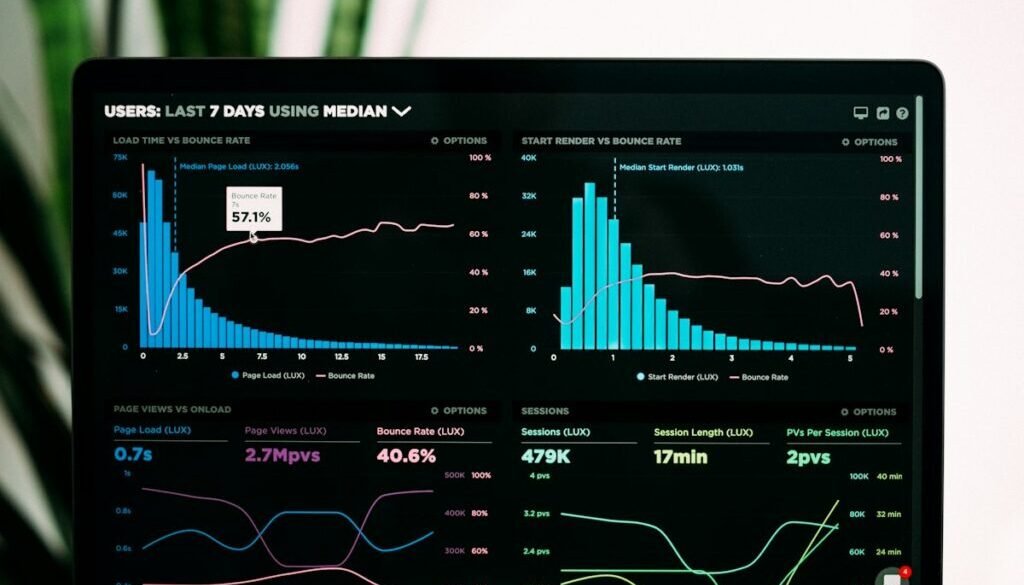
AI content tools are increasingly built around integrated dashboards — not just standalone generators.
What’s Actually New in AI Content Creation Right Now
The biggest shift happening in late 2026 isn’t a single new model — it’s the move from standalone generators to integrated production workflows. Here’s what that looks like in practice:
Video: AI Is Now Inside the Editor
Adobe’s September 2026 updates to Premiere Pro are the clearest example of this shift. Editors can now select a gap in their timeline and generate context-aware video or audio without ever leaving the project. Need b-roll for a product demo? Generate it from reference frames. Need background music or ambient sound? Create it right there in the sequence. The generated clips stay editable inside the timeline — no export, no import, no starting over.
Adobe’s After Effects also entered public beta with an AI assistant that can reorganize large layer structures, identify technical problems, and create motion effects from plain-language instructions. For small business owners who’ve always found video editing intimidating, this is a meaningful change.
Audio: ElevenLabs’ Big Month
ElevenLabs had arguably the most impactful releases of the period. On September 28, they launched Eleven v4 and Eleven v4 Turbo — with more emotional nuance, better tone control, multi-speaker capability, and support for over 90 languages. The Turbo version targets low-latency applications, with a reported response time of around 150 milliseconds.
Then in October, they launched Instant Soundtracks: upload a video, and the system analyzes the motion, pacing, and mood to generate original music and place sound effects at the right timestamps. Music and effects appear as separate, editable layers. For a small business producing product videos or social content, this is the kind of capability that used to require hiring a composer.
Images and Design: Layered and Brand-Controlled
The image generation story in 2026 is less about “wow” demos and more about practical brand control. Adobe Firefly now gives access to over 30 models — including custom models trained on your own brand assets. Canva AI 2.0 (launched earlier this year) generates layered, editable designs rather than flat images, which means you can actually update prices, calls to action, and campaign details without starting from scratch.
OpenAI consolidated its image tools into ChatGPT Images following the retirement of the legacy DALL·E GPT in August, with support for transparent-background assets useful for campaign graphics.
Text: Agents That Actually Do the Work
The text generation story has shifted from “here’s a draft” to “here’s a completed workflow.” AI assistants can now use shared files, project history, and connected applications to produce or update multiple assets — not just return a single block of copy. The practical result: you can turn one approved interview or product brief into blog posts, social captions, email sequences, and presentation slides with far less manual work.

Small business owners are finding that AI tools handle the repetitive assembly work — freeing them to focus on strategy and customer relationships.
What This Means for Small Businesses: The Practical Picture
Here’s a simple table of what’s now realistic for a small business team:
| Business Need | AI-Assisted Workflow | Human Checkpoint |
|---|---|---|
| Weekly social campaign | Brief → copy variants → layered design → resize/schedule | Claims, tone, offer details |
| Product demonstration video | Existing footage → generated b-roll/effects → short versions | Product accuracy |
| Podcast repurposing | Transcribe → summarize → article/email → clips | Context and quotations |
| Localized explainer | Approved script → multilingual voice → dub/lip-sync | Native-language review |
| Brand soundtrack | Upload video → generate score/effects → adjust layers | Licensing and brand fit |
The key insight: AI handles the assembly and technical repetition. You handle the strategy, the customer insight, the factual verification, and the final approval. That’s a division of labor that actually makes sense for a lean team.
What Does It Cost?
Here’s a realistic snapshot of entry-level pricing as of late October 2026:
| Platform | Free Tier? | Paid Starting Price | Main Limit |
|---|---|---|---|
| Canva | Yes | ~$144/year (Pro) | Shared AI credit allowance |
| ElevenLabs | Yes | ~$6/month (Starter) | 30,000 monthly credits |
| Runway | Yes | $12/month (Standard) | 625 credits/month |
| ChatGPT | Yes | ~$20/month (Plus) | Usage limits vary |
| Descript | No | ~$16/month | 10 media hours |
| Opus Clip | No | ~$15/month | Varies by plan |
A realistic solo starter stack — one general AI assistant plus one specialist tool — runs roughly $20–$35 per month. A three-person team with broader needs might spend $150–$200 per month. The catch: credit-based pricing can make the effective cost higher than the headline price, especially if you’re regenerating frequently or using premium models.
At Your Career Place, our advice is always to start with monthly billing, test one specific bottleneck for 30–60 days, and only commit to annual plans once you’ve confirmed the tool actually saves you time on real work — not just demos.
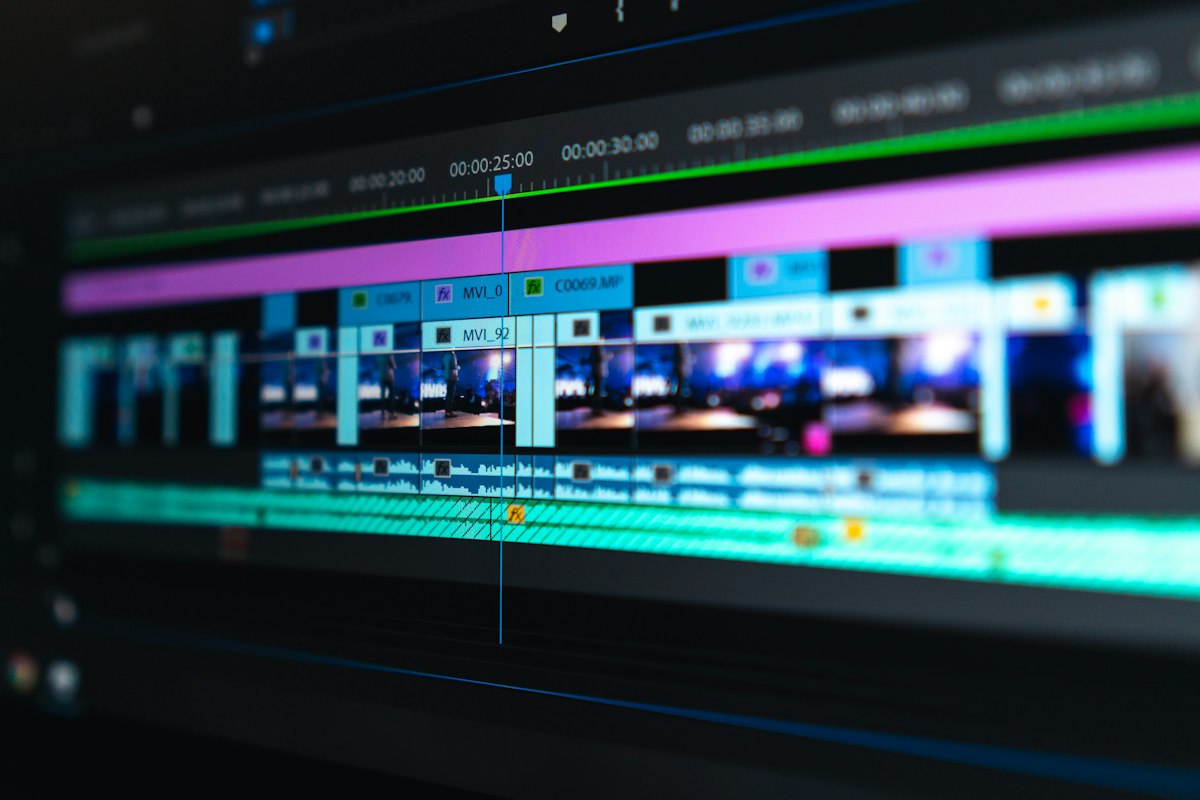
AI-assisted video editing is now accessible to small teams — but human editorial judgment remains essential for quality and accuracy.
🌟 Boomer’s Perspective: This Is the Moment Small Businesses Have Been Waiting For
Let’s be honest: for most of the past decade, “content marketing” was something big companies with dedicated marketing teams could do well, and everyone else was playing catch-up. You needed a copywriter, a graphic designer, a video editor, a social media manager — and if you were a small business owner, you were probably doing all of that yourself, badly, at 11pm.
What’s happening in 2026 is genuinely different. The tools have crossed a threshold where they’re not just helpful — they’re capable. A solo business owner can now:
- Turn one product demo video into a week’s worth of social content
- Generate professional voiceovers in multiple languages for under $10
- Produce layered, brand-consistent graphics without a designer
- Score a video with original music without hiring a composer
- Draft, edit, and publish a blog post in the time it used to take just to outline one
The productivity gains being reported — teams moving from two videos a week to seven, production time cut by 80% — aren’t universal, but they’re not fiction either. For small businesses that have been resource-constrained for years, this is a genuine leveling of the playing field.
The businesses that move now — that pick one bottleneck, test one tool, and build one repeatable workflow — are going to have a significant advantage over competitors who wait. Content is still how customers find you, trust you, and decide to buy from you. AI doesn’t change that equation. It just makes it possible for small businesses to actually compete in it.
At Your Career Place, we’ve seen this pattern before: the businesses that embrace new tools early, thoughtfully, don’t just save time — they build capabilities that compound over months and years. The window to get ahead of this curve is right now.
⚠️ Doomer’s Perspective: Faster Output Means Faster Mistakes — and the Stakes Are Real
Here’s the thing nobody wants to say out loud: AI content tools don’t just make it easier to create good content. They make it easier to create bad content at scale. And for a small business, publishing bad content at scale is worse than publishing nothing at all.
Consider what can go wrong:
- Accuracy failures: AI drafts can invent facts, misquote prices, and distort product claims. If you’re in healthcare, finance, legal services, or any regulated industry, a single AI-generated error can create real liability.
- Generic content that hurts your SEO: Google’s current position emphasizes quality and original value. Unedited AI summaries that lack firsthand experience or distinctive insight may not just underperform — they may actively damage your search rankings.
- Legal exposure: The FTC prohibits fabricated reviews and testimonials. Copyright questions around AI-generated content remain unresolved in U.S. courts. Voice cloning without authorization is a growing legal risk. EU mandatory watermarking for synthetic media is coming in December 2026.
- Brand dilution: High-volume AI content without strong brand controls — templates, Brand Kits, approval gates — can make your business sound like everyone else. Consistency is what builds trust, and AI without guardrails actively undermines it.
- Cost creep: Credit-based pricing, premium model fees, per-seat licenses, and overlapping subscriptions can quietly erase the savings you thought you were getting. Many businesses discover this only after committing to annual plans.
The deeper concern is this: the businesses most likely to get burned by AI content tools are the ones who treat them as a replacement for human judgment rather than a support for it. The tools are genuinely impressive. But impressive tools in the hands of someone who skips the review step are a liability, not an asset.
The team at Your Career Place would add one more caution: don’t let the speed of AI output pressure you into publishing before you’re ready. The fact that you can produce seven videos a week doesn’t mean you should. Quality still beats quantity. One well-crafted, factually accurate, genuinely useful piece of content will always outperform ten generic ones — no matter how fast they were produced.
📋 Key Takeaways for Small Business Owners
- The big shift is workflow integration, not new models. The most valuable AI content tools in 2026 are the ones that work inside your existing editor — not standalone generators you have to export from and import into.
- Audio had a breakout month. ElevenLabs’ Eleven v4 and Instant Soundtracks are genuinely useful for small businesses producing video content — professional voiceovers and original music are now accessible at low cost.
- Start with one bottleneck, not a full stack. Pick the single most time-consuming content task in your business and test one tool against it for 30 days. Measure publishable output, not raw generation count.
- Human review is not optional. AI handles drafts, assembly, and repetition. You handle factual accuracy, brand voice, legal compliance, and final approval. That division of labor is non-negotiable.
- Watch the real cost. Credit-based pricing can make tools more expensive than their headline price suggests. Use monthly billing until you’ve confirmed a tool actually works for your specific workflow.
- Brand controls matter more than ever. Brand Kits, custom models, reference images, and approval gates are what separate consistent, trustworthy content from generic AI output. Invest in setting these up before you scale.
The Bottom Line
AI content creation in 2026 is genuinely powerful — and genuinely risky if you approach it without a plan. The businesses that will benefit most are the ones that treat these tools as a way to do their existing work better, not as a shortcut around the hard parts of building a brand.
The hard parts — knowing your customers, having a distinctive point of view, verifying your facts, maintaining your brand voice — those are still yours to own. AI just handles more of the assembly work so you can focus on them.
At Your Career Place, we’ll keep tracking these developments and translating them into practical guidance for small business owners. The landscape is moving fast, but the fundamentals of good content — accuracy, relevance, and genuine value for your audience — haven’t changed at all.
Stay Ahead of the AI Curve
Every week, Your Career Place breaks down the latest AI developments into practical guidance for small business owners. No hype, no jargon — just what you need to know to make smart decisions.
Visit YourCareerPlace.com to explore more resources, tools, and insights for growing your business in the age of AI.