

How Brand Mentions Replace Backlinks in Modern SEO
Introduction, the changing SEO landscape, and why brand mentions are essential.
For many years, backlinks were the primary currency of search engine optimization. Marketers chased links, tallied domain authority scores, and judged campaigns by the number of referring domains. That model still has value, but the rules are shifting. Large language models and search-level AI are reshaping how visibility is earned and measured.
Search engines now interpret context and entity signals, not only raw link counts. When AI systems recommend answers, they rely on the prevalence and quality of brand mentions across the web. The result: authority is increasingly measured by reputation rather than just hyperlinks.
From backlinks to brand mentions and why it matters
Backlinks remain useful, especially when they come from high-authority sites. Yet a recent, large-scale analysis by Ahrefs showed a striking pattern: traditional backlinks had a relatively weak correlation with being featured in AI-driven search summaries, while combined web mentions produced far stronger correlation.
In practical terms this means brands that are widely discussed on trustworthy sites—whether linked or not—get preferential treatment in AI-generated answers. These answers appear on a substantial share of queries, particularly problem-solving searches where users expect a direct recommendation. If your brand isn’t present in those answers, you may lose visibility even if your backlink profile looks healthy.
Three types of mentions AI uses
Link mentions and their residual value
Classic backlinks still send signals about endorsement and relevance. A high-quality link can drive referral traffic and help search engines index content. Those links remain part of a broader authority profile, and they can amplify other signals when paired with solid brand mentions.
Unlinked mentions and why they are harder to game
Unlinked mentions are brand names, product names, or executive names referenced on web pages without a hyperlink. These are valuable because they represent organic conversation and are more difficult to fabricate at scale. AI systems detect these co-occurrences and use them to map an entity’s network of associations across trustworthy sources.
AI mentions and LLM citations
An AI mention occurs when a brand is cited inside an AI-generated answer—whether that’s a Google AI Overview or a generative model response. Being repeatedly cited by language models signals that your brand is a reliable source for specific queries. Brands with strong mention footprints often receive disproportionate LLM citations, turning those AI answers into a new form of search real estate.
Data that proves the shift
Ahrefs findings on AI Overviews and web mentions
Ahrefs analyzed thousands of brands and found that web mentions correlated far more strongly with placement in AI Overviews than backlinks alone. Brands with high mention prevalence were far more likely to appear in those prime snippets.
Case studies showing traffic growth from digital PR
Agencies tracking long-term digital PR campaigns report substantial organic growth from sustained mention-building. A multi-brand study showed average monthly organic sessions growing by more than 100% after consistent, strategic PR activity. That growth came from improved brand recognition, increased citations, and more favorable inclusion in AI answers.
Zero click search trends and the new search real estate
AI-driven answers increase the number of searches that end without a click on a website page. For problem-solving queries, AI Overviews appear for a large proportion of queries. When your brand appears inside the answer, the referral traffic that does arrive tends to be higher intent and higher value.
Digital PR as the engine of modern authority
To earn brand mentions you must craft stories and assets that journalists, bloggers, and content creators want to reference. Traditional press release blasts rarely cut it. Effective digital PR focuses on relevance, novelty, and utility.
Spheres of Relevance framework for campaign ideas
Map your brand to several adjacent audiences. If your core is a technical product, identify adjacent groups—small businesses, developers, hobbyists—then design campaigns targeted to each sphere. Each sphere becomes a source of mentionable angles and campaign audiences.
Creating mentionable assets and non promotional storytelling
The most successful assets are data-driven or highly narrative and avoid overt promotion. Think surveys, original analyses, local studies, and human stories. Make sure each asset tells a clear story that journalists can retell without turning into an ad.
Newsworthiness checklist to vet campaign ideas
Before launching, vet ideas with three questions: will anyone care? does it present unique information? is it non-promotional? If the answer to each is yes, the concept has a much higher chance of earning organic mentions.
Five data angles to build attention grabbing campaigns
Generational gaps: Compare behaviors across age cohorts. These often spark debate and are highly shareable.
Regional and hyperlocal rankings: Localized lists and zip-code analyses invite neighborhood-level coverage from local press.
Emotional confessions and human stories: Surveys capturing personal behavior or regret produce vivid narratives that attract broad attention.
Tech anxiety and product trust: Measure attitudes toward automation, AI, and privacy. These themes tap into widespread concern and debate.
Financial behavior and cost headlines: Data about expenses and regret around spending decisions makes for attention-grabbing local and national stories.
Use one of these angles to shape a survey or public dataset, then craft a headline that highlights the surprising element of your findings.
Outreach tactics to earn mentions at scale
Proactive hunt pitching checklist for journalists
Targeting matters. Before you pitch, verify a journalist’s specialty, location, and history. Use tools to find reporters who write about similar data or topics. Personalize the pitch and explain why the story fits their audience.
Reactive fishing with HARO and similar platforms
Responding quickly to journalist queries on platforms like HARO puts your expertise in front of active reporters. Concise, timely responses can earn mentions and frequently secure backlinks in reputable outlets.
How to combine campaign outreach with daily opportunities
Run major campaigns with targeted pitches, and supplement that with ongoing responses to reporters’ requests. The large campaigns produce big wins; daily pitching sustains momentum.
Monitoring mentions and converting signals into links
Tools to track brand and AI mentions
Use alerts and listening tools to catch every mention. Google Alerts, Brand24, and Semrush’s brand monitoring are practical starting points. Dedicated monitoring helps you identify high-value unlinked mentions quickly.
Link reclamation outreach that converts unlinked mentions
When you find an unlinked mention on an authoritative site, send a brief, courteous note thanking the author and suggesting a link that adds value for readers. This simple outreach often converts mentions into links.
Optimizing on page content and entity signals
Ensure your site communicates entity information clearly: landing pages that read like concise brand profiles, internal linking to relevant entities, and structured data where appropriate. Consistent NAP data and well-linked entity mentions on your own pages help AI models map who you are.
Building entity authority off page
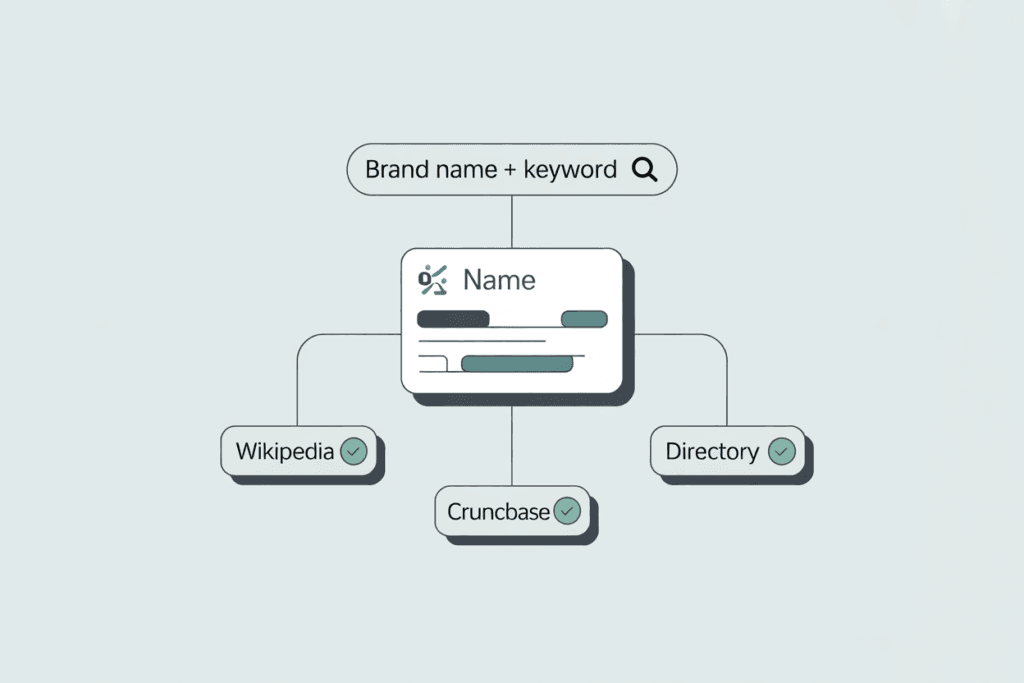
Maintain profiles on public reference platforms such as Wikipedia and CrunchBase where applicable. Keep name, address, and phone details consistent across directories.
Engineering branded search behavior with ads and stories
Paid campaigns that trigger branded searches—ads that encourage people to search for your brand plus a keyword—train audiences to use your brand as the go-to answer. That behavior signals familiarity and trust to algorithms.
Co occurrence and sentiment as trust signals for AI
AI systems analyze who you are mentioned with and how those mentions are framed. Positive placement alongside trusted sources builds credibility. Work to earn mentions near reputable sources and ensure context is favorable.
Measuring success and next steps
Key metrics to track for LLM citations and value of traffic
Track the frequency of AI citations, brand mention volume, organic sessions growth, and conversion rates from AI-referred users. Some estimates show AI-referred users can be several times more valuable because intent is higher.
Tools and workflows to scale digital PR efforts
Combine monitoring tools with outreach platforms and a content calendar. Automate alerts, batch journalist research, and keep a repository of asset one-pagers to speed responses.
Practical 30, 60, 90 day action checklist
30 days: map spheres of relevance, run a small survey, set up monitoring alerts.
60 days: produce a data asset, run targeted pitches, start HARO responses.
90 days: measure mention volume, reclaim unlinked mentions, launch a branded-search ad test.
Conclusion and recommended first actions
Backlinks still matter but they are no longer the sole route to search visibility. Brand mentions, co-occurrence, and AI citations are central to visibility in current search systems.
If you take one step this week: set up brand monitoring and list three relevance spheres for your brand. Next, plan a simple, localized data study that ties to one sphere and build a short outreach list of journalists who cover that topic. Small, consistent PR efforts compound into significant gains in citation and authority.
Thank you for visiting Your Career Place. Here are some articles for your review.
https://yourcareerplace.com/10-inspiring-social-media-marketing-examples-from-leading-brands/