

Retirement Planning in 2026: Are You Ready for the New Rules — or Running Out of Time?
Retirement Planning in 2026: Are You Ready for the New Rules — or Running Out of Time?
Let’s be honest: most of us don’t think about retirement until we absolutely have to. And then, when we finally sit down and crunch the numbers, the reality can feel like a cold splash of water to the face. Here at Your Career Place, we believe that knowledge is the first step toward financial security — and right now, there’s a lot happening in the world of retirement planning that you need to know about.
From sweeping changes to 401(k) and IRA contribution limits, to a new “super catch-up” provision for workers in their early 60s, to Social Security adjustments that may not stretch as far as you’d hope — 2026 is a pivotal year for anyone thinking about their financial future. Whether you’re 30 years out from retirement or counting down the months, the decisions you make right now could shape the next several decades of your life.
So let’s dig in. What’s changed, what it means for you, and how two very different types of people — the optimistic Boomer and the anxious Doomer — are looking at the same landscape and seeing completely different pictures.

What’s New in Retirement Planning for 2026
The retirement landscape shifted significantly at the start of 2026, thanks to a combination of IRS adjustments, SECURE 2.0 Act provisions kicking in, and broader economic forces. Here’s a quick rundown of the most important developments:
1. Higher Contribution Limits Across the Board
The IRS raised the annual contribution limit for 401(k), 403(b), and 457 plans to $24,500 in 2026, up from $23,500 in 2025. IRA contribution limits also climbed to $7,500, up from $7,000. If you’re 50 or older, the standard catch-up contribution for workplace plans increased to $8,000, and IRA catch-up contributions rose to $1,100.
These aren’t massive jumps, but they add up — especially if you’ve been maxing out your accounts consistently. Every extra dollar you can shelter from taxes today is a dollar that compounds tax-deferred (or tax-free, in the case of Roth accounts) for years to come.
2. The “Super Catch-Up” for Ages 60–63
One of the most exciting provisions from SECURE 2.0 is now fully in effect: if you’re between the ages of 60 and 63, you can make a “super catch-up” contribution of up to $11,250 to eligible workplace plans, bringing your total potential contribution to $35,750 for the year. This is a significant opportunity for workers in their early 60s who may be behind on savings and want to make a serious push before retirement.
3. Mandatory Roth Catch-Up for High Earners
Starting January 1, 2026, workers who earned more than $150,000 in FICA wages in the prior year must make all catch-up contributions to workplace plans on a Roth (after-tax) basis. Pre-tax catch-up contributions are no longer an option for this group. This is a significant change that affects high-income earners and requires some tax planning to navigate effectively.
4. Social Security: A 2.8% COLA — But Medicare Eats Into It
Social Security beneficiaries received a 2.8% cost-of-living adjustment (COLA) in 2026, raising the average monthly benefit to approximately $2,071. That sounds like good news — and it is, to a point. But the standard Medicare Part B premium jumped 9.7% to $202.90 per month, which is automatically deducted from Social Security checks for most beneficiaries. For many retirees, the Medicare increase partially or fully offsets the COLA gain.
5. A New Senior Tax Deduction
As part of the “One Big Beautiful Bill,” taxpayers aged 65 and older can now deduct up to $6,000 ($12,000 for married couples) from their taxable income. This phases out for individuals earning above $75,000 and couples above $150,000. It’s a meaningful break for middle-income retirees, though higher earners won’t see the full benefit.
6. Social Security’s Long-Term Outlook Remains Concerning
The Congressional Budget Office projects that the Social Security Old-Age and Survivors Insurance trust fund could be exhausted as early as Fiscal Year 2032. If that happens without legislative action, benefits could be cut by roughly 20-25%. This isn’t a reason to panic, but it is a reason to plan — and not to rely on Social Security as your only retirement income source.
The Retirement Savings Reality Check
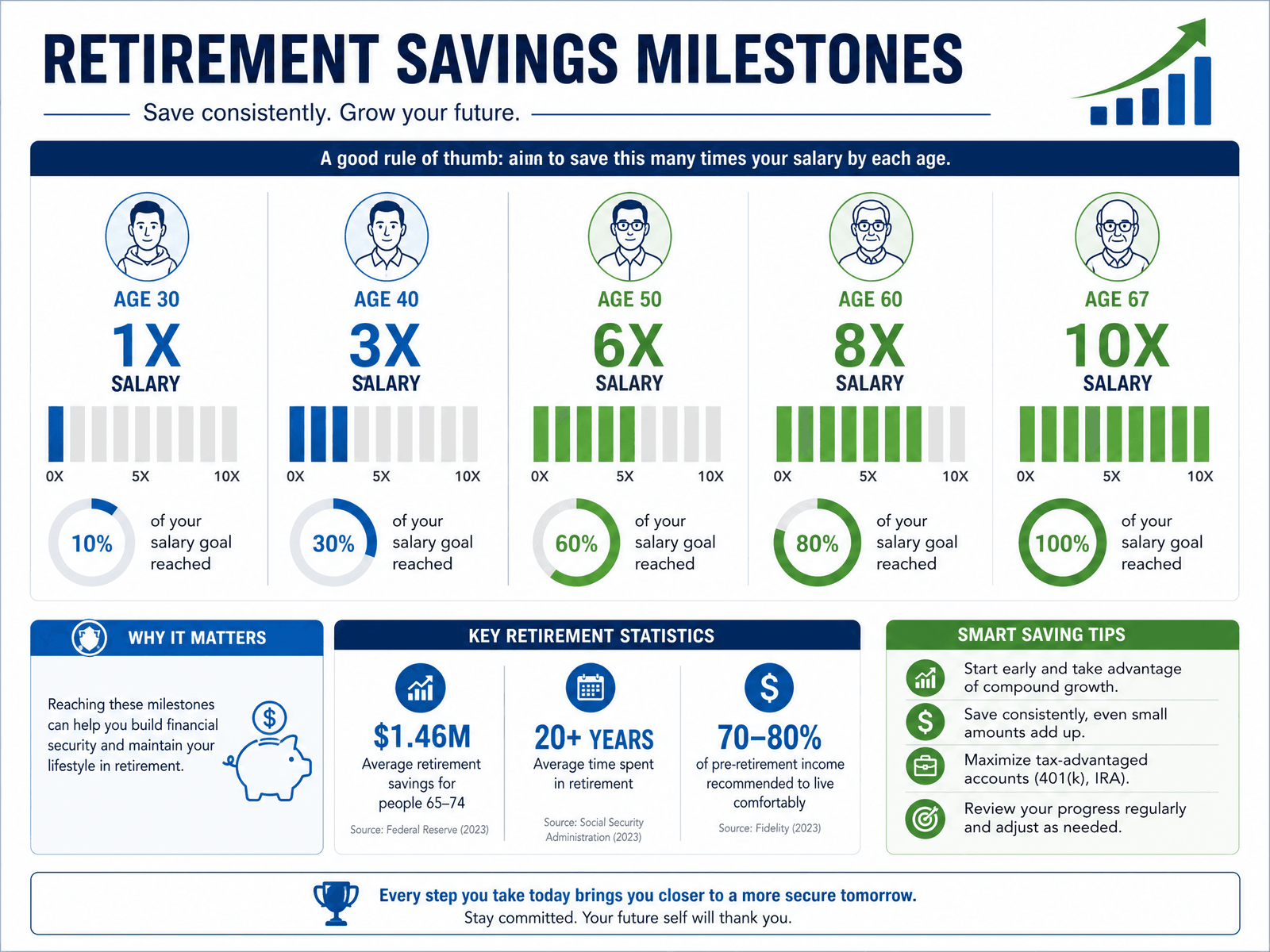
Before we get into the Boomer and Doomer perspectives, let’s look at where Americans actually stand when it comes to retirement savings — because the numbers are sobering.
According to a 2026 Northwestern Mutual study, Americans believe they need an average of $1.46 million to retire comfortably — up 15% from the previous year. Yet the average retiree has approximately $288,700 in savings. The median savings for workers aged 55–64, those closest to retirement, is just $185,000.
Even more striking: roughly 28% of Americans have no retirement savings at all. Among part-time workers, that figure rises to 55%. And nearly half of all Americans — 48% — believe they will outlive their savings.
Financial experts generally recommend having 1x your annual income saved by age 30, 6x by age 50, and 10x by age 67. Most Americans fall 40–70% below these benchmarks. The gap between where people are and where they need to be is real — and it’s growing.
At Your Career Place, we know that these statistics can feel overwhelming. But they’re also a call to action. The good news is that the new rules for 2026 actually give savers more tools than ever before — if they know how to use them.
The Boomer Perspective: “The System Is Working — You Just Have to Work It”
For the optimists among us — let’s call them the Boomers — 2026 is actually a pretty good year to be planning for retirement. Here’s how they see it:
Higher limits mean more opportunity. The increase in 401(k) and IRA contribution limits is a gift for disciplined savers. If you’ve been maxing out your accounts, you can now shelter even more money from taxes. And if you haven’t been maxing out, now is the time to start. The super catch-up provision for ages 60–63 is particularly exciting — it’s essentially the government saying, “We know some of you got a late start. Here’s a chance to make up for it.”
The market has rewarded patience. Despite early-year volatility, the long-term trend for diversified investors has been upward. Financial experts note that the “safe” withdrawal rate for 2026 is approximately 3.9%, up from previous years, largely because bond yields have become more attractive. For retirees with a balanced portfolio, this is genuinely good news.
Social Security is still there. Yes, the trust fund faces long-term challenges. But Social Security has been “about to run out” for decades, and Congress has always found a way to shore it up — because the political cost of cutting benefits to tens of millions of retirees is simply too high. The Boomer view: plan for some adjustments, but don’t write off Social Security entirely.
The new senior tax deduction is real money. For middle-income retirees, the ability to deduct up to $6,000 (or $12,000 for couples) from taxable income is a meaningful benefit. Combined with the higher standard deduction, many retirees will pay significantly less in federal taxes in 2026 than they did in previous years.
Professional advice pays off. Studies show that 74% of Americans who work with a financial advisor feel confident they’ll be financially ready for retirement, compared to just 43% of those without one. The Boomer takeaway: get a plan, stick to it, and don’t let short-term noise derail your long-term strategy.
The Doomer Perspective: “The Numbers Don’t Add Up — and Time Is Running Out”
Now let’s hear from the pessimists — the Doomers — who look at the same landscape and see a very different picture. And honestly? They’re not wrong to be worried.
The savings gap is catastrophic. When the average retiree has $288,700 saved but believes they need $1.46 million, that’s not a gap — it’s a chasm. And for the 28% of Americans with zero retirement savings, no amount of contribution limit increases matters, because they’re not contributing anything. The new rules help people who are already saving. They do nothing for the tens of millions who aren’t.
The Roth catch-up mandate is a tax trap for some. High earners who are now required to make catch-up contributions on a Roth basis will pay taxes on that money now, at their current (high) marginal rate. For workers who expect to be in a lower tax bracket in retirement, this is a worse deal than pre-tax contributions. It’s a rule change that sounds progressive but may actually hurt some of the people it’s supposed to help.
Medicare is eating the COLA alive. A 2.8% Social Security increase sounds nice until you realize that Medicare Part B premiums jumped 9.7%. For many retirees, the net gain from the COLA is minimal — or even negative when you factor in other rising healthcare costs. And healthcare costs in retirement are only going to keep climbing.
Social Security’s 2032 deadline is real. The Doomer doesn’t trust Congress to fix Social Security before the trust fund runs dry. If benefits are cut by 20-25%, millions of retirees who depend on Social Security for 90% or more of their income will face genuine hardship. The Doomer is planning as if Social Security won’t be there — or will be significantly reduced — and building their retirement plan accordingly.
Sequence of returns risk is terrifying. If you retire into a bear market and have to sell assets at depressed prices to cover living expenses, you can permanently damage your portfolio’s ability to recover. The Doomer is acutely aware of this risk and is building cash buffers, reducing equity exposure, and considering annuities to create guaranteed income floors.
Key Takeaways: What You Should Actually Do Right Now
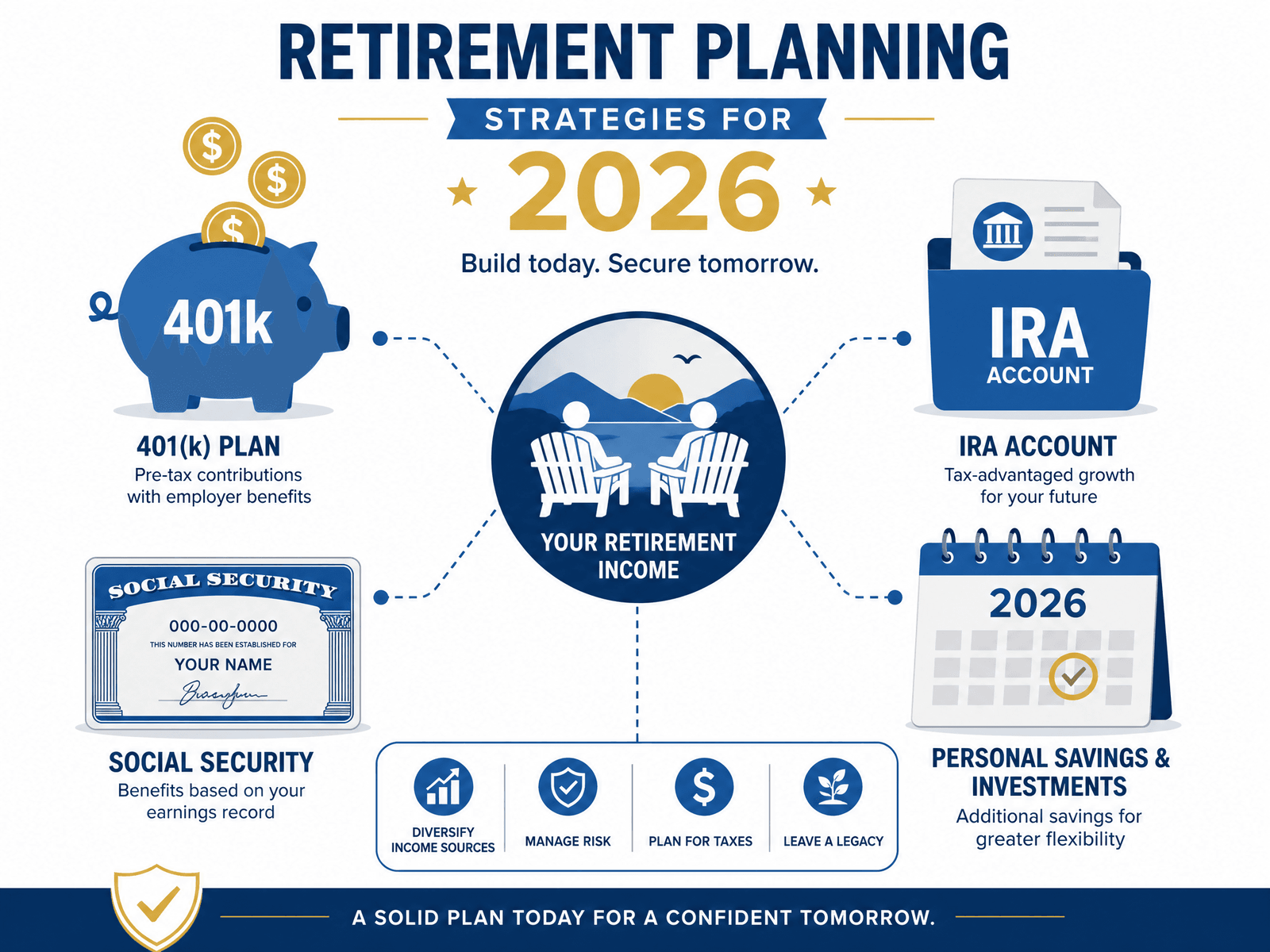
Whether you lean Boomer or Doomer, here are the concrete steps that Your Career Place recommends for anyone serious about retirement planning in 2026:
- Max out your contributions — or get as close as you can. With limits at $24,500 for workplace plans and $7,500 for IRAs, there’s more room than ever to save. If you’re 60–63, the super catch-up provision is a once-in-a-career opportunity. Use it.
- Understand the Roth vs. pre-tax decision. If you earn over $150,000, your catch-up contributions must now go into Roth accounts. But even if you’re not required to, it’s worth evaluating whether Roth contributions make sense for your tax situation. A financial advisor can help you model this out.
- Don’t count on Social Security alone. The 2.8% COLA is helpful, but with Medicare premiums rising and the trust fund facing a potential 2032 shortfall, Social Security should be a floor — not a ceiling — for your retirement income plan.
- Build a cash buffer. Financial experts recommend holding one to three years of living expenses in cash or short-duration bonds as you approach and enter retirement. This protects you from having to sell equities during a market downturn.
- Consider flexible withdrawal strategies. The traditional 4% rule is giving way to more dynamic “guardrails” approaches that adjust spending based on market performance. A flexible strategy can allow for higher sustainable withdrawal rates — sometimes up to 5.7% — while still protecting your portfolio.
- Take advantage of the new senior tax deduction. If you’re 65 or older and your income is below the phase-out thresholds, the new $6,000 deduction (or $12,000 for couples) is free money. Make sure your tax preparer knows about it.
- Get professional help. The data is clear: people who work with financial advisors are significantly more confident about their retirement readiness. If you don’t have an advisor, 2026 is the year to find one.
The Bottom Line
Retirement planning in 2026 is more complex — and more important — than ever. The new rules offer real opportunities for those who are paying attention and taking action. But the statistics also make clear that millions of Americans are dangerously underprepared, and the window to course-correct is narrowing with every passing year.
At Your Career Place, we believe that financial security in retirement doesn’t happen by accident. It happens through consistent action, smart planning, and a willingness to face the numbers honestly — even when they’re uncomfortable. The Boomer and the Doomer are both looking at the same reality. The difference is what they do about it.
So which one are you going to be?
Disclaimer: The information provided in this article is for educational and informational purposes only and should not be construed as financial, tax, or investment advice. Retirement planning involves complex decisions that depend on your individual circumstances. Please consult with a qualified financial advisor, tax professional, or retirement planning specialist before making any financial decisions. Your Career Place does not provide personalized financial advice.