

Is the Sustainability Career Boom Real — or Just Hype?
Green Jobs in 2026
The green economy promises millions of new jobs and a cleaner future. But is the path to a sustainability career paved with gold — or riddled with potholes? We break it all down.
Introduction: The Career Opportunity You Can’t Afford to Ignore
Imagine a job market where demand for your skills is growing twice as fast as the supply of qualified workers. Where entire new industries are being built from scratch. Where the work you do every day is tied to something bigger than a quarterly earnings report.
That’s the pitch for green jobs and sustainability careers in 2026 — and it’s not entirely wrong. The numbers are genuinely staggering. The World Economic Forum projects that climate change mitigation will contribute a net global gain of 78 million jobs by 2030. In the U.S. alone, clean energy employment grew from 3.2 million to 3.6 million jobs between 2021 and 2024, expanding at roughly three times the rate of the broader U.S. workforce.
But here’s the thing: big numbers don’t always translate into easy opportunities. The green economy is real, it’s growing, and it’s hiring — but it’s also complicated, politically volatile, and not equally accessible to everyone. At Your Career Place, we believe in giving you the full picture, not just the highlight reel. So let’s dig into what’s actually happening in the world of green jobs right now.
What’s Happening Right Now: The State of Green Jobs in 2026
The sustainability job market in 2026 is best described as a sector in transition — experiencing explosive long-term growth while navigating some very real short-term turbulence.
On the growth side, the numbers are hard to argue with. Green hiring is currently outpacing green skills acquisition by nearly 2-to-1 — meaning employers are desperately searching for qualified candidates and often coming up short. According to recent research, over 90% of global firms report a lack of the talent they need to achieve their sustainability goals. That’s not a niche problem; that’s a systemic talent shortage that creates genuine opportunity for job seekers willing to invest in the right skills.
The sectors driving this demand are diverse. Energy efficiency remains the largest employer in the clean energy space, supporting approximately 2.4 million U.S. jobs — think HVAC technicians, energy auditors, and building retrofit specialists. Clean electric power generation accounts for another 733,000 jobs, while clean vehicles and grid modernization add hundreds of thousands more. And it’s not just the obvious “green” roles: financial services saw a 16.3% year-on-year increase in green hires in 2025, as ESG analysts, climate risk specialists, and sustainable finance leaders became essential to corporate strategy.
Perhaps most surprising is where many of these jobs are actually landing. More than 50% of green hires are going to people in non-traditional “green” job titles — procurement managers, operations analysts, supply chain directors, and project managers who’ve added sustainability competencies to their existing skill sets. The green economy isn’t just creating new jobs; it’s transforming existing ones.
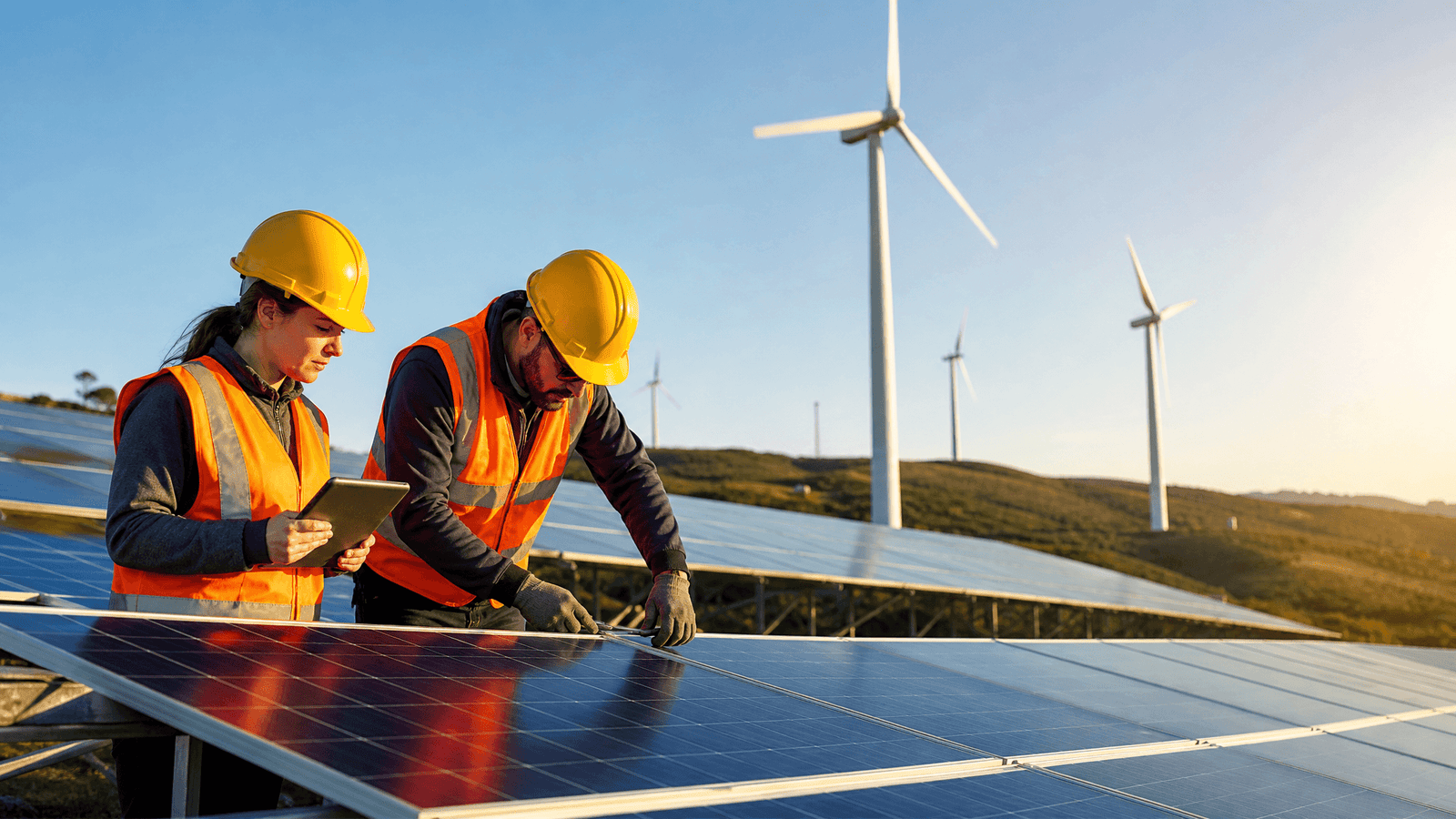
On the flip side, 2025 brought some sobering news. Policy reversals and changes to federal incentives led to at least 110 clean energy projects — representing $36 billion in investment — being paused or canceled as of September 2025. That’s a significant setback that rippled through hiring pipelines, leaving some workers in limbo. The industry is resilient, but it’s not immune to political headwinds.
Meanwhile, the “green skills gap” is a double-edged sword. Yes, it means employers are hungry for talent. But it also means that workers who lack access to retraining programs — or who live in regions where green jobs aren’t materializing — can find themselves on the wrong side of the transition. Geographic mismatches are real: new clean energy jobs aren’t always appearing in the same communities where fossil fuel jobs are disappearing.
The Boomer’s Perspective: Why the Green Economy Is the Opportunity of a Generation
Let’s be honest — if you’re looking for a reason to be optimistic about your career prospects in 2026, the green economy gives you plenty of ammunition.
Start with the sheer scale of job creation. Seventy-eight million net new jobs globally by 2030. Even if you discount that figure by half for policy delays and economic headwinds, you’re still talking about one of the largest labor market expansions in modern history. And unlike some tech-driven job booms that concentrated wealth in a handful of coastal cities, the green economy is creating jobs across a remarkably wide range of sectors and geographies — from wind farms in the Midwest to solar installations in the Sun Belt to green building retrofits in every major metro area.
The pay is real, too. Forget the stereotype of sustainability careers as low-paying nonprofit work. In 2026, Architectural and Engineering Managers in the green sector earn a median of $167,740 per year. Natural Sciences Managers pull in $161,180. Even roles like Operations Research Analysts — which increasingly incorporate sustainability metrics — offer median salaries of $91,290 with a projected 22% growth rate. These are serious, well-compensated careers.
What’s particularly exciting is the breadth of entry points. You don’t need to be a solar engineer or an environmental scientist to break into this space. The mainstreaming of sustainability across corporate functions means that professionals in finance, marketing, operations, HR, and supply chain can all find pathways into green roles by adding targeted credentials. A single certification in ESG reporting or energy management can meaningfully boost your hiring prospects. At Your Career Place, we’ve seen firsthand how professionals from traditional industries have successfully pivoted into sustainability roles by strategically layering green skills onto their existing experience.
The policy tailwinds are also more durable than the recent turbulence might suggest. The U.S. Inflation Reduction Act and the EU Green Deal have already funneled trillions of dollars into the clean economy, and the infrastructure they’ve built — both physical and institutional — doesn’t disappear overnight. Renewable energy costs continue to fall, electricity demand continues to rise, and the business case for sustainability continues to strengthen regardless of which party controls Washington. Companies that have made public net-zero commitments can’t simply walk them back without serious reputational and financial consequences.
And here’s the kicker: the green skills gap that’s causing so much anxiety for employers is actually great news for workers who are willing to invest in themselves. When demand outpaces supply this dramatically, wages go up, hiring standards become more flexible, and employers become more willing to train candidates who show the right aptitude and attitude. The workers who position themselves now — before the talent pipeline catches up — will be the ones who command premium salaries and have their pick of opportunities in the years ahead.
The Doomer’s Perspective: Why the Green Job Boom Isn’t All It’s Cracked Up to Be
Before you quit your job and enroll in a sustainability certification program, let’s pump the brakes and look at the other side of the ledger.
The green economy’s job creation numbers are real — but they come with an asterisk the size of a wind turbine. Those 78 million new jobs? They’re projected to be offset by approximately 2.4 million job losses in legacy industries. And the people losing those jobs aren’t necessarily the same people gaining the new ones. A coal miner in West Virginia doesn’t automatically become a solar installer in Nevada. The geographic and skills mismatch between displaced workers and new green opportunities is one of the most underreported challenges in the entire energy transition narrative.
The policy volatility of 2025 was a wake-up call. When $36 billion in clean energy investment gets frozen or canceled in a single year due to political shifts, it exposes just how dependent the green job market is on government support. Unlike the tech sector, which can largely self-fund through private capital, much of the clean energy industry still relies heavily on federal incentives, tax credits, and regulatory mandates. Change the administration, change the incentives, and suddenly those “stable” green jobs don’t look so stable anymore.
The skills gap cuts both ways, too. Yes, it creates opportunity for workers who can upskill. But upskilling costs money and time — resources that aren’t equally available to everyone. A 50-year-old manufacturing worker who’s been displaced by automation doesn’t necessarily have the financial cushion to spend two years getting a new degree or the digital literacy to navigate online certification programs. The green economy risks creating a two-tier labor market: well-paid opportunities for educated professionals who can afford to adapt, and displacement for everyone else.
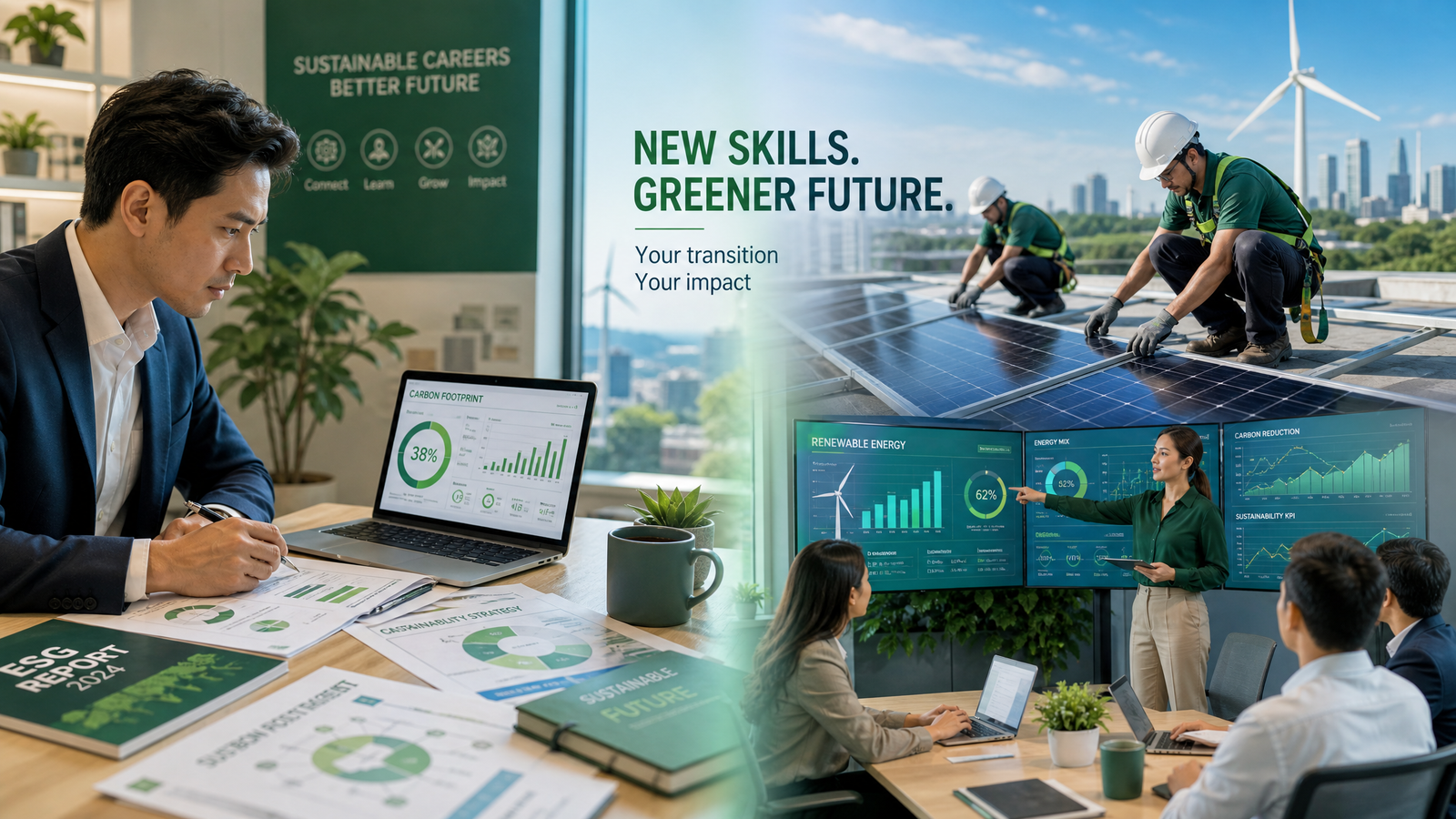
The numbers on workforce shortages are also a bit of a paradox. We’re told that 90% of firms lack the talent to meet their sustainability goals — but we’re also seeing project cancellations and hiring freezes in the clean energy sector. How do you reconcile a talent shortage with layoffs? The answer is that the green job market is highly fragmented: some subsectors are booming while others are contracting, and the skills required in one area don’t always transfer to another. A laid-off offshore wind project manager doesn’t necessarily slot into a corporate ESG analyst role.
There’s also the uncomfortable reality of greenwashing — not just in corporate marketing, but in job titles. As sustainability becomes a buzzword, companies are increasingly slapping “green” labels on roles that don’t meaningfully advance environmental goals. Chief Sustainability Officers who lack real authority. ESG reports that are more PR than substance. Job seekers who invest in sustainability credentials may find themselves in roles that look good on paper but don’t deliver the meaningful work — or the job security — they were promised.
Finally, let’s talk about the informal sector. Over 60% of the global workforce — and up to 90% in low-income countries — works in informal arrangements without the social protections, access to training, or institutional support needed to navigate a major economic transition. The green economy’s job-creation story is largely about formal, credentialed employment in wealthy countries. For the billions of workers outside that system, the transition looks a lot less like opportunity and a lot more like disruption.
Key Takeaways: What This Means for Your Career
So where does that leave you? Here’s what the team at Your Career Place thinks you should take away from all of this:
- The opportunity is real, but it requires intentionality. Green jobs aren’t going to fall into your lap. You need to identify which subsectors align with your existing skills, research which credentials employers value, and build a targeted plan to make the transition.
- You don’t have to start from scratch. More than half of green hires are going to people in non-traditional green roles. If you’re in finance, operations, supply chain, or project management, you may be closer to a green career than you think. Look for ways to add sustainability competencies to your current role before making a full pivot.
- Watch the policy landscape. The green job market is more politically sensitive than most sectors. Stay informed about federal and state incentive programs, and factor policy risk into your career planning — especially if you’re considering roles that are heavily dependent on government subsidies.
- Prioritize transferable skills. The green economy needs data analysts, project managers, communicators, and strategists just as much as it needs engineers and scientists. Focus on building skills that are valuable across multiple sectors so you’re not overexposed to any single industry’s volatility.
- The skills gap is your friend — if you act now. The window of maximum opportunity is open right now, with demand high and supply low. Workers who invest in green credentials today will be better positioned than those who wait until the talent pipeline catches up.
- Don’t ignore the trades. Some of the fastest-growing and most in-demand green jobs are in skilled trades — electricians, HVAC technicians, solar installers, wind turbine technicians. With projected shortages of 77,400 electricians by 2034 and 320,000 welders by 2029, these roles offer excellent job security and competitive wages without requiring a four-year degree.
The green economy is neither the utopian job paradise that its most enthusiastic advocates promise nor the policy-dependent house of cards that its critics fear. It’s a genuine, large-scale labor market transformation that creates real opportunities for workers who are prepared — and real risks for those who aren’t.
At Your Career Place, our job is to help you navigate exactly this kind of complexity. Whether you’re a recent graduate exploring sustainability careers for the first time, a mid-career professional looking to pivot, or a seasoned executive trying to understand how ESG is reshaping your industry, we’re here to help you make sense of the landscape and build a career strategy that actually works.
The green economy is coming. The question is whether you’ll be ready for it.
Want more insights on navigating the evolving job market? Visit Your Career Place for career advice, job search strategies, and the latest labor market analysis — updated every week.