

Budgeting in 2026: Is Your Money Plan Keeping Up With Real Life?
Budgeting in 2026: Is Your Money Plan Keeping Up With Real Life?
Let’s be honest — budgeting has never been anyone’s favorite topic. It conjures images of spreadsheets, sacrifice, and saying no to things you actually enjoy. But here’s the uncomfortable truth: in 2026, not having a solid budget isn’t just inconvenient — it could be genuinely dangerous to your financial health. And at Your Career Place, we believe that understanding where your money goes is the single most powerful step you can take toward financial freedom.
The numbers tell a sobering story. The U.S. personal savings rate has plummeted to just 2.6%–2.7% in mid-2026, down from 5.8% just a year ago. Meanwhile, inflation is still running at 3.8%, outpacing average wage growth of 3.6%. Half of all Americans say their 2026 financial goals have already been derailed by the rising cost of living. And 22% of adults have zero emergency savings — none at all.
So what’s going on, and what can you actually do about it? Let’s dig in.

The State of American Budgets in 2026: A Reality Check
The financial squeeze hitting American households right now isn’t just a feeling — it’s backed by hard data. A staggering 45.5% of U.S. households are unable to earn enough to cover basic necessities like housing, food, childcare, transportation, and utilities. That’s nearly half the country struggling to keep the lights on and food on the table.
Housing is the biggest culprit, consuming 33.4% of the average household budget. Nearly half of all renters are spending more than 30% of their gross income on rent and utilities alone — a threshold that financial experts consider the danger zone for housing cost burden. Add in the fact that the national debt has surpassed $40 trillion (putting upward pressure on interest rates for mortgages, car loans, and credit cards), and you’ve got a perfect storm of financial pressure.
The response? Over 8 million Americans now hold multiple jobs just to make ends meet. And 37% of adults have turned to credit cards, Buy Now Pay Later services, or personal loans to bridge the gap between income and expenses. Even retirement savings are taking a hit — 19.2% of workers have outstanding 401(k) loans in 2026, up from 18.8% the previous year.
The IRS has also introduced new complexity: a fresh overtime tax deduction now applies, but only to the “premium” portion of overtime pay (the extra half-time above regular wages), and employers must report it on tax forms. If you’re working overtime to boost your income, make sure you understand how this affects your tax picture.
This is the environment we’re all navigating. And it’s exactly why having a real, working budget — not just a vague intention to “spend less” — matters more than ever.
The Boomer View: Budgeting Is the Foundation of Everything
For those who grew up in an era before credit cards were ubiquitous and “lifestyle inflation” was a recognized phenomenon, the current savings crisis might seem baffling — but the solution feels familiar. The fundamentals of budgeting haven’t changed, and they work just as well today as they ever did.
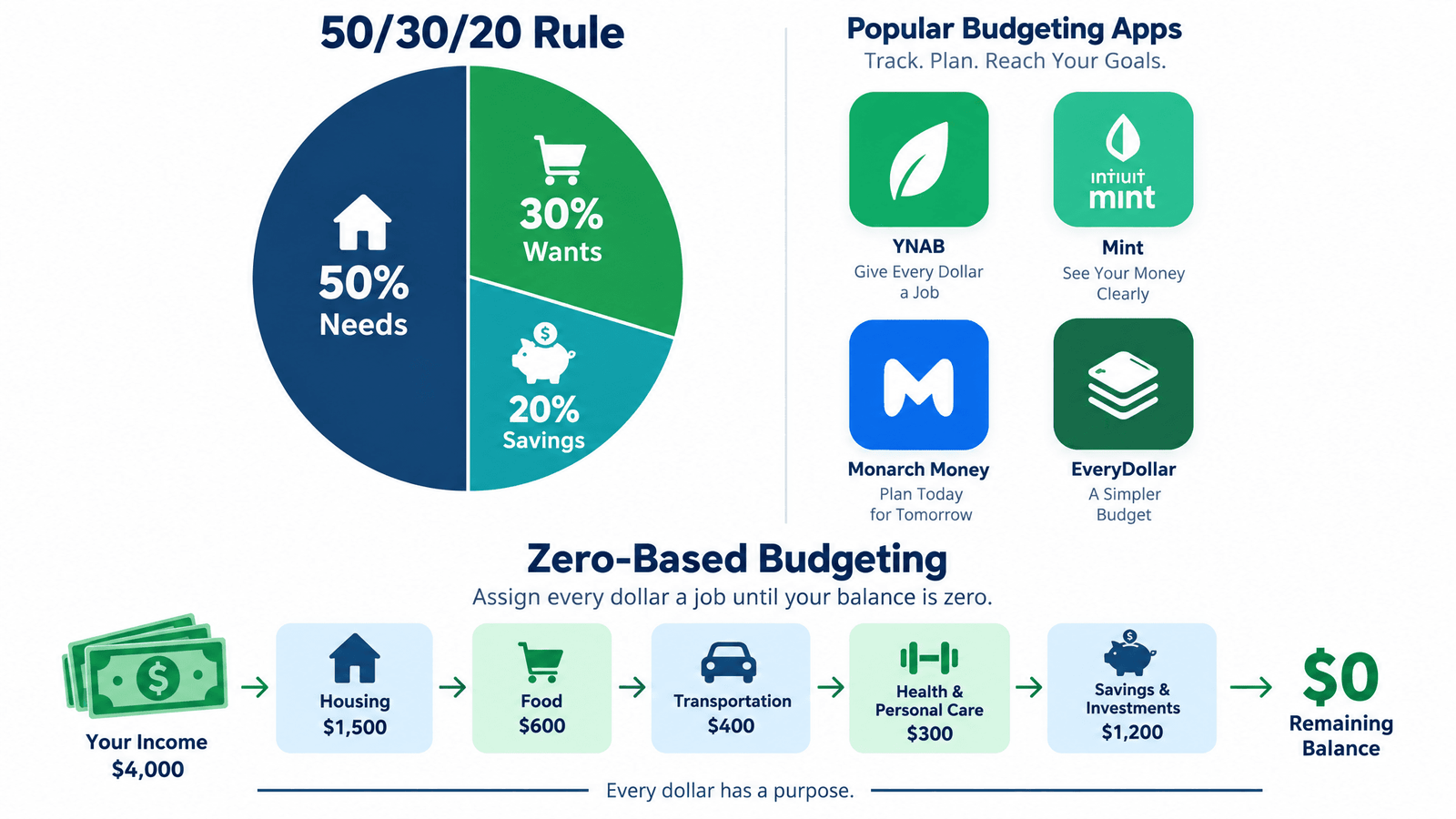
The optimistic case for budgeting in 2026 is actually quite strong. We have more tools, more information, and more flexibility than any previous generation. The 50/30/20 rule — allocating 50% of income to needs, 30% to wants, and 20% to savings and debt repayment — is a time-tested framework that still holds up beautifully. It’s simple, scalable, and doesn’t require a finance degree to implement.
The Boomer perspective also points to automation as a game-changer. Setting up automatic transfers to a high-yield savings account the moment your paycheck hits removes the temptation to spend first and save later. Treat savings like a non-negotiable bill — because it is. This approach has helped generations of Americans build wealth steadily, even during tough economic times.
There’s also real optimism in the budgeting app revolution. Tools like Monarch, YNAB (You Need A Budget), Quicken Simplifi, and Rocket Money have made it easier than ever to track spending, identify waste, and stay on course. Monarch, for instance, offers AI-assisted insights and collaborative household budgeting — perfect for couples or families trying to get on the same financial page. YNAB’s zero-based budgeting approach (giving every dollar a job before the month begins) has helped millions of users pay off debt and build savings even on modest incomes.
The optimistic view says: yes, times are tough, but the tools and strategies exist to navigate them. The people who commit to a real budget — and actually stick to it — will emerge from this period in far better financial shape than those who don’t. At Your Career Place, we’ve seen this play out time and again: the discipline of budgeting creates a foundation for every other financial goal, from buying a home to retiring comfortably.
Practical Boomer-approved moves for right now:
- Audit your subscriptions — the average American spends $219/month on subscriptions, often without realizing it
- Build sinking funds for predictable expenses like car insurance, property taxes, and holiday gifts
- Lock in fixed costs where possible — negotiate a longer lease, refinance to a fixed-rate loan
- Start with a $1,000 emergency fund if you have nothing saved — then build from there
- Review your budget monthly — a 30-minute check-in can prevent financial drift
The Doomer View: When Budgeting Isn’t Enough
Here’s where we have to get real. For a growing number of Americans, the problem isn’t that they don’t know how to budget — it’s that there simply isn’t enough money to budget with. And no amount of spreadsheet optimization fixes a structural income problem.
The pessimistic case for 2026 budgeting starts with a hard truth: 81% of Americans who set financial goals in 2025 failed to meet them, primarily because of rising costs. When housing alone eats 33% of your income and food prices remain elevated, the math just doesn’t work for millions of households. You can cut every subscription, brew your own coffee, and pack your lunch every day — and still come up short.
The savings rate collapse is particularly alarming. At 2.6%, Americans are barely saving anything. That means one unexpected car repair, one medical bill, or one job loss away from financial crisis for a huge swath of the population. And with 22% of adults having zero emergency savings, that crisis is already here for many people.
The debt spiral is another concern. When 37% of Americans are using credit cards or BNPL services to cover everyday expenses — not luxuries, but groceries and utilities — they’re paying interest on necessities. That’s a wealth-destroying cycle that’s very hard to escape. And with the national debt above $40 trillion putting pressure on interest rates, the cost of carrying that debt is only going up.
There’s also the psychological toll. Financial stress is one of the leading causes of anxiety, relationship strain, and health problems in America. When you’re constantly worried about money, it’s hard to make good long-term decisions. The Doomer perspective warns that without structural changes — in wages, housing policy, healthcare costs — individual budgeting can only do so much.
The student loan situation adds another layer of complexity. Borrowers exiting the SAVE plan are facing recalculated payments that could significantly increase their monthly obligations, further squeezing already-tight budgets. If you’re in this situation, checking your account status on StudentAid.gov is urgent.

The Doomer’s honest assessment: budgeting is necessary but not sufficient. If your income genuinely doesn’t cover your basic needs, the answer isn’t a better spreadsheet — it’s finding ways to increase income, whether through upskilling, negotiating a raise, adding a side income stream, or making a strategic career move. That’s something Your Career Place can help with — because sometimes the best budget hack is earning more.
Key Takeaways: What You Should Do Right Now
Whether you lean Boomer or Doomer on the budgeting debate, there are concrete steps that can improve your financial situation regardless of the economic environment. Here’s what the experts — and the data — say works:
- Know your numbers. You can’t manage what you don’t measure. Track every dollar for one month using an app like Monarch, YNAB, or even a simple spreadsheet. Most people are shocked by what they find.
- Choose a framework and commit. The 50/30/20 rule works for most people. Zero-based budgeting works better for those who want maximum control. Pick one and stick with it for at least 90 days before judging results.
- Automate your savings first. Set up an automatic transfer to a high-yield savings account on payday. Even $50 a month builds the habit and the fund. Increase it as you find savings elsewhere.
- Build your emergency fund in stages. Start with $1,000. Then work toward one month of expenses. Then three months. Don’t let perfect be the enemy of good — any cushion is better than none.
- Audit your fixed costs. Call your insurance company, internet provider, and any subscription services. Negotiate. Cancel what you don’t use. This is often where the biggest wins hide.
- Address the income side. If your budget is genuinely too tight to save anything, focus on increasing income — a raise, a promotion, a side gig, or a career pivot. Your Career Place has resources to help you make that move strategically.
- Review quarterly. Set a calendar reminder every three months to review your budget against your actual spending. Adjust for inflation, life changes, and new goals.
- Check your student loans. If you’re on an income-driven repayment plan, verify your payment amount on StudentAid.gov — changes to the SAVE plan may have affected your monthly obligation.
The bottom line? Budgeting in 2026 is harder than it’s ever been for many Americans — but it’s also more important than ever. The gap between those who manage their money intentionally and those who don’t is widening. At Your Career Place, we believe that financial literacy and career growth go hand in hand. A strong budget gives you the stability to take career risks, invest in yourself, and build the future you actually want.
Don’t wait for the “perfect time” to get your finances in order. That time is now.
Disclaimer: The information provided in this article is for educational and informational purposes only and does not constitute financial, investment, or tax advice. Personal finance decisions should be made based on your individual circumstances. Please consult a qualified financial advisor or tax professional before making significant financial decisions. Your Career Place is not a licensed financial advisor.