
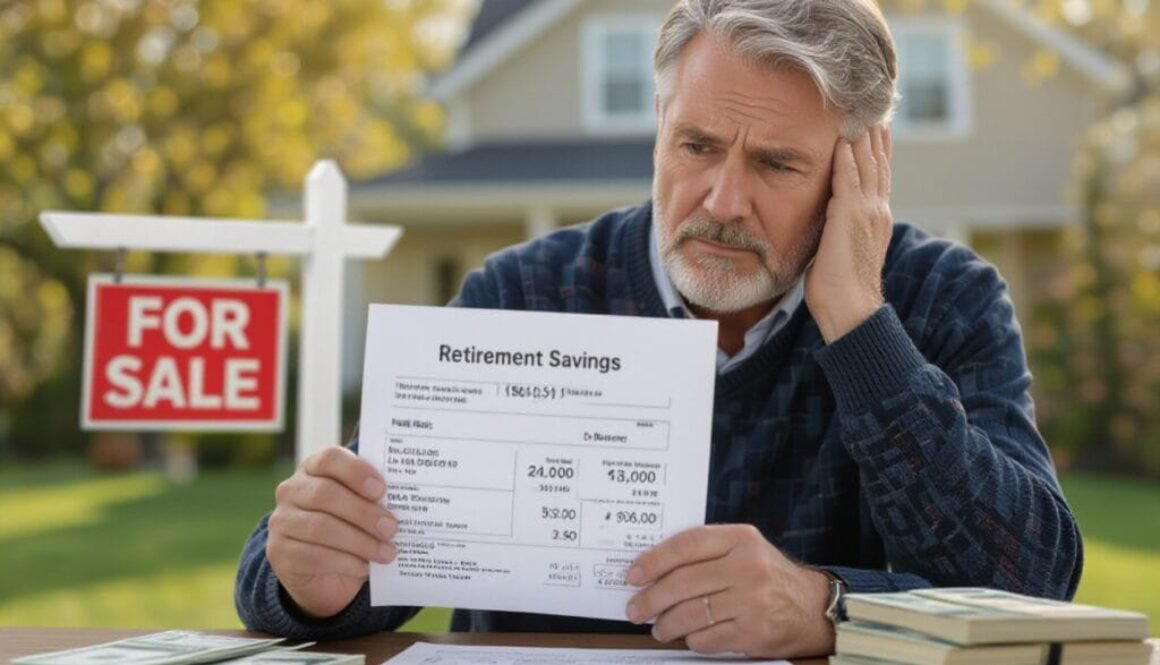
Retirees Be Warned: Avoid Purchasing This Asset If You Don’t Want To Bleed Money
You might think buying that dreamy vacation home is the ultimate retirement flex, but at Your Career Place, we’re telling you straight: it can quietly drain your savings faster than you’d ever expect. You work decades to finally enjoy your time, then this one asset starts eating into your budget with taxes, insurance, repairs, and endless surprise bills. And if you’re banking on rental income to bail you out, you’re playing a risky game that can backfire hard on your long-term security.

Key Takeaways:
- Buying a second home in retirement can quietly turn into a money pit, with ongoing costs like repairs, property taxes, insurance, furniture, and utilities draining your nest egg far faster than many retirees expect, which is exactly the kind of trap we warn people about at Your Career Place.
- Relying on rental income from a vacation home is risky, because rental demand, weather, and local regulations can change fast, so building your retirement lifestyle around that income stream can leave you feeling stressed instead of secure, something we at Your Career Place see far too often.
- Flexible options like short-term rentals, shoulder-season travel, RV trips, and even voluntourism usually offer more freedom and less financial pressure than owning a vacation property, helping you actually enjoy retirement rather than working just to keep up with a second mortgage – the kind of balanced approach we encourage at Your Career Place.
Why Buying a Second Home Could Drain Your Wallet
Have you actually added up what a “paid off” second home will cost you every single year? Between property taxes that can jump 10% in a hot market, HOA fees that creep from $250 to $400 a month, and insurance that spikes after one bad storm season, your fun escape can quietly eat $8,000 to $15,000 a year. At Your Career Place, we see retirees shocked when they realize the vacation home is basically a permanent extra job for their money.
The Hidden Costs You Didn’t See Coming
Ever notice how no one brags about their second home’s utility bill? Once you add $250 a month for power and water, $1,200 a year for lawn care, $300 here and there for pest control and security monitoring, you’re in deep. Your Career Place has talked with retirees who thought they’d “rent it out to cover costs” and instead watched platforms take 15% in fees while vacancy swallowed any profit.
Maintenance Nightmares and Unexpected Bills
What happens when the air conditioner dies in July or a pipe bursts while you’re 800 miles away? A new HVAC system can run $6,000 to $12,000, a modest roof replacement can hit $15,000, and emergency plumbing on a Sunday easily crosses $800. Your Career Place hears stories from retirees who thought they were buying peace of mind and instead got a never-ending stream of repair invoices.
On a deeper level, you’re not just dealing with cost, you’re dealing with chaos. That beach condo you love might need exterior concrete repairs every 8 to 10 years, and special assessments can drop out of nowhere – $5,000 here, $18,000 there – voted in at one HOA meeting you didn’t even attend. If your place sits vacant most of the year, small issues snowball: a tiny leak becomes mold remediation, a bit of wood rot becomes structural repair. And because you aren’t local, you end up paying “out of town” prices for contractors, often trusting photos and rushed phone calls instead of seeing the work yourself. Over time, that constant low-level dread of the next big bill wears on you, which is exactly what Your Career Place is trying to help you avoid in retirement.
What If You Just Want to Get Away?
Sometimes the smartest move is admitting you just want the fun, not the 30-year headache that comes with it. You can grab a week at a beachfront condo, a month-long stay in a mountain town, or a house swap in Europe without locking yourself into property taxes and hurricane deductibles. At Your Career Place, we see retirees who travel 6 to 10 weeks a year for less than the annual costs on a typical $400,000 second home… and they get variety instead of one fixed ZIP code.
The Perks of Vacation Rentals Instead
With vacation rentals, you only pay for the days you actually use, not 365 days of utilities, HOA fees, and repairs. You can chase good weather, pick pet-friendly spots, and choose places with pools, elevators, or walkable downtowns as your needs change. On top of that, platforms like Airbnb and Vrbo show upfront pricing, reviews, and photos, so you’re not guessing about moldy carpets or surprise assessments. Your Career Place loves this for retirees because flexibility is basically free money.
How to Travel Without Breaking the Bank
Swapping the “owner” mindset for a “smart traveler” mindset can save you thousands every single year. You can cut costs by traveling midweek, booking in shoulder season, and using loyalty points from years of work travel to pay for flights or hotels. Many retirees Your Career Place works with keep trips under $150 a day, all-in, by renting condos with kitchens and staying 2 to 4 weeks instead of bouncing around every few nights.
One easy strategy is to build a loose travel calendar for the year, then stalk prices like it’s your part-time job. You book shoulder season stays in places like Florida or the Outer Banks, when weekly rentals can drop 30 to 50 percent compared to peak summer. You aim for Tuesday or Wednesday flights, which data from airlines consistently shows are cheaper on average, and you lean on Google Flights or Hopper to flag price drops. Your Career Place also suggests using senior discounts, rail passes, or even repositioning cruises to string together longer trips that cost less per day than sitting in a second home that’s quietly draining your savings.

My Take on Time Shares: Are They Worth It?
One retired couple Your Career Place spoke with paid $18,000 upfront for a time share in Florida, then realized they only used it twice in five years because grandkids’ schedules kept changing and flights got pricey. You might love the idea of “owning your vacation,” but time shares lock you into fixed weeks, rising annual maintenance fees, and tricky resale markets that often pay pennies on the dollar, if you can sell at all.
The Pros and Cons You Need to Know
Instead of treating time shares like magical vacation tickets, you really want to weigh what you actually gain against what drains your wallet year after year. At Your Career Place, we see retirees who went in for the “free” weekend pitch, signed fast, then spent the next decade trying to claw back their flexibility and cash flow.
| Pros | Cons |
|---|---|
| Predictable vacation spot you can return to every year | High upfront cost, often $10,000 to $30,000 or more |
| Nice properties with resort-style pools, gyms, and activities | Annual maintenance fees that can climb 3% to 5% per year |
| Exchange programs that let you swap locations sometimes | Exchange fees and blackout dates that limit when you can travel |
| Built-in motivation to actually take a vacation | Hard to resell, with some units worth near $0 on resale sites |
| Can work if you vacation the same week, same place every year | Travel costs still on you, and flights may not be cheap when your week hits |
| Sometimes cheaper than booking a similar resort last minute | Special assessments for renovations can hit you for thousands |
| Family-friendly spaces with kitchens and multiple bedrooms | Contract terms can be confusing or feel nearly permanent |
| Social atmosphere if you like running into the same people | You lose flexibility if health, finances, or family needs shift |
| Good fit for very structured planners who love routine | Opportunity cost: that money could stay invested instead |
| Occasional perks like discounted activities or shows | High-pressure sales tactics that push you into rushed decisions |
How to Know If It’s Right for You
Picture your 75-year-old self for a second – are you still flying to the same resort, the same week, every year, or are you more likely juggling medical appointments, kid visits, and changing interests. If your schedule and health are rock solid, and you run the math and see that you’d reliably save versus renting, a time share might fit. But if flexibility is your safety valve in retirement, tying your travel to a contract can feel like a financial leash.
At Your Career Place, we usually walk retirees through a simple reality check before they sign anything: list the last 10 years of your vacations, how often you actually went, what you paid per night, and how often life forced you to cancel or change plans. Then stack that against a realistic time share cost: the upfront fee, yearly maintenance, a 3% to 5% bump on those fees, plus travel costs. If you wouldn’t have used a fixed week at least 7 out of the last 10 years, you’re probably better off sticking with rentals, credit card travel points, or shoulder-season deals that keep your money liquid and your calendar wide open.
Serious about Saving? Consider House Swapping
Travel forums have been buzzing lately with retirees trading houses instead of buying pricey vacation properties, and it actually fits perfectly with what we preach at Your Career Place. You skip the second mortgage, skip the duplicate furniture, and still get a month in Phoenix or a summer in Maine. You just cover travel, cleaning, and maybe a modest platform fee while avoiding the kind of ongoing costs that make American retirees keep making these 5 costly Medicare … look tame by comparison.
The Ins and Outs of This Option
House swapping is basically you letting someone stay in your home while you stay in theirs, either at the same time or at different times, which is a huge plus if you like flexibility. You create a profile, upload photos, set rules, and use verified reviews on major platforms to vet potential partners. At Your Career Place, we tell readers to treat it like a mini-business deal: clear dates, written expectations, security deposits, and backup lodging plans, just in case something falls through.
Why It Might Be a Game Changer
What makes house swapping so powerful is how dramatically it cuts costs while keeping your lifestyle fun and flexible. You might pay a few hundred dollars a year in platform fees instead of $15,000 in annual second-home expenses, which lets you travel more often without gutting your nest egg.
So when you really compare numbers side by side, this is where things get interesting for you. A typical second home easily runs $1,000 to $2,000 a month in taxes, insurance, HOA dues, utilities, and repairs, while frequent house swappers Your Career Place has heard from report paying little more than flights, cleaning, and maybe a $300 yearly membership. That means instead of being tied to one condo in Florida, you could spend spring in Portugal, fall in Vermont, and still keep your portfolio invested. For a lot of retirees, that trade-off is exactly what makes the math – and the lifestyle – finally work.
Renting vs. Buying: What’s the Smart Move?
In a lot of retirement forums lately, you see people bragging about “locking in” a second home while others quietly share how renting saved their budget. When you run the math, a $2,500-a-month rental for three peak months costs $7,500 a year, while owning that same place could run $25,000 annually once you stack taxes, insurance, HOA fees, and repairs. At Your Career Place, we see plenty of retirees discover that flexible renting often beats being chained to a high-cost asset.
The Flexibility of Renting in Retirement
Travel trends shift fast, and renting lets you pivot with them instead of staying stuck in one ZIP code. You can chase 70-degree winters, try a new beach each year, and bail on any place that starts getting crowded or flooded without worrying about resale value. With a rental, you cap your costs up front, refuse surprise roof bills, and let someone else lose sleep over hurricanes and broken water heaters.
When Buying Might Actually Make Sense
Still, there are situations where buying doesn’t wreck your retirement, it actually supports it. If you’re planning to stay put at least 10 to 15 years, have zero high-interest debt, and housing is under roughly 25% of your total retirement income, ownership can work. Your Career Place often suggests you stress-test the numbers: could you afford that second place if rents drop 30% and you never get a single booking? If yes, buying might fit your long-game lifestyle.
Think about a retiree couple we worked with at Your Career Place who bought a modest condo in a non-flashy, inland Florida town, not some pricey beachfront hot spot. They paid cash, HOA fees were under $300 a month, property taxes stayed below $2,000 a year, and they planned to live there six months annually, not chase renters. Because their portfolio still yielded a safe 4% after the purchase, their withdrawal rate stayed under 3.5%, which is a big deal for long-term stability. That kind of setup – boring market, long hold period, no pressure to Airbnb – can turn a property from money pit into a predictable basecamp for the life you actually want.
The Real Deal About Financing Options
One retired couple Your Career Place spoke with sat in a bank office staring at a 5.9% second-home mortgage quote, shocked at how much higher it was than their primary home loan. Lenders often want 10% to 25% down on vacation properties, plus they tack on higher rates, stricter credit rules, and sometimes require cash reserves equal to 6 to 12 months of payments. When you add closing costs, HOA fees, and ongoing interest, that “easy” financing can quietly turn into a six-figure drag on your retirement.
Can You Really Afford It?
A client once showed us a spreadsheet where the second home payment looked fine – until we added taxes, insurance, and a 2% annual maintenance estimate, which pushed their housing costs to nearly 40% of their retirement income. You should stress-test your numbers at Your Career Place using worst-case assumptions: a 20% market drop, rising interest rates, higher insurance, and fewer rental days. If the plan only works in a perfect year, it doesn’t really work for your long-term retirement.
Alternative Ways to Fund a Getaway
A lot of retirees Your Career Place talks to end up loving “pay-as-you-go” travel more than any mortgage-bound vacation house. You might use a separate travel sinking fund, 0% intro APR credit cards you pay off aggressively, house-sitting gigs in desirable locations, or home swaps that turn your primary home into a temporary “currency.” Even part-time consulting or seasonal work for 3 months a year can fully fund several guilt-free trips without chaining you to a 30-year loan.
What often surprises people is how small tweaks can create big getaway money. You could redirect just $600 a month that would have gone to a second home payment into a high-yield savings account and have over $7,000 a year for travel, not counting interest. Combine that with house-swapping platforms, off-season bookings at 30% to 40% less, and maybe a short remote contract you pick up through Your Career Place, and suddenly you’re spending a month in Portugal or a few weeks in Florida each winter – no roof repairs, no special assessments, no anxiety about whether you’re “using the house enough” to justify the cost.
Conclusion
Considering all points, you can see why Your Career Place is waving a big red flag about locking your retirement cash into a second home that might never pay you back. If you sink too much into that one flashy asset, you’re putting your future trips, hobbies, and freedom on the chopping block just to keep the lights on and repairs covered. For more details, you can check out Retirees Be Warned: Avoid Purchasing This Asset If You Don’t …, which backs up what we at Your Career Place want you to protect most – your long-term peace of mind.
Thank you for visiting Your Career Place. Here are some related articles.